Welcome to our practical guide, “Ukulele for Dummies.” If you want to learn to play the ukulele, whether you are a beginner or are looking for tutorials to improve your technique and chords, you have come to the right place. In this article, we will explore everything you need to know to play this cheerful, sunny instrument.
You will discover the best ways to learn, essential chords, different ukulele playing techniques, and much more. You will soon be able to play your favorite songs and enjoy the beauty of this instrument.
Whether you want to relax by playing alone at home or share good times playing in a group, this practical guide will accompany you at every stage of learning. So get ready to explore the world of the ukulele and discover the musical joy it can bring to your life.
History of the ukulele
The ukulele has its roots in the Hawaiian Islands, although it was invented in Portugal, on the island of Madeira. Portuguese migrant workers introduced it to Hawaii in 1879. The instrument quickly grew in popularity and became a fixture in the 1920s, thanks in particular to musicians such as Cliff Edwards and George Formbey.
The ukulele grew out of the ingenuity of Manuel Nunes, a Portuguese immigrant who lived on the island of Madeira. Toward the end of the 19th century, Nunes began making small stringed instruments inspired by the Portuguese cavaquinho. Portuguese workers traveling to Hawaii to work on sugarcane plantations brought these instruments with them. Once in Hawaii, the instrument quickly grew in popularity and became a symbol of Hawaiian culture.
The rise of the ukulele
By the 1920s, the ukulele was already very popular in Hawaii and across the rest of the United States. Artists such as Cliff Edwards, also known as Ukulele Ike, helped popularize the ukulele through their recordings and public performances. Another famous name associated with the ukulele is George Formbey, a British musician known for his comic and virtuosic performances.
Benefits of the ukulele
The ukulele has many benefits for aspiring musicians. Whether you are a beginner or an experienced player, this instrument offers a rewarding musical experience. Discover the main benefits that make the ukulele an ideal choice:
1. Easy to learn
The ukulele is one of the easiest musical instruments to learn. Thanks to its small size and just four strings, you can quickly master basic chords and play your first songs in no time. It is an excellent option for beginners who want to start making music without feeling overwhelmed.
2. Distinctive sound
The ukulele produces a distinctive sound that instantly brings beaches and vacations to mind. Its cheerful, sunny tone adds a touch of joy to every melody you play. You can also create subtle variations in tone by playing more softly, making it a versatile and expressive instrument.
3. Easy to carry
Thanks to its small size and light weight, the ukulele is very easy to carry. You can easily slip it into a backpack or suitcase, making it an ideal travel companion. Whether you want to play on the beach, in a park, or while traveling, the ukulele is always ready to come along.
4. Affordable price
Compared with other musical instruments, the ukulele is relatively affordable. You can find quality models at accessible prices, making it an ideal choice if you want to begin without spending a fortune. Essential accessories, such as picks and carrying cases, are also affordable.
5. A first step toward guitar
If you plan to play guitar in the future, the ukulele is an excellent first step. The basics of frets and tuning are similar to those of a guitar, making the transition to the larger instrument easier. By starting with the ukulele, you can develop your musical skills while becoming familiar with guitar fundamentals.
In short, the ukulele offers many benefits, including being easy to learn, having a distinctive sound, being easy to carry, having an affordable price, and providing a first step toward guitar. Whether you are a beginner or an experienced musician, the ukulele can offer an enjoyable musical experience. Do not wait: start learning the ukulele and let your musical creativity flourish.
Anatomy of the ukulele
The ukulele has different parts that contribute to its sound and playability. Understanding its anatomy will help you get to know the instrument better. Here are its essential parts:
1. Body
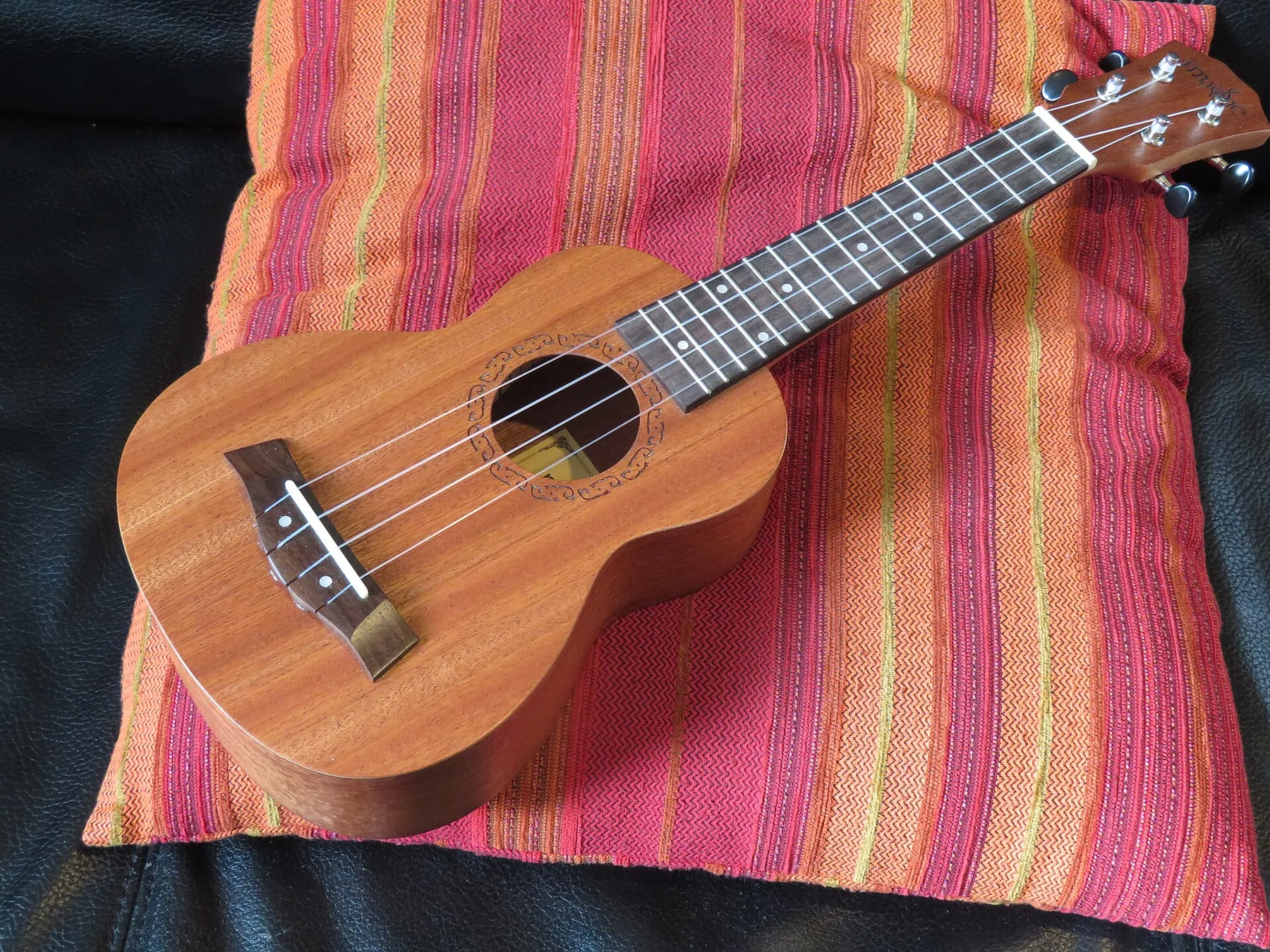
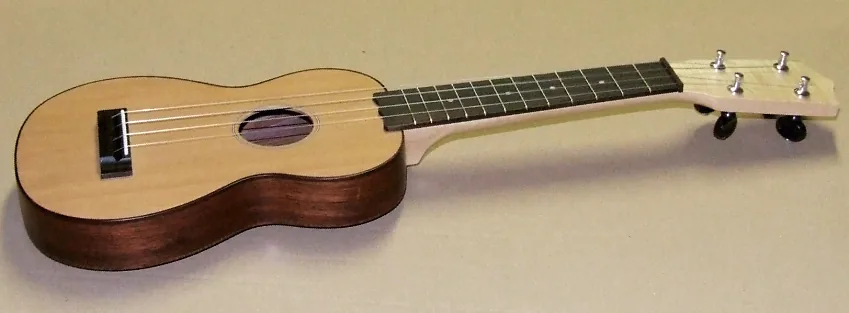
The ukulele’s body is the main part that produces sound. It is generally made of wood and can have different shapes, including a figure-eight shape. The body also has an opening on its front, called the sound hole, which amplifies the resonance of the strings.
2. Neck
The ukulele’s neck lets you create different notes by pressing on the strings. It is generally narrower and shorter than a guitar neck. The frets along the neck help you hold the strings in place to produce precise notes.
3. Strings
A ukulele usually has four nylon strings. These strings are generally tuned G-C-E-A, from lowest to highest. They can be plucked or strummed to produce notes and chords.
4. Types of wood
The wood used to build a ukulele can affect its sound. Several types of wood are commonly used, including koa, mahogany, and spruce. Each type of wood has unique tonal qualities that help shape the instrument’s sound.
5. Arched back
Some ukuleles have an arched back, also called a domed back. This shape can improve sound projection. The arched back acts as an additional resonating body, amplifying the strings’ vibrations and producing a more powerful sound.
Understanding the ukulele’s anatomy is essential to choosing the right instrument and appreciating it more fully. Explore different body shapes and wood characteristics, then choose the ukulele that best suits your playing style and tonal preferences.
Types of ukuleles
There are different types of ukuleles based on their size. The most common are the soprano, concert, tenor, and baritone. The soprano is the standard and best-selling model. The concert is a popular choice among ukulele enthusiasts, while the tenor is preferred by more experienced players. The baritone produces lower notes and uses a different tuning from the other models. The banjolele combines a ukulele and a banjo.
Here is a list of the types of ukuleles:
- The soprano: the standard and best-selling model.
- The concert: a popular choice among ukulele enthusiasts.
- The tenor: preferred by more experienced players.
- The baritone: produces lower notes and uses a different tuning.
- The banjolele: a combination of a ukulele and a banjo.
To better understand the differences between these types of ukuleles, see the comparison table below:
| Type | Size | Pitch | Tuning |
|---|---|---|---|
| Soprano | Small | High | G-C-E-A |
| Concert | Medium | High | G-C-E-A |
| Tenor | Large | Low to high | G-C-E-A |
| Baritone | Large | Low | D-G-B-E |
| Banjolele | Small | Variable | G-C-E-A |
Conclusion
The ukulele is an exciting musical instrument that is easy to learn. Thanks to this practical guide, you now have the knowledge you need to choose the right ukulele and begin your musical journey.
The ukulele offers many benefits, whether you are a beginner or an experienced musician. It is simple to learn and play, and it lets you create cheerful, sunny melodies. Whether you play solo, with a group, or simply for fun at home, the ukulele will be an ideal companion.
Explore different techniques, chords, and playing styles to enrich your musical experience with the ukulele. Practice regularly and enjoy the beauty of this unique instrument.
Now all that remains is to pick up your ukulele, learn new songs, and enjoy the music. May your ukulele journey be full of joy, creativity, and beautiful melodies!
FAQ
What are the benefits of learning the ukulele?
Learning the ukulele has many benefits. It is easy to learn, even for beginners, and you can produce pleasant sounds in a short time. It has a charming, distinctive sound, and you can play it more softly than other instruments. It is also easy to carry and relatively affordable compared with other instruments. Finally, it can serve as a first step toward guitar or another musical instrument.
Where did the ukulele come from?
The ukulele has its roots in the Hawaiian Islands, although it was invented in Portugal, on the island of Madeira. Portuguese migrant workers introduced it to Hawaii in 1879. The instrument quickly grew in popularity and became a fixture in the 1920s, thanks in particular to musicians such as Cliff Edwards and George Formbey.
What are the different types of ukuleles?
There are different types of ukuleles based on their size. The most common are the soprano, concert, tenor, and baritone. The soprano is the standard and best-selling model. The concert is a popular choice among ukulele enthusiasts, while the tenor is preferred by more experienced players. The baritone produces lower notes and uses a different tuning from the other models. The banjolele combines a ukulele and a banjo.
What are the parts of a ukulele?
A ukulele consists of a body and a neck with strings. The body, with its opening on the front, produces the sound. The neck lets you create different notes. The type of wood used can influence the instrument’s sound. Some ukuleles also have an arched back to improve sound projection.