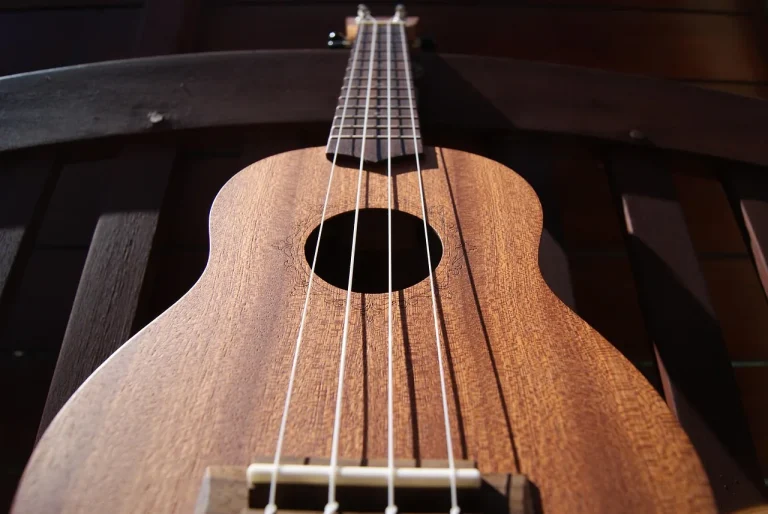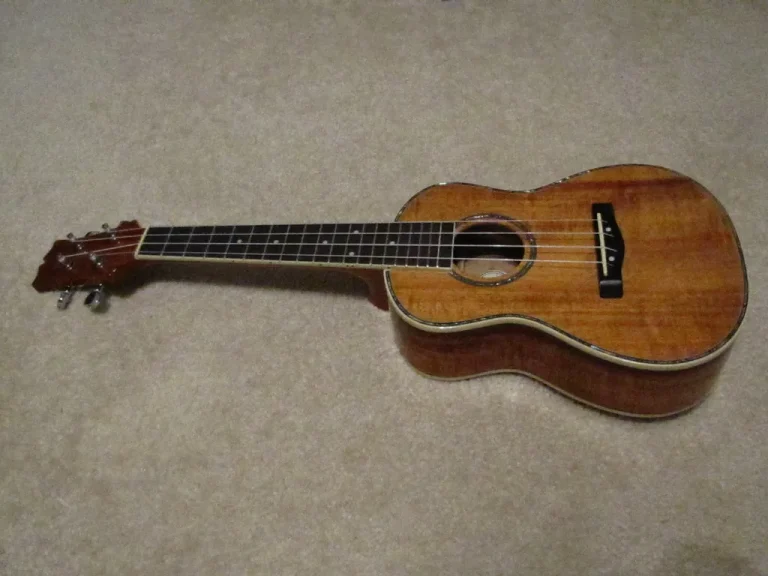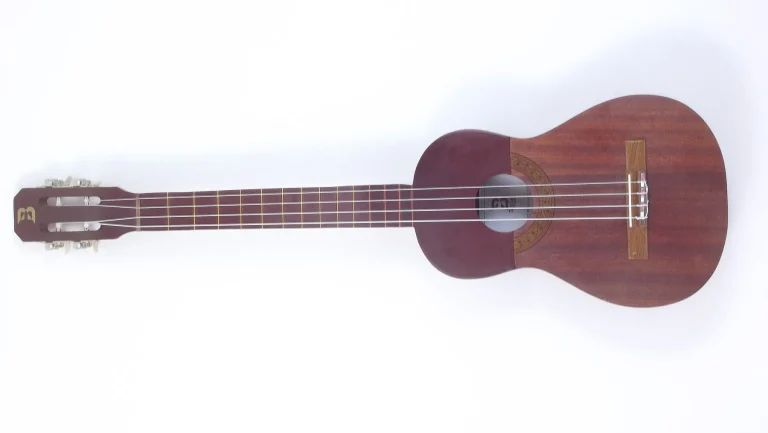
The ukulele is a versatile instrument that can be used to play many songs. Major, minor and seventh chords are the foundation of ukulele music.
To get started, you need to know the basic chords. They are essential for playing simple songs and help you improve your skills.
There are resources for learning these chords. For example, Ukulele Chords offers lessons and exercises for beginners. The main chords are used in 98% of cases.
Major chords suit cheerful songs, while minor chords are better suited to sad songs. Seventh chords are often used in blues or jazz.
Essential Ukulele Basics
The ukulele is a stringed instrument. To play it well, you need to know how to hold and tune it. A ukulele chord diagram or ukulele chord chart helps you see where to place your fingers.
Standard tuning is GCEA. It is the most widely used tuning. A ukulele chord tutorial helps you learn chords and use diagrams.
https://www.youtube.com/watch?v=LrZd6Z-O3f4
Beginners should learn four chords: A minor (Am), F major (F), C major (C) and G major (G). Practise for 15 minutes a day. The Pomodoro technique can help you organise your practice.
Chord diagrams help you play better. A ukulele chord tutorial provides tips and exercises to help beginners progress.
Chart of Essential Ukulele Chords
Learning ukulele chords is essential for playing music. Major and minor chords form the foundation, while seventh chords add a touch of complexity. The chords used appear in 98% of songs played.
There are seven major chords, seven minor chords and seven seventh chords. A chord has three main notes: the root, third and fifth. To learn easily, start with simple chords such as C major, which requires you to place one finger on the 3rd fret of the 1st string.
Essential Major Chords
- C major: place one finger on the 3rd fret of the 1st string
- G major: place your index finger on the 2nd fret of the 3rd string, your ring finger on the 3rd fret of the 2nd string and your middle finger on the 2nd fret of the 1st string
- A major: place your fingers on the 1st fret of the 3rd string and the 2nd fret of the 4th string
Basic Minor Chords
- A minor: place one finger on the 2nd fret of the 4th string
- E minor: place your fingers on the 2nd fret of the 1st string and the 4th fret of the 3rd string
- D minor: place your index finger on the 1st fret of the 2nd string, your middle finger on the 2nd fret of the 4th string and your ring finger on the 2nd fret of the 3rd string

To play the ukulele well, practise regularly. Learn how to tune it, especially to standard tuning. With practice and patience, you will be able to play your favourite songs.
| Chord | Finger placement |
|---|---|
| C major | 3rd fret of the 1st string |
| G major | 2nd fret of the 3rd string, 3rd fret of the 2nd string, 2nd fret of the 1st string |
| A major | 1st fret of the 3rd string, 2nd fret of the 4th string |
Techniques for Changing Between Chords
Changing between chords is essential for playing ukulele chord songs smoothly. Learn to change chords and practise regularly to improve your playing.
You will find useful resources on sites such as apprendre-le-home-studio.fr. They will help you start composing.
To play ukulele chord songs, it is essential to know the main chords. The Chart of Essential Ukulele Chords is a valuable tool for beginners. Here are some examples of chord substitutions:
- Replace G directly with G6, G7, G9 or G13
- Replace A minor directly with Am6, Am7, Am9 or Am13
- A major chord can be replaced with a minor chord with the same root
By applying these techniques, you will play ukulele chord songs more smoothly. Practise regularly to improve.
In conclusion, mastering chord changes lets you play ukulele chord songs smoothly. By learning to change chords and practising regularly, you will become more comfortable and play with greater confidence.
Practical Exercises to Master Your Chords
Practical exercises are essential for learning chords. Get to know the main ukulele chords and their ukulele chord diagrams. Major and minor chords form the foundations of music.
Beginners can start with simple chords such as C, G and F. They are easy to play and help improve dexterity. Practising changes between chords is also essential. Use the main ukulele chords to create simple harmonies.

- Practise regularly to develop your dexterity and coordination
- Use ukulele chord diagrams to understand chords and find their positions on the fretboard
- Listen to music and try playing your favourite songs
By following these tips and practising regularly, you will gain confidence in your playing. Remember to have fun and enjoy learning!
Conclusion: Develop Your Ukulele Playing
To improve your ukulele skills, explore the different types of ukuleles available. Prices range from €70 for a soprano ukulele to €80 for a concert ukulele. Also visit the Ukebox site to discover new ukulele chord tutorials and tips.
With practice and these resources, you will soon learn to play this charming little Hawaiian guitar!