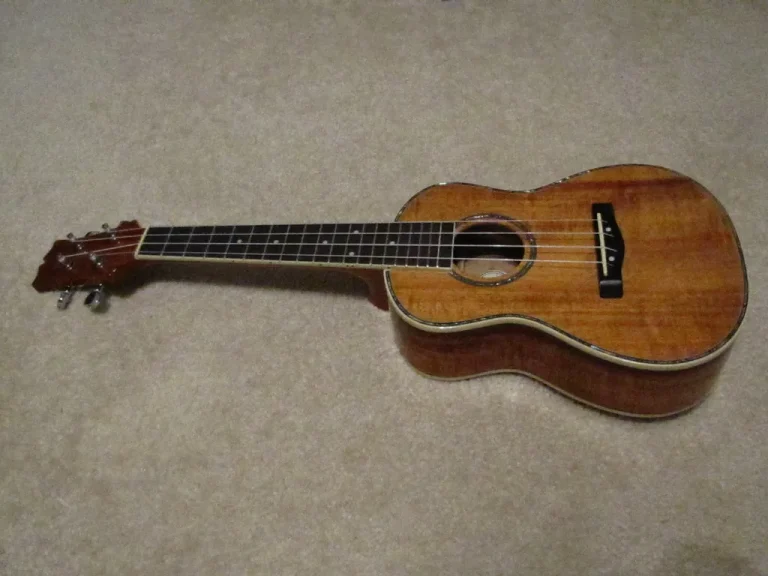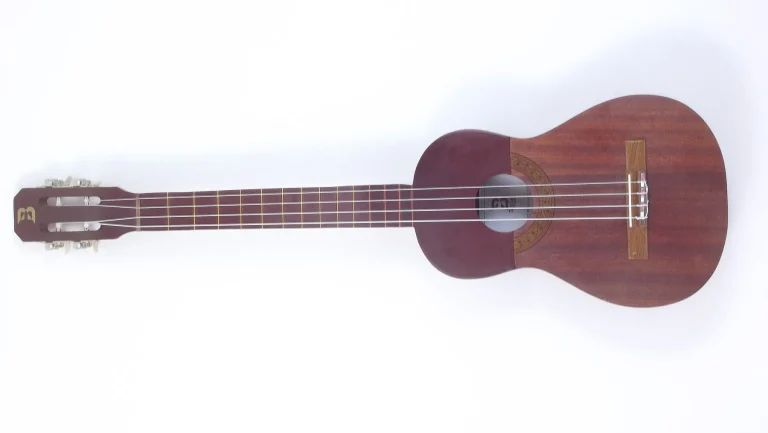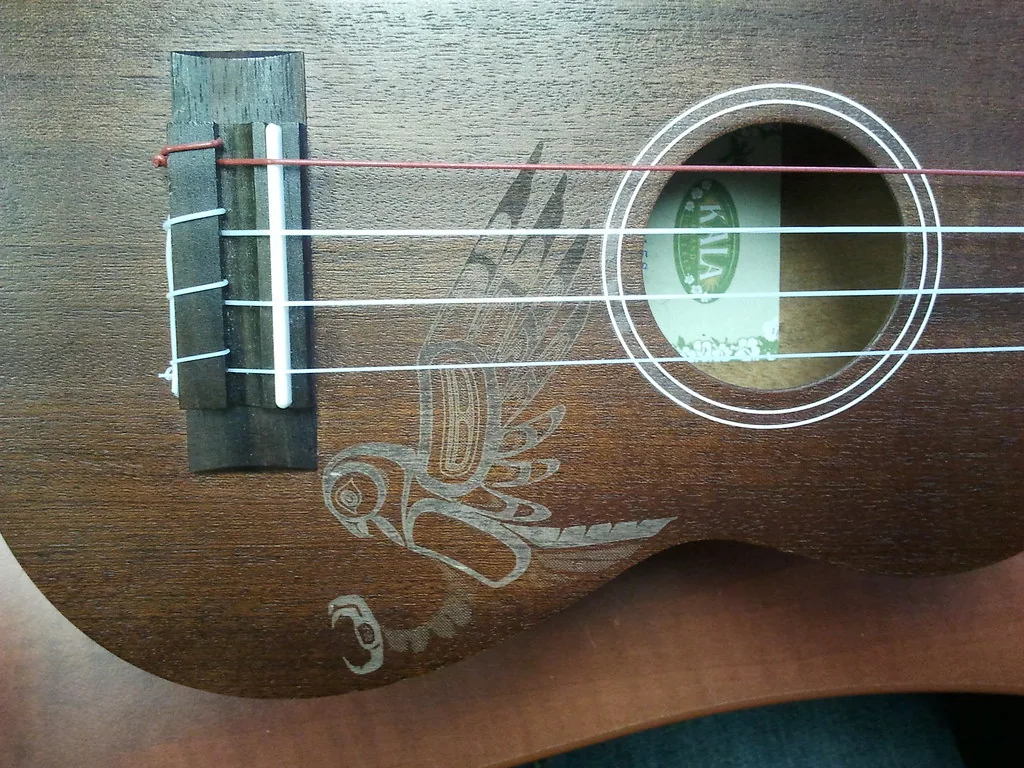
The ukulele is a plucked string instrument. It is tuned G-C-E-A and offers a wide variety of sounds. To play it, you need to know its tuning and learn the basics.
Lessons and chords are essential for understanding the instrument. They help you master the basics of the ukulele.
Beginners can use methods such as mnemonics to memorize the notes. For example, you can use four phrases for the A, E, C and G strings.
You also need to know the distances between notes. For example, the note on the G string is the same as the one on the E string, and the note on the C string is the same as the one on the A string.
With practice, beginners will learn quickly. They will play simple songs using basic chords. Lessons and chords are essential for making progress.
Ukulele basics and standard tuning
The ukulele is a string instrument. It has distinct parts and a standard tuning. Ukulele tablature and online tutorials are useful for beginners. Standard tuning is GCEA, which is ideal for playing many songs.
Quality ukuleles, such as those made from exotic wood, stay in tune longer. Regular ukulele exercises help you improve. Electronic tuners, such as the Snark SN6X, make tuning easier and are affordable.
Baritone ukuleles are tuned DGBE, unlike soprano, concert and tenor models, which are tuned GCEA. Online ukulele tutorials offer advice and exercises to help you improve.
In short, knowing your ukulele and its tuning is essential for playing well. Tablature, tutorials and regular exercises are essential for improving and caring for the instrument.
Learn the notes on the ukulele strings
To play the ukulele, you need to know the notes on its strings. It is important to know where to place your fingers on the fretboard. This helps you produce clear notes. Websites offer useful advice, particularly on using tablature and sheet music.
Tablature is very useful for beginners. You do not need to know how to read music to use it. Programs such as TuxGuitar and MuseScore are popular for creating tablature.
Here are some tips for learning the notes on the ukulele:
- Start with basic chords, such as C and Am (A minor). Each can be played with one finger.
- Use tablature to learn where to place your fingers and to practise playing chords.
- Listen to music played on the ukulele to improve your ear and technique.
Regular practice is essential for improving. Try playing for a few minutes each day to make steady progress.
By following these tips and using the right resources, you will soon learn the ukulele notes. Remember to enjoy learning!
Practical ways to memorize the notes
To play the ukulele well, you need to memorize the notes on its strings. A ukulele guide can be very useful. Learning basic ukulele chords, such as C, G, Am and F, is essential.
There are several ways to memorize the notes. Visualization techniques can be very effective. You can use cards or apps to see the notes on the strings.
Visualization techniques
Visualization techniques help you memorize notes by linking them to images or words. For example, you could associate the note C with a cat or another word beginning with C.
Memorization exercises
Memorization exercises involve playing notes on the strings. Start with the lowest notes and work your way up to the highest.
Learning apps and tools
Many apps and tools can help you learn the ukulele notes. Some offer interactive lessons and exercises to help you improve.
Using these methods and tools will help you memorize the ukulele notes. This will help you make better use of your ukulele guide and master ukulele chords.
Finger positions on the fretboard
Finger placement on the ukulele fretboard is essential for producing clear sounds. You need to know how to place your fingers on the strings. Ukulele lessons and ukulele tablature are very useful for this.
Here are some tips for positioning your fingers:
- Use your thumb for the G string (string 4).
- Use your index finger for the C string (string 3).
- Use your middle finger for the E string (string 2).
- Use your little finger for the A string (string 1).
The left hand moves up and down to strum the strings. Basic chords are easy to learn. They let you play many popular songs. Major and minor chords contain three notes: the root, the third (major or minor) and the fifth.

By following these tips and practising, you will improve your playing. Consult additional resources to develop your musical skills. This will help you play the ukulele fretboard more confidently.
Progressive exercises to master the notes
To improve at the ukulele, you need to practise often. You need to know the notes and their positions on the fretboard. Start by playing one note at a time, then try more complex combinations.
Many online resources can help. For example, this method includes 211 videos and 72 exercise sheets. There are also apps such as Music Crab, with 182 levels for learning the notes.

- Practise often to improve your muscle memory.
- Focus on accuracy and clarity as you play.
- Try different musical styles to develop your skills.
By following these tips and practising, you will play the ukulele better. You will become more confident and accurate.
| Exercise | Level | Goal |
|---|---|---|
| Playing individual notes | Beginner | Understanding the basic notes |
| Note combinations | Intermediate | Developing coordination and accuracy |
| Advanced exercises | Advanced | Mastering complex notes and varied musical styles |
Moving from notes to chords
Once you have learned the notes on the ukulele, it is time to learn chords. They are essential for playing songs. Ukulele tablature is very useful for this because it shows you where to place your fingers.
Understanding the relationship between notes and chords is essential. Chords are combinations of notes that create a particular sound. The first chords to learn are C, G, Am and F. They are simple and used in many songs.
Understanding the relationship between notes and chords
Music theory explains the relationship between notes and chords. Notes are the building blocks of music. Ukulele chords are simpler than guitar chords because the ukulele has four strings. This makes them easier to play.
Essential first chords
Here are some essential chords to learn:
- C chord: very simple and used in many songs.
- G chord: very common and suited to many styles.
- Am chord: creates a melancholy mood and suits emotional songs.
- F chord: a little more complex, but very useful for more advanced songs.
By learning these chords and practising, you will be able to play songs on your ukulele. Use tablature to help you learn and improve.
| Chord | Notes | Tablature |
|---|---|---|
| C chord | C – E – G | 0 – 0 – 0 |
| G chord | G – B – D | 2 – 2 – 2 |
| Am chord | A – C – E | 0 – 1 – 2 |
| F chord | F – A – C | 1 – 3 – 3 |
Common mistakes to avoid
When learning the ukulele, it is essential to avoid certain mistakes. A ukulele guide can help you spot and correct them. Online ukulele lessons offer tips for playing better.
Here are some mistakes to avoid:
- Not warming up properly before playing.
- Not practising regularly.
- Not using strings suited to your playing level.
Frequent practice is essential for improving. Play for at least 15 minutes a day. Include finger exercises and scales. A ukulele guide can help you organize your practice sessions.
By following these tips and using quality ukulele lessons, you will improve your playing. Remember to warm up before playing and practise often to make progress.
| Mistake | Advice |
|---|---|
| Not warming up properly | Do finger exercises for 15 minutes before playing. |
| Not practising regularly | Practise for at least 15 minutes a day. |
| Not using the right strings | Choose strings suited to your playing level. |
Conclusion: improve your ukulele playing
Your ukulele journey is just beginning. The techniques and tips in this article will help you play better. Keep using a metronome to improve your rhythm.
Explore different ukulele chords to expand your repertoire. This will help you master your ukulele technique. Set SMART goals to stay motivated and track your progress.
With practice and perseverance, your skills will improve quickly. Your efforts will lead to better playing. Enjoy making music with your ukulele!