Kalimba de Luna remains an iconic hit of the 1980s, instantly recognizable and still firmly lodged in the collective memory.
This introduction sets out to tell the story of the song’s origins, explain its worldwide success, and compare the covers that increased its fame.
One mystery still intrigues listeners: the name evokes an African instrument, yet the original version does not use one. That contrast invites curiosity and analysis.
The song spread through France and beyond thanks to radio, compilations, and covers. The phrase even appears in popular culture, notably in a description of Youssef Chahine’s film The Sixth Day (1986), evidence of its presence beyond music.
In the sections that follow, we will trace a chronological path through its Italian origins, its lyrics and rhythm, the real kalimba or mbira, and its best-known versions.
Learn more about its spread
Kalimba de Luna: the song’s history and famous renditions
The song blended dance-floor conventions with exotic sounds to win over a broad audience.
Why it remained a hit: a simple chorus, danceable energy, and a recognizable sound. Its mix of disco and world music gives it a distinctive character that is easy to remember.
In France, its reception benefited from a popular-music culture open to international hits of the 1980s. Radio stations and clubs amplified its success.
The power of its rhythm explains its longevity: its structure suits both radio and dance floors. Its mysterious lyrics and exotic sounds create an emotional connection.
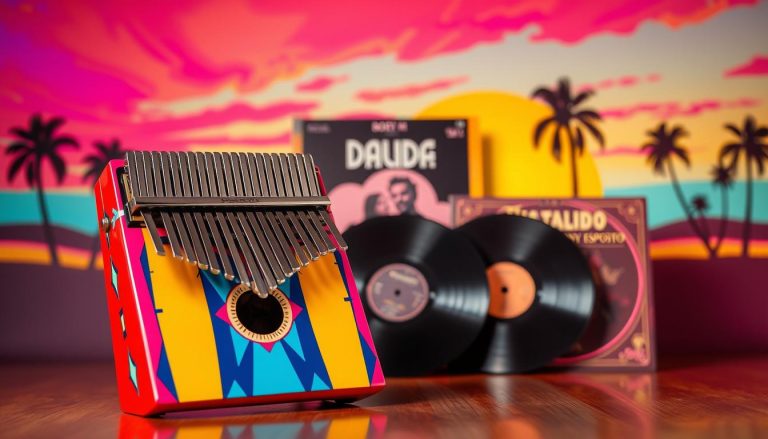
Dalida’s 1984 cover and Boney M.’s 1985 version renewed interest in the song and introduced it to new audiences. We will distinguish the suggestive image of the kalimba from the reality of the original recording.
| Element | Characteristic | Impact |
|---|---|---|
| Chorus | Simple and repetitive | Easy to remember |
| Rhythm | Disco beat | Suited to clubs and radio |
| Reception | France and Europe | Embraced by audiences |
The song’s origins: Tony Esposito and 1980s Italy
Italian studios in the early 1980s were experimenting with sonic textures that would define an era.
Tony Esposito, the percussionist who became an international star: the context and the era
Tony Esposito comes from a percussion-centered musical background. His rhythmic approach shapes the song and makes it instantly danceable.
At the time, Italy was exporting pop that combined tradition and modernity. Esposito drew on that environment to express his sense of groove.
A distinctly disco production: drum machines, brass, and a Roland Jupiter-8 synthesizer
The mechanical beat and brass create disco energy. Layers of synthesizer, including sounds from a Roland Jupiter-8, carry the melody.
The production uses percussion patterns and synthesizer textures to evoke both the club and a sense of escape.
The name as a fictional character: the idea behind the title
The name suggests an imaginary character more than a real instrument. This device enriches the song’s imagery without claiming ethnographic authenticity.
That sonic and marketing strategy suited the era: an evocative name made the song easier to remember.
| Element | Role | Impact |
|---|---|---|
| Percussion | Rhythmic foundation | Keeps the energy up on dance floors |
| Roland Jupiter-8 | Melodic layers | Adds a synth-pop sound |
| Brass | Hook | Emphasizes the disco character |
To learn more about the percussionist and artist and explore his musical world, the linked page offers some useful starting points.
Lyrics, rhythm, and melody: what makes “Kalimba de Luna” unforgettable
The lyrics combine English, Spanish, and Italian to create a sonic texture rather than a clear-cut meaning. This blend gives the song an international feel and emphasizes the musical quality of its syllables.
The famous phrase, often quoted for its mystery, acts as a hook. Even without fully understanding it, audiences remember and sing it.
Vocals and song structure
The voice is rhythmic and chant-like. It serves the groove rather than the storytelling.
Concise verses, repetitive choruses, and subtle variations build energy for both radio and the dance floor.
The rhythm’s DNA
- A steady beat and percussive accents.
- A sense of continuous movement that invites dancing.
- Production that turns the lyrics into an instrumental element.
| Element | Role | Effect on listeners |
|---|---|---|
| Mixed languages | Sonic texture | International identity |
| Vocal hook | Memorable point of reference | Easy to remember |
| Rhythm | Percussive foundation | Longevity |
The kalimba (mbira): the African instrument… absent from the original recording
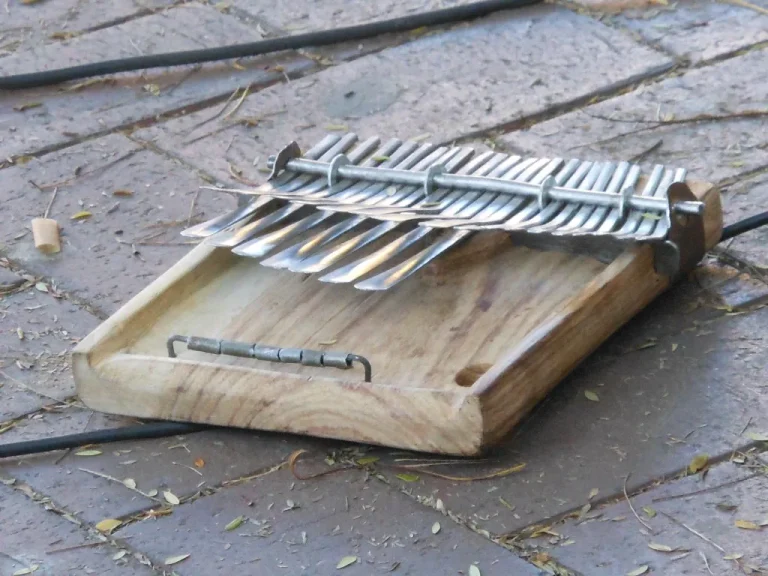
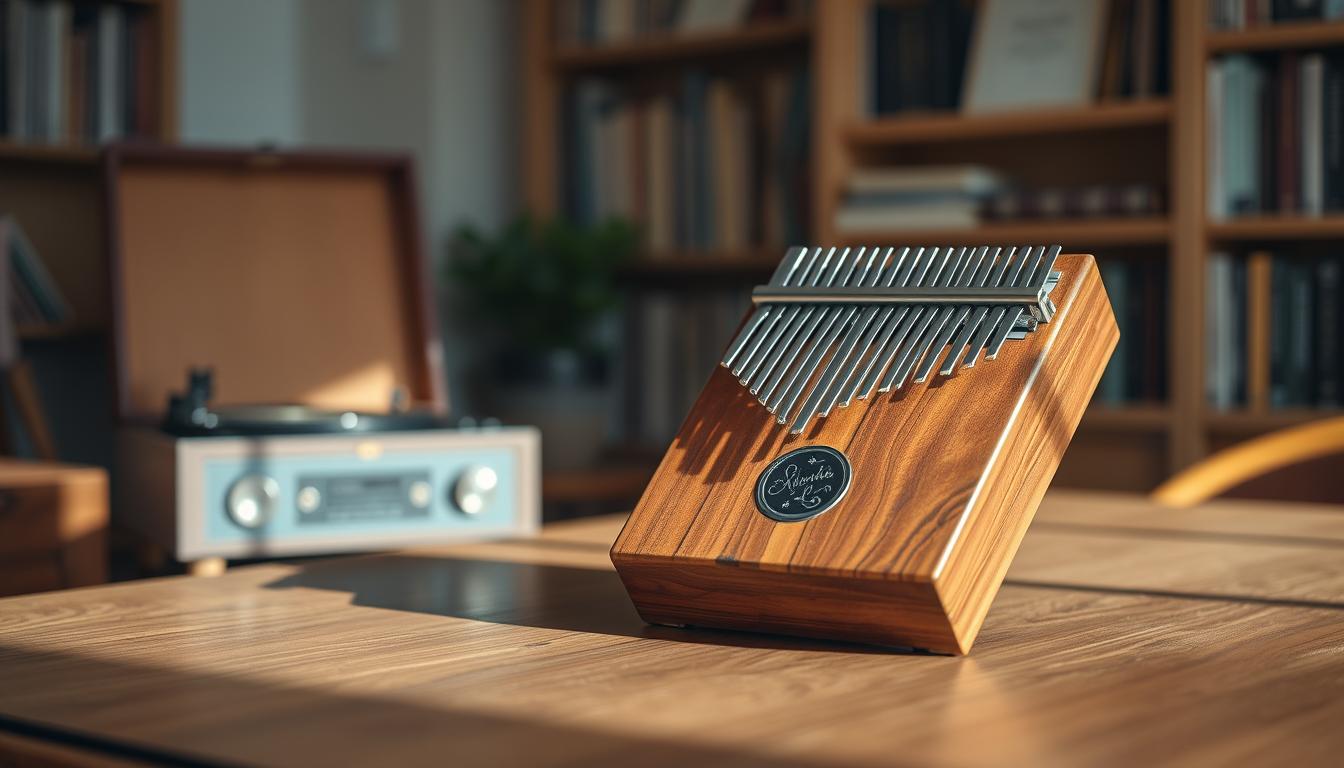
The crystalline sound of the mbira, often called a kalimba in the West, makes it instantly recognizable. It has metal tines that are plucked. Its tone is clear and repetitive.
It holds a central place in Zimbabwean traditions and features in ritual and spiritual repertoires. Its hypnotic sound speaks directly to listeners’ hearts.
Yet the song’s name does not mean that the instrument appears in it. The original version does not use it. Its “world” sound comes more from percussion and production choices than from any direct use of the kalimba.
Where the instrument can actually be heard
Concrete examples show how it has been incorporated into popular music:
- Earth, Wind & Fire — “Evil” (1973): an early use in a mainstream setting.
- Bobby McFerrin — “Kalimba Suite” (2002): a solo exploration.
- April Yang, in her YouTube performances, and Stella Chiweshe: tradition and contemporary reach.
| Element | Role | Example |
|---|---|---|
| Timbre | Crystalline, repetitive sound | Stella Chiweshe |
| Function | Ritual and spiritual | Zimbabwean traditions |
| Modern use | “World” sound or lead melody | Earth, Wind & Fire, McFerrin |
To learn more about the instrument and its uses in pop, visit the section devoted to the kalimba.
Famous renditions and covers: Dalida, Boney M., and other versions
The different versions increased the song’s fame, reaching more audiences in more listening contexts.
Dalida version (1984): songwriters Esposito, Licastro, and Di Franco; running time 4 minutes 39 seconds; Orlando-Carrere label. This version established the song on French playlists.

Dalida: an adaptation for French-speaking audiences
The singer brings a voice closer to mainstream pop. Her diction is tailored to radio. The result is less club-focused and more melodic.
Boney M.: a club-oriented interpretation (1985)
The 1985 version emphasizes dance energy. The beat is more pronounced and the bass is stronger, making it effective on dance floors. It presents a more disco and eurodance side of the song.
Quick comparison
| Element | Dalida (1984) | Boney M. (1985) |
|---|---|---|
| Arrangement | Orchestral, vocals up front | Synthesizers, powerful bass |
| Tempo | Moderate | Faster |
| Impact | Radio, general audiences | Clubs and compilations |
The covers helped the song spread across several languages. Various artists adapted it for their audiences. Each version refreshed the hit and extended its success around the world.
Conclusion
The journey of Tony Esposito’s song illustrates an era rich in experimentation. This 1984 track found a worldwide audience thanks to a simple melody and an infectious rhythm.
The paradox remains: the name evokes a specific instrument, but the production favors percussion and synthesizer textures. That combination helped the song endure.
Dalida’s and Boney M.’s covers show two sides of the hit: radio and mainstream pop on one hand, clubs and dancing on the other. Moving between these settings has prolonged the song’s life.
To compare them, listen to the original and then the covers: you will hear how the performers, arrangements, and production transform the same melody. You can also explore a disco selection in this disco playlist.