Goal: understand this 1980s song as a musical phenomenon, compare its best-known interpretations and explain how to adapt its groove for a simple instrument.
French context: the song has remained a fixture on the radio and on retro compilations. Its dancefloor sound defined a generation and contributed to its worldwide success.
We will compare tempo, groove, the role of the voice and musical intent to distinguish each version. Key dates (1984–1985) and the artists involved will help us avoid vague claims.
Paradox: despite its title, the instrument it names does not appear in the original recording. That mystery adds to the song’s appeal.
Finally, this article offers a practical approach: by the end, you will know how to simplify the melody and capture its disco energy on a small instrument with tines.
For sources and historical details, see the dedicated page.
Why “Kalimba de Luna” remains an 1980s hit in France
A sunlit melody and punchy percussion made this song a staple of retro playlists. It relies on a simple structure, a memorable chorus and a rhythm made for dancing. That formula suited the era and radio audiences perfectly.
Its sound blends disco and world music: prominent percussion, a steady beat and an “international” feel. This emphasis on sounds associated with other parts of the world helped the song spread across radio stations and parties.
Its peak popularity in 1984–1985 also owed much to simultaneous covers by well-known artists. The many versions kept the song firmly in listeners’ memories.
Its multilingual lyrics also work in its favor. Listeners remember the sound of the syllables more than their precise meaning. That enigmatic quality helps the song stand the test of time without sounding dated.
Today, the song still holds a place on retro playlists and at 1980s parties, evidence of its status as a hit and its ability to reach audiences across language barriers.
The song’s origins: Tony Esposito, its creation and the sound of “Kalimba de Luna”
The song grew out of a hybrid rhythmic approach. Tony Esposito contributed as both percussionist and performer, seeking a groove that was carefully crafted yet open to sounds from around the world.
Tony Esposito, the original performer and percussionist
His playing puts rhythm at the heart of the song. He combines percussion, Mediterranean motifs and a beat designed for dancing.
Credits and authorship
The songwriters are Tony Esposito, Mauro Malavasi, Remo Licastro, Giuseppe Amoruso and Gianluigi di Franco. These credits establish who created the song.
The paradox of the name
Surprisingly, the instrument named in the title does not appear in the original recording. The word remains an image, a poetic choice rather than a sound in the arrangement.
Typical 1980s production choices
The production uses drum machines for their steady beat, disco brass for impact and synthesizers for their distinctive sound. The Roland Jupiter-8 contributes to the warm, bright texture that helped the song find an audience worldwide.
| Element | Role | Impact |
|---|---|---|
| Drum machines | Steady beat | Immediate dancefloor appeal |
| Disco brass | Dramatic accents | Melodic force |
| Roland Jupiter-8 | Synthesizer color | Distinctive sound |
Understanding this foundation makes it easier to hear what later artists changed. For more on the 1980s context, read an article about the Italo-disco years.
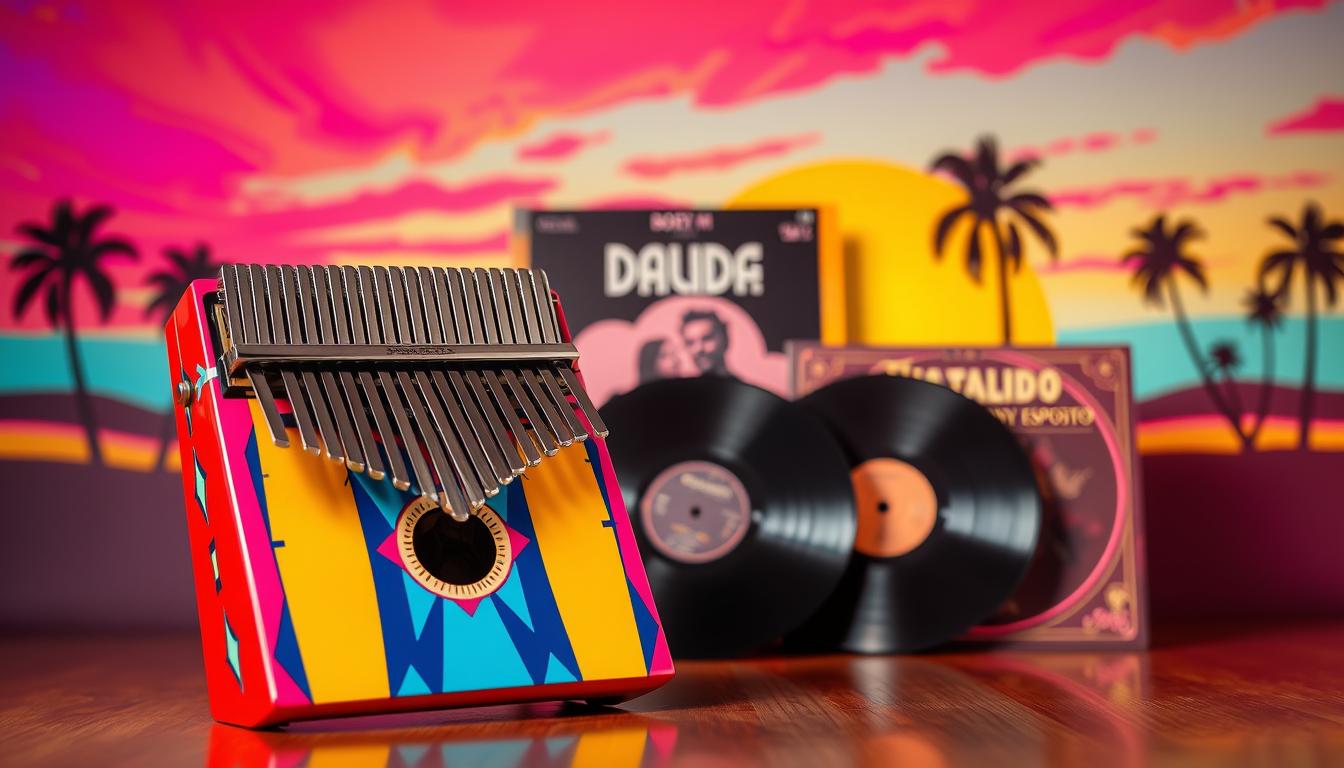
Kalimba de Luna: Boney M, Dalida and Tony Esposito versions on the kalimba
Let’s see how each performer reshaped the same musical material. The original provides the foundation: strong percussion, a disco beat and an energy that carries the song onto the dancefloor.
Tony Esposito’s version: the rhythmic foundation and energy of the song
Tony Esposito establishes the rhythmic framework. Rhythm takes center stage, the beat drives relentlessly forward, and the groove provides a reference point for hearing the other interpretations.
Dalida’s version (1984): key details and vocal character
The 1984 recording runs for 4 minutes 39 seconds. It was released on the Orlando-Carrere label (catalogue no. 13 604) and credits Esposito-Licastro-Di Franco.
Her voice transforms the song: her more theatrical delivery and chanson-style interpretation emphasize the lyrics over the dancefloor.
Boney M’s version (1985): a cover made for dancing
The 1985 version was designed for the club. The arrangement becomes more powerful: drums and brass give the song a more commercial, danceable energy.
Listening comparison: tempo, groove, the role of the voice and musical intent
| Element | Tony Esposito | Dalida (1984) | Boney M (1985) |
|---|---|---|---|
| Tempo | Steady, dancefloor-oriented | Feels slightly slower | Faster and sharper |
| Groove | Percussive; the reference point | More supple, closer to chanson | More pronounced and club-oriented |
| Role of the voice | Prominent and rhythmic | Prominent and dramatic | Supports the dance beat |
| Intent | Rhythmic exoticism | Chanson interpretation | A dancefloor hit |
More recent covers and remixes: when the song is “distorted” or reinvented
In 2017, Raggaïbe & Ragga P released a cover titled “Jumping Up,” followed by remixes by NaXwell, Patricio AMC, Markus D’Ambrosi and Calenzo.
Some critics and fans felt that certain productions overloaded the song, particularly with EDM drops and compression. Only Calenzo’s version received a generally positive response for respecting the original.
To view the dedicated page and listen to the track, follow these links.
Playing “Kalimba de Luna” on the kalimba: capturing the disco rhythm and melody
Playing this song on a small instrument with tines means adapting the groove rather than reproducing it exactly.
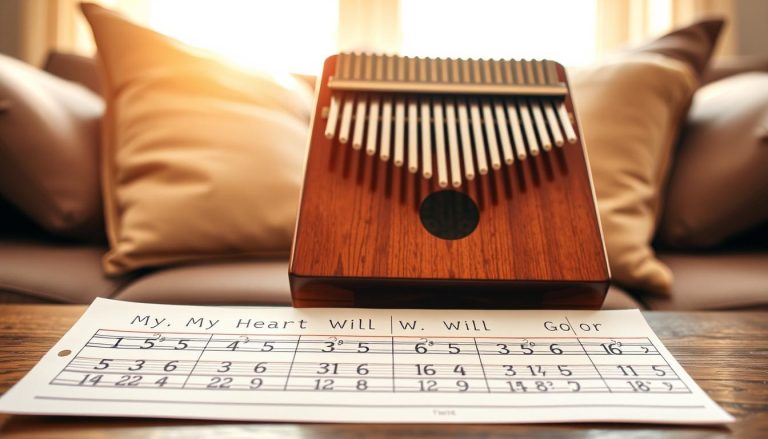
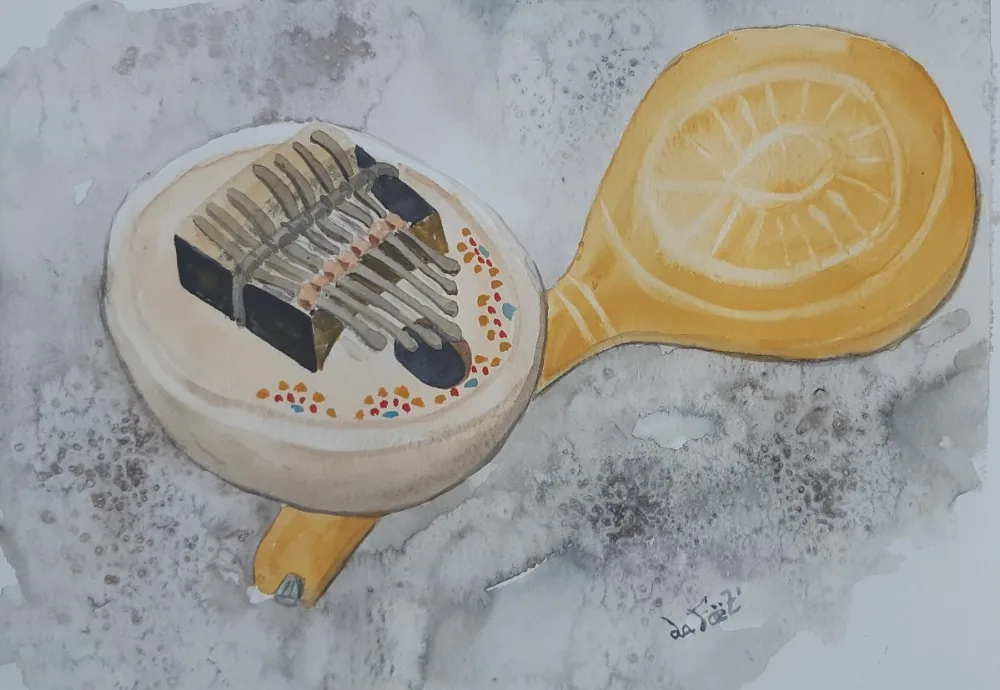
Which instrument should you choose? Choose a 17-tine model to play the pop melody without transposing it. A smaller instrument will work if you transpose the main line.
Adapting the melodic line
Keep the catchy motif: retain the most recognizable phrase and leave out passing notes. Repeat it until it sounds natural.
Practicing the disco beat
Use a metronome and accent the strong beats. Alternate your right and left thumbs to create a supporting bass line beneath the melody.
| Goal | Technique | Effect |
|---|---|---|
| Note range | 17 tines or transposition | More melodic freedom |
| Groove | Beat accents and a metronome | A dancefloor feel |
| Filling out the sound | Double notes and light arpeggios | Fullness without muddiness |
Practice with 1980s playlists, record a short cover and compare the feel rather than the speed. For historical context and resources, consult a dedicated guide.
Conclusion
The history of this song shows how a simple rhythmic motif can endure across decades. The song, born from a strong percussive identity, found new life through notable covers in 1984 and 1985.
It owes its success to an easy-to-remember chorus, intriguing multilingual lyrics and the central role of rhythm. This combination makes the composition timeless and keeps it on playlists years later.
The paradox of the absent instrument named in the title opens the door to free arrangements, including an adaptation for a small instrument. Choose your favorite version according to the effect you want—raw energy, vocal character or dancefloor impact—then listen, experiment and play the catchy motif while keeping the beat at the forefront.