Goal: clarify whether these names describe real differences or simply reflect regional usage.
These thumb pianos belong to the broad family of lamellophones. Mbira, sanza and kalimba share the same playing principle: plucked tines produce notes.
The short answer: sanza often refers to traditional African variants, while kalimba commonly describes a modernized, standardized version. The distinction reflects both history and manufacturing standards.
In this guide, we will cover their shared features, terminology, history, construction, tuning and uses in France.
What you will gain: by the end, you will have practical criteria for choosing according to your budget, experience and intended setting. Key terms to remember: thumb piano, lamellophone, diatonic, hollow and flat.
Understanding the “thumb piano”: what kalimbas and sanzas share
The principle is simple: fixed tines vibrate, and the instrument’s body amplifies the sound. A thumb piano is an idiophone that produces sound without strings or a membrane, simply through the vibration of its tines.
Idiophones and lamellophones: where do the vibrations come from?
Physically, one end of each tine is fixed and the other is free. Plucking a tine makes it vibrate at a particular frequency. The soundboard, made of wood or acrylic, projects and colors the sound.
Tines, soundboard and thumb playing: the shared features
The common elements are straightforward: metal tines, a rigid support and an instrument held in both hands. Playing is done mainly with the thumbs, sometimes with the fingers, and lends itself to repetitive patterns that are easy to remember.
Why these instruments also appeal to beginners and music therapy practitioners
The instrument appeals to players because of its gentle attack and clear visual layout. Beginners progress quickly with simple patterns and scales that often make it easy to avoid wrong notes.
“A gentle tone and minimal movement: a useful tool for relaxation and sound exploration.”
In France, its quiet sound and portability make it an everyday companion. It also has a place in music therapy: repetition, simplicity and a soothing tone can support work in a therapy room.
For more on tuning and tine layout, see this practical guide.
Kalimba or sanza: what are the differences between the two instruments?
The names vary, but the playing technique and mechanics are often the same.
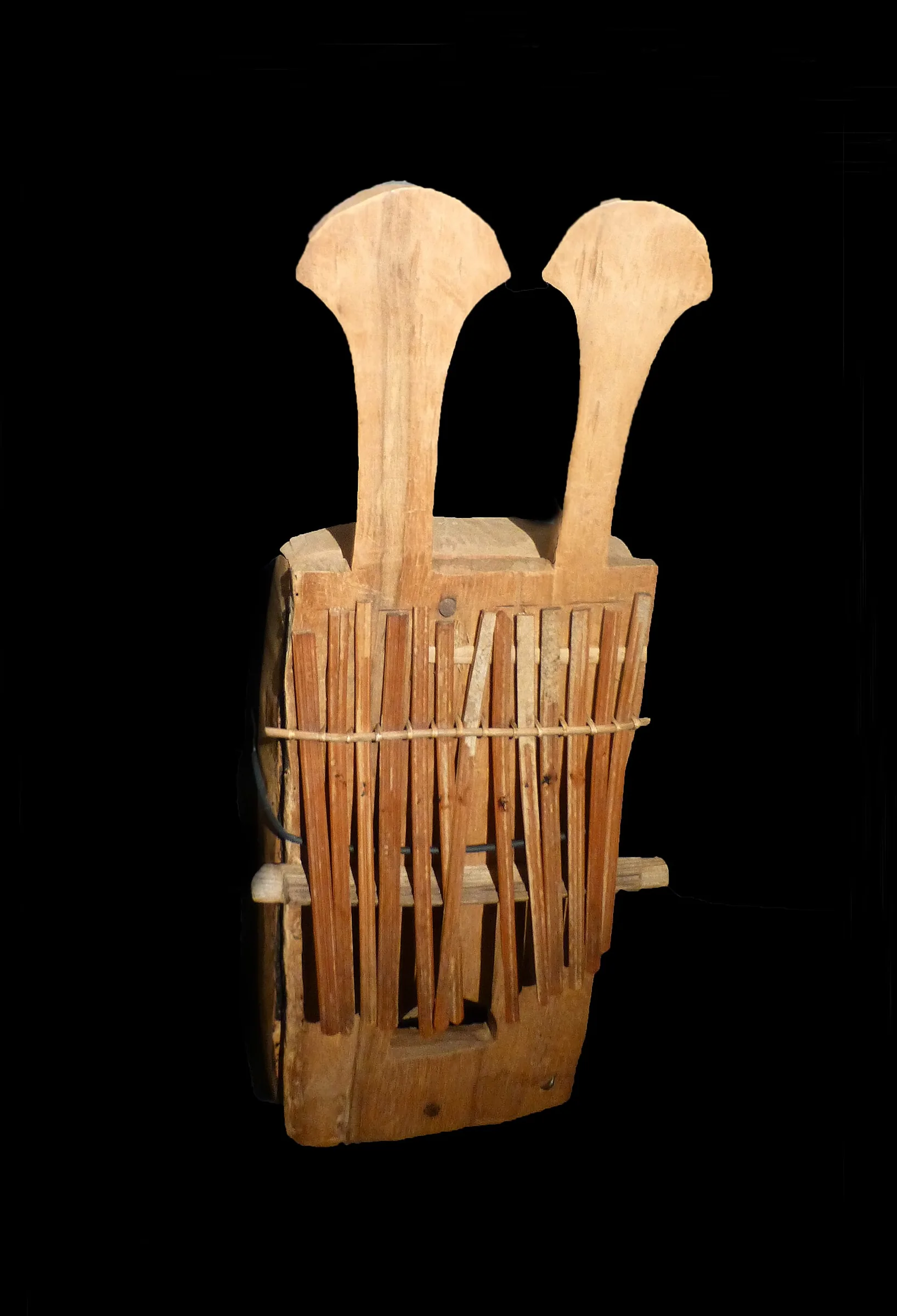
Much of the confusion comes from terminology. Across several regions of Africa, the same instrument has different names: mbira, likembe or sometimes sanza.
The impression that there are substantial differences often comes from marketing and standardization for export. In the West, kalimba has become the common term for modernized, uniform models.
To find your way, start with the specifications: tuning, number of rows, sound effects and intended use.
- Rule of thumb: sanza often refers to a local tradition.
- Rule of thumb: kalimba often refers to standardized versions made for learning and sale.
Sanza, mbira, likembe: one instrument, several names
In online shops, the same model may carry different labels. Do not rely on the name alone.
What really differs today
The practical differences are the tuning, whether diatonic or traditional; the number of rows, one or two; the characteristic ritual “buzz”; and the instrument’s purpose: ceremony, performance or learning.
“Check the construction and tuning before buying; the name is only a clue.”
| Criterion | Traditional version | Modernized version |
|---|---|---|
| Tuning | Not standardized; local tonal systems | Common diatonic tuning, often in C major |
| Rows | Often two rows | Usually one row |
| Sound effects | Buzz, resonators | Clear sound, controlled sustain |
In this guide, we compare context, construction, sound, tuning and uses to look beyond the labels.
Origins and history: from an ancient African instrument to the modern kalimba
This musical heritage spans thousands of years and several regions of Africa.
Roots and ritual role
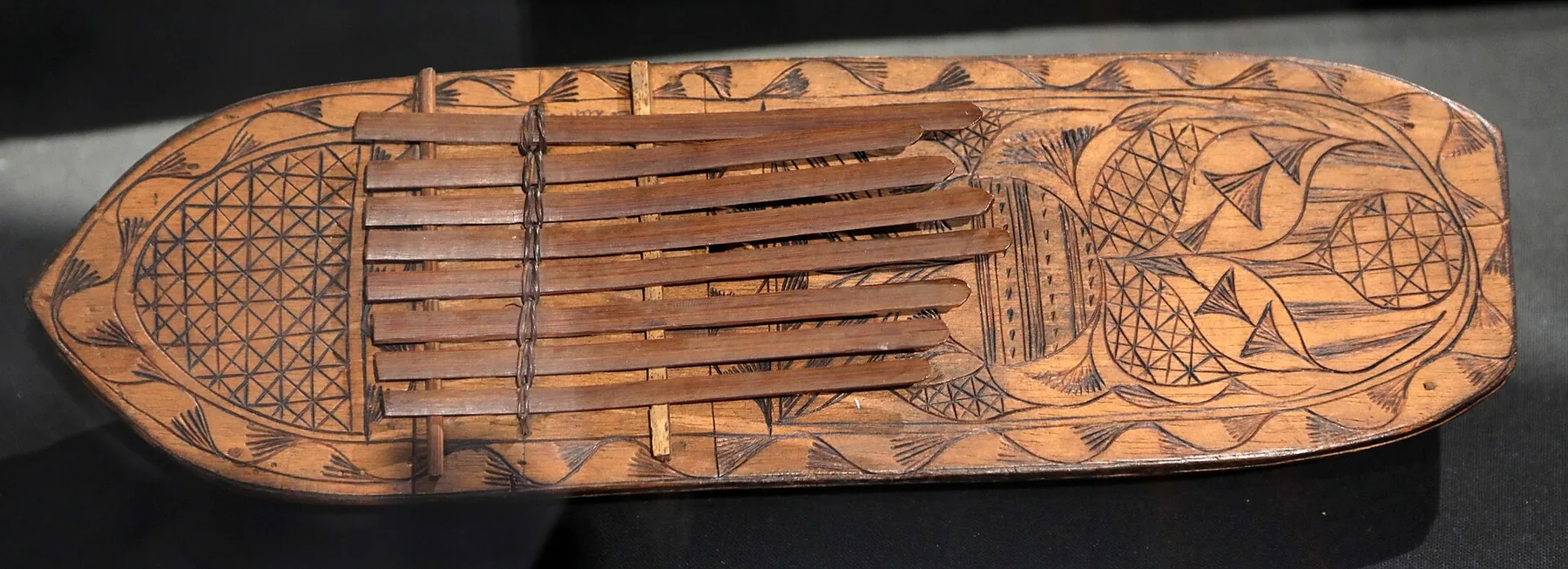
Archaeological traces and traditions suggest that the instrument has existed for more than 3,000 years. Over time, metal tines replaced bamboo ones.
Among the Shona people of Zimbabwe, the mbira has a spiritual role. It serves as a link to ancestors during ceremonies and communal gatherings.
Hugh Tracey’s redesigned version in 1954
In 1954, ethnomusicologist Hugh Tracey popularized a simplified version. This standardized model uses a single row of tines tuned to a diatonic scale, making it easier to learn.
Standardization changes the sound: intervals become more regular, the tone clearer and the possibilities for melody broader.
Innovation: the sansula of 2001
In 2001, Peter Hokema created a hybrid model by mounting the instrument on a membrane. The result is stronger resonance and a more airy sound.
Understanding this history helps distinguish versions by their purpose: ritual, educational or performance use.
Construction and materials: wood, mahogany, metal, acrylic… what difference do they make?
The body material significantly changes how the instrument feels in your hands and how it sounds. Materials affect weight, durability and perceived tone.
Wooden or acrylic bodies: tone, weight and durability
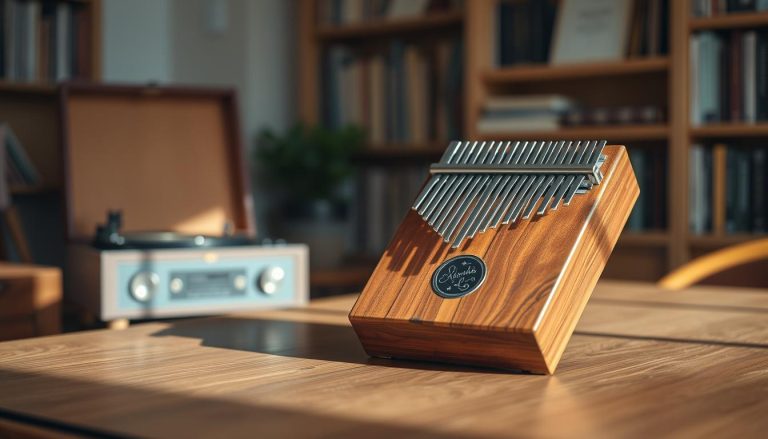
A wooden body offers a warm tone and a comfortable grip. Mahogany is common: a good starting point for beginners, it produces a mellow sound and offers good durability.
Acrylic models sound brighter and are often heavier. They withstand knocks better, but their sound projection can vary.
Tine quality: consistency, playing comfort and stability
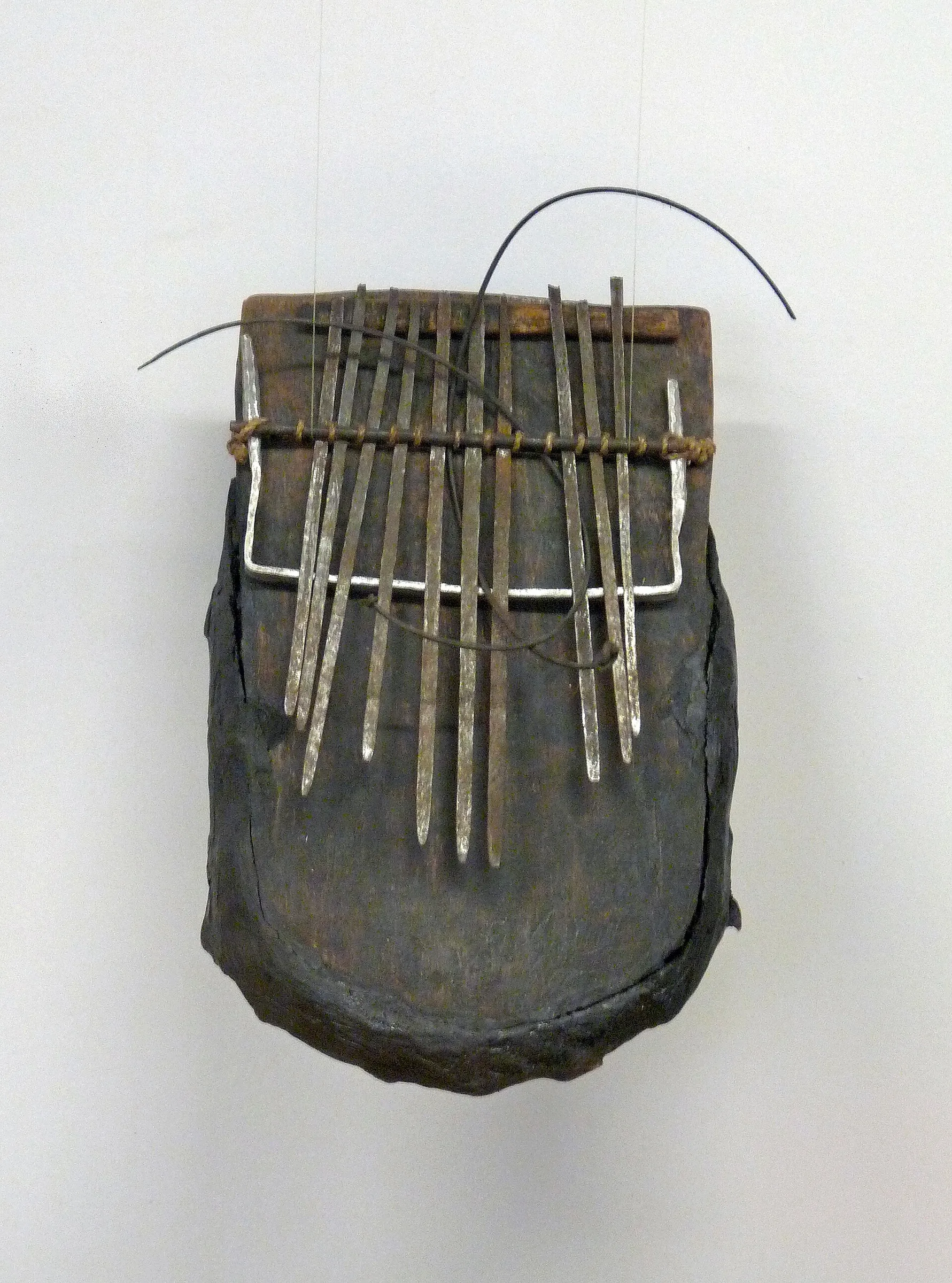
How well the instrument stays in tune depends mainly on the tines. Look for well-made, aligned tines without sharp edges. Good flexibility helps maintain accurate, stable tuning.
Finish and assembly: details that matter when buying
Check the fittings, make sure there are no unwanted vibrations, and inspect the sound holes for clean edges. Rounded edges and careful sanding make the instrument more comfortable to hold.
Buying tip: prioritize build quality: a stable body and consistent tines prevent frustration and help the instrument last.
Resonance box or flat board: volume, resonance and effects
Depending on its construction, the same type of instrument can sound intimate or project across a room.
The main distinction is simple: the box changes volume, projection and sustain. It also affects resonance and how easily the sound fills a room without amplification.
Hollow models: projection and effects
Hollow models have a cavity and sound holes. This construction provides greater projection and longer sustain.
Covering and uncovering the holes creates a “wah-wah” effect. This model suits gatherings, small acoustic stages and outdoor playing, where the sound needs to carry.
Flat models: compact size and recording
Flat models are thin boards. Their sound remains intimate and controlled, making them suitable for close microphone recording and playing at home.
This design favors portability and discretion. For travel, a lightweight wooden body offers a good balance of weight and sound.
“Choose according to how it feels in your hands: comfort and ease of holding matter as much as the specifications.”
| Criterion | Hollow model | Flat model |
|---|---|---|
| Volume | High, with good projection | Low to moderate, intimate |
| Resonance | Long sustain, rich sound | Shorter resonance, precise sound |
| Effects | Possible “wah-wah” effect | Few acoustic effects |
| Recommended use | Stage, outdoors, gatherings | Studio, apartment, travel |
Number of keys and note layout: what really affects playing
The number of keys directly affects what you can play and how you play it. It influences range, chord possibilities and fingering complexity.
The standard 17-key model remains the best balance for beginners. It has enough range for varied melodies and matches most available tutorials and sheet music.
Models with 10 to 15 tines suit beginners. They simplify learning and let you play melodies quickly. Their limitation is a narrower repertoire.
Instruments with 21 or more tines provide richer harmony and more options for advanced arrangements. They require more technique, however, so they suit experienced musicians.
The traditional two-row mbira follows a different logic. Its layout supports polyrhythmic patterns and asks players to learn a distinct set of cultural references.
| Format | Advantage | Limitation |
|---|---|---|
| 10 to 15 tines | Easy learning and quick progress with melodies | Limited repertoire |
| 17 keys | Good balance between ease of learning and repertoire | Fewer harmonic possibilities |
| 21 or more tines | Wide range and rich harmony | More demanding technique |
Tip: start with 17 keys and focus on the central tines at first so you can progress without feeling overwhelmed.
Tuning and scales: Western diatonic scales and traditional African tunings
Tuning shapes the sound and intended use of each model.
Modern version: most models use diatonic tuning, often in C major. This makes learning, reading sheet music and transposing easier.
Traditional version: mbiras and sanzas use tuning systems that are not standardized. Intervals and tonal qualities vary by region. Depending on the local scale, certain notes may be absent, creating a distinctive sound.
How to tune the tines with a hammer
To adjust a tine, tap it gently with a small hammer to change its vibrating length. Shortening that length raises the pitch; lengthening it lowers the pitch.
“Make small adjustments and check each key with a tuner.”
- Practical advice: check the tuning after every journey.
- Use a smartphone tuning app and the small hammer included with a good set.
- Make small adjustments to avoid moving notes too far out of tune.
| Criterion | Modern diatonic tuning | Traditional tuning |
|---|---|---|
| Purpose | Compatibility with songs and sheet music | Local and ritual aesthetics |
| Notes | Complete, transposable scale | Some notes may be absent; distinctive intervals |
| Recommended tool | Tuning app and hammer | Trained ear and fine adjustments |
For detailed instructions, follow this practical guide, which explains tuning and the essential movements step by step.
Sounds and effects: vibrato, “buzz,” membrane… how can you tell the instruments apart by ear?
When listening, a few clues can help you distinguish their sounds.
What to listen for
Listen first to the attack: is it crisp or muted? Then pay attention to brightness and sustain. These clues connect the sound to the construction.
The mbira’s “buzz”
Its signature: a grainy sound created by metal caps and resonators. The buzz adds rhythmic texture that colors the music.
Clear tone and controlled effects
The modernized version has a cleaner tone. Melodies remain distinct, and effects are more controlled, especially on flat models.
The sansula and its membrane
The stretched membrane surrounds the sound and increases resonance. The result is more airy and sustained, ideal for atmospheric music.
“Comparing the same pattern through headphones helps you distinguish the attack, brightness and decay of each note.”
| Clue | Mbira | Modernized version | Sansula |
|---|---|---|---|
| Attack | Pronounced | Clear | Softened |
| Effects | Pronounced buzz | Controlled resonance | Gentle reverberation |
| Body | Often hollow | Flat or hollow | Membrane and frame |
Practical uses in France: relaxation, storytelling, stage, studio and electroacoustic versions
In France, these small tine instruments are used in settings ranging from care to performance.
At home and in a therapy room
For relaxation, their moderate volume is an advantage. Their calm sound can accompany breathing exercises.
In a therapy room, the instrument is used in music therapy to support reflection and sound exploration for children and adults.
Gatherings, storytelling and small stages
A hollow body projects notes more effectively and can accompany a storyteller’s voice. It also allows simple, expressive modulation effects.
At a gathering, the instrument’s ability to fill a room without amplification is a real advantage for the audience.
Studio and amplified stage
In the studio, flat models work well with a close microphone: less overpowering bass, more controlled resonance and a clean recording.
On stage, consider electroacoustic versions with a built-in piezo pickup, an external microphone or a jack output. Reduce feedback by adjusting the instrument’s position and equalization.
To choose according to your needs, whether you are a therapist, storyteller, performing musician or hobbyist, consider the body type, output options and how the instrument feels in your hands. For more information, see these practical resources.
Choosing, pricing and buying: finding good value without making a mistake
A good balance between price and quality is easy to recognize once you know what to look for.
Recommended budget: aim for €30 to €50 for a reliable first purchase. Avoid models under €20: uneven tines, unstable tuning and poor finishes are common at that price.
Useful accessories: a case protects the instrument during travel, a hammer lets you maintain its tuning, stickers mark the notes, and thumb guards can reduce discomfort.
Materials: choose wood or mahogany for a warm tone and a comfortable grip. Choose acrylic if appearance and toughness matter most to you, bearing in mind that it is often heavier.
Quick recommendations by player type
- Beginners: a 17-key wooden model with a good balance of price and quality.
- Travelers: a flat model with a sturdy case; prioritize low weight.
- Experienced musicians: a hollow or electroacoustic model for stage and studio use.
Tip: choose consistent tines and careful assembly over a bundle of inexpensive accessories you do not need.
| Price | What to expect | Risks |
|---|---|---|
| < €20 | Very low cost | Uneven tines, unstable tuning, limited after-sales support |
| €30 to €50 | Reliable entry level | Good value, adequate finish |
| €60 and above | Midrange or premium | Better tuning stability, higher-quality materials, electroacoustic options |
Before buying, check the number of keys, body type, engraved markings, tine stability, reviews and after-sales support. For a more detailed guide to tuning and choosing, see this practical guide.
Conclusion
,In conclusion, the thumb piano’s technical characteristics matter more than its name. In practice, these instruments share the same principle; the meaningful differences are the keys, tines and tuning.
Key criteria: the number of keys, tine layout, body type, whether flat or hollow, and the amount of resonance you want. Check the specifications before buying.
For quick learning, a standardized 17-key version is a straightforward choice. If you want a traditional sound and style, explore two-row models with buzzing effects and local tunings.
Practical advice: check the tuning when your instrument arrives, play for a few minutes each day and let your experience guide your final choice.