2025 buying guide for France: how much does this small instrument really cost, and why do prices vary so much? This article explains the price ranges and shows you how to avoid a bad deal.
There are four main price ranges: under €20, €20 to €50, €50 to €100, and over €100. For each range, we explain what to expect in terms of quality, tines, materials, and accessories.
The aim is to spot misleading offers and provide a simple way to check what comes in the box. A higher price does not always mean better craftsmanship.
By the end, you will have a clear recommendation for your needs—whether you are a beginner, buying for a child, or traveling—and a checklist to use before you buy.
What affects the price of a kalimba?
These are the practical factors that determine a kalimba’s value, from pocket models to chromatic instruments.
Number and type of keys: pocket models with 10 keys or fewer are simple and inexpensive.
The standard 17-key model offers a wide range of music without excessive complexity.
Chromatic models with 24, 34, 42, or more keys are more complex and more expensive.
Body materials: solid wood offers warmth and strength.
A hollow body improves sound projection.
Acrylic (PMMA) emphasizes design and appearance, but it can be heavier and cost differently.
Tine quality: polished steel, carefully rounded edges, and clean finishes affect how the instrument feels and how long notes ring.
Poorly made tines often cause buzzing and unstable tuning.
Included accessories: a tuning hammer, stickers, a case, or an instruction booklet can justify a higher price.
When instrument quality is equal, a useful bundle is often better value than an attractive model sold without accessories.
Brand and quality control: a good brand provides careful finishing, consistent sound, and stable tuning.
Thoughtful design and thorough checks reduce unwelcome surprises when the instrument arrives.
To explore which features matter most for your needs, see this complete beginner’s guide.
Kalimba price ranges in France in 2025: a quick guide
In 2025, a few simple benchmarks show what the main price ranges offer on the French market.
Budget, midrange, and premium: what to expect
Budget (around €20 to €40): a reasonable starting point and acceptable sound, but inconsistent quality control. Finishes may be uneven, and accessories may be limited.
Midrange (around €40 to €80): more consistent quality, more complete bundles, and a more comfortable playing experience. This is often the best balance of enjoyment and price for beginners.
Premium (€80 and up): finer materials, more stable tuning, careful finishing, and options such as pickups and professional accessories. Some specialized models cost over €200.
Why a more expensive model is not always better
A high price does not guarantee that an instrument will suit your needs. An expensive model may arrive out of tune or be inconvenient for travel.
Ask yourself the right question: are you buying a kalimba to learn quickly, play occasionally, or meet a specific musical need? The right choice depends on your answer.
| Price range | What you get | Recommended for | Example |
|---|---|---|---|
| €20 to €40 | Acceptable sound, variable finishing, few accessories | Curious buyers, gifts, and first attempts | Basic bundle |
| €40 to €80 | Good quality, complete bundle, comfortable playing | Motivated beginners and hobbyists | Recommended complete bundle |
| €80 and up | Fine materials, stability, professional options | Enthusiasts and musicians | Branded instrument |
Kalimba prices: price ranges, brands, and pitfalls of the cheapest models
A good purchase starts with a few quick checks: wood, tines, accessories, and customer reviews.
Warning signs before you pay
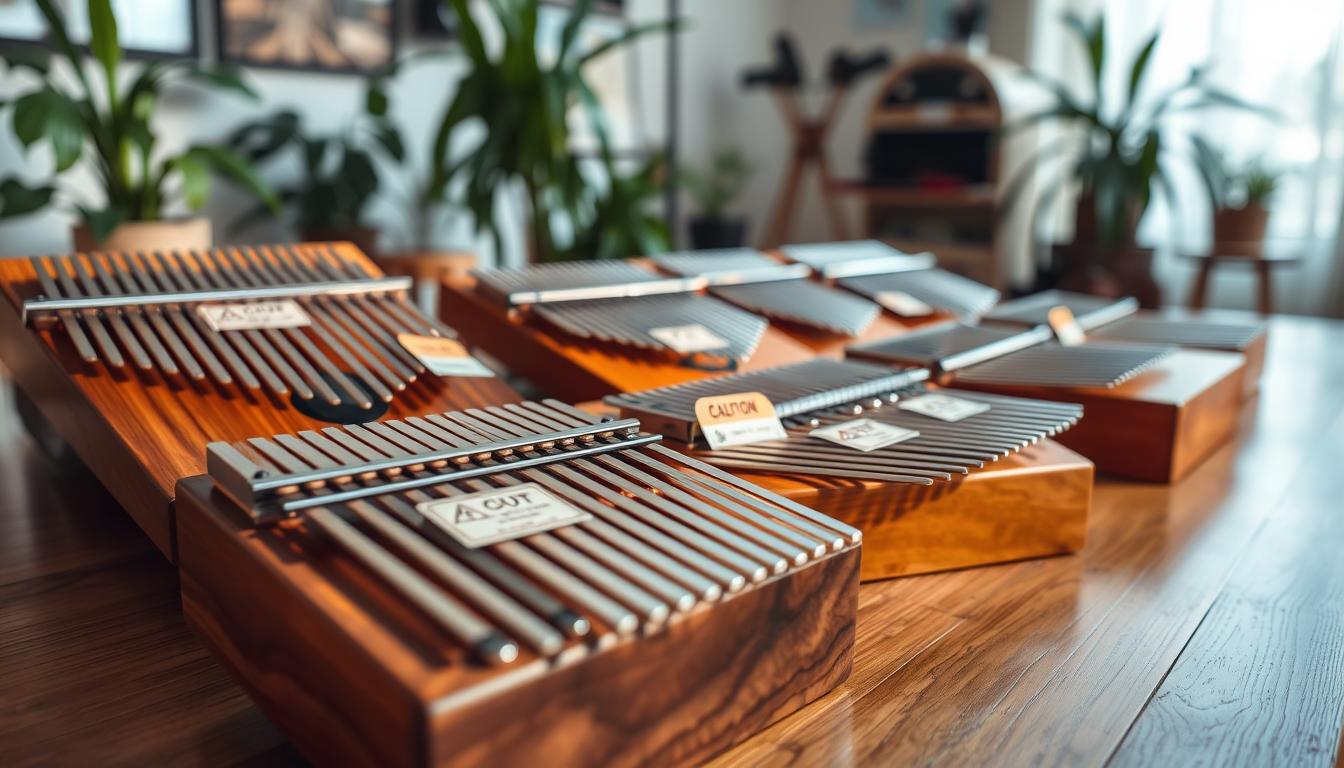
Pre-purchase checklist: check the type and finish of the wood, the consistency of the tines, whether a tuning hammer and case are included, and whether the photos match the description.
- Wood that is too thin or unfinished: risk of damage.
- Tines with sharp edges or poor polishing: risk of buzzing and muted notes.
- Missing accessories: additional costs later.
- Studio photos without detailed views: be cautious about how the product really looks.
Common mistakes when buying your first instrument
Many buyers choose a model that is too small for the music they want to play. The result is frustration and limited musical possibilities.
Buying a chromatic model too early makes learning more difficult. It is better to master the basics before adding more tines.
Pay attention to tuning, too: confusing the key of C with the ability to play particular songs often leads to disappointment.
“Look for reviews that mention how well the instrument is tuned on arrival and whether it stays in tune over time.”
Simple rule: a reliable 17-key model with accessories is better than an appealing ready-made kit with poor quality control. For a closer look at choosing for your needs, read our complete beginner’s guide.
Under €20: when this budget makes sense
With less than €20, you are mainly looking at very compact pocket models, ideal for trying the instrument without a major commitment. This budget works if your aim is to discover the kalimba or give it as a small gift.
Pocket kalimbas: 10 tines or fewer
These models often have only a few notes. They are convenient for travel and occasional use.
Common compromises
Expect basic wood, no accessories, and sometimes unreliable tuning. Poorly finished tines can reduce sustain.
Who is this size for?
It suits an introductory gift, a curious player, or occasional use by a child with adult supervision.
Tip: choose a seller with easy returns and recent reviews. For serious learning, a 17-key model is generally better value and more reliable.
€20 to €50: the sweet spot for getting started
This price range often offers the best balance for starting to play without spending too much.
Why choose this range? It can buy a reliable 17-key model that is versatile enough to learn quickly and enjoy playing.
The best balance of enjoyment and price for beginners
Look for a bundle with a tuning hammer, stickers, a songbook, and a case. These accessories make learning easier and avoid extra costs.
17 tines: the easiest standard format for learning
The 17-key format covers a wide range of music. There are many methods and videos for beginners, making progress quick and rewarding.
Wood and entry-level acrylic models
At this price, you can find bodies made of mahogany, acacia, pine, beech, or walnut. The type of wood changes the feel and appearance, without magically transforming the sound.
Acrylic (PMMA) models are also available: they look modern, weigh more, and scratch more easily.
“Check that the instrument stays in tune, the tines do not buzz, and their edges are rounded.”
| Budget | What to expect | Advice |
|---|---|---|
| €20 to €50 | 17 keys, basic bundle, useful accessories | Choose a complete bundle instead of a bare instrument |
| Materials | Mahogany, acacia, pine, beech, walnut, acrylic | Choose according to feel and appearance |
| Criteria | Tuning stability, tine finishing, customer reviews | Prioritize detailed reviews |
€50 to €100: aim for quality and a recognized brand
Moving into the €50 to €100 range often gets you a reliable instrument for playing and recording.
In practical terms, the tines feel better, the finishing is cleaner, and the sound is more consistent.
Tuning becomes more stable, reducing the need for adjustments and increasing the enjoyment of playing.
Brands and options to consider
- Brands: Gecko and Lingting are often mentioned for their attention to quality control.
- Accessories: a reinforced case, maintenance kit, spare parts, and more detailed instructions.
- Piezo pickup: useful for connecting the instrument to an amplifier or audio interface and recording music without relying on the resonator box.
Keep in mind: chromatic models generally cost more than this. If you want maximum versatility, plan for a higher budget.
A simple rule: paying “a little more” makes sense if it brings better tuning stability and playing comfort.
Over €100: luxury, passion, or a specific musical need
Above €100, kalimbas are often aimed at demanding enthusiasts or professionals. You are mainly paying for better finishing, finer materials, and consistent sound over time.
Premium branded kalimbas
A recognized brand offers quality control, after-sales service, and spare parts. That can mean a longer-lasting instrument and fewer surprises on arrival.
Chromatic kalimbas: 24, 34, 42 tines, and more
Chromatic models add tines and keys. They provide more harmonic possibilities for arranging and recording, but require more adjustment and experience.
Why this format is not recommended for a first purchase
If you are just starting out, avoid spending too much. Begin with a reliable 17-key model. Make sure you enjoy the instrument before upgrading.
Tip: check the brand’s reputation, the availability of after-sales support, and user reviews before buying.
- Who it is for: experienced musicians, recording artists, and collectors.
- Approach: try the instrument, then upgrade if necessary.
- Price guide: spending more than €200 may be worthwhile if the warranty and support justify it.
Wood, acrylic, and bamboo: effects on sound and budget
The material changes how the instrument resonates under your fingers.
Overall effect: the material influences warmth, clarity, and sustain. The tines remain crucial, but the body strongly colors how you perceive the sound.
Mahogany: a warm, rounded sound and good resonance. It is often an affordable choice that adds pleasing depth without a large extra cost.
Maple and acacia
Maple produces a clearer, brighter sound; acacia balances warmth and definition. Both woods are usually mid-priced.
Walnut and zebrawood
These woods stand out for their grain and premium feel. They cost more because of their relative rarity and finishing.
Acrylic
Its glass-like appearance is appealing. Acrylic is heavier, scratches easily, and can cost more than a comparable wooden body.
Bamboo and plywood
These are economical options. They have a clear attack, but often shorter sustain. They suit travel better than recording.
Listen to video comparisons, then choose according to where you will play: at home, while traveling, or in a studio.
| Material | Sound characteristics | Typical cost |
|---|---|---|
| Mahogany | Warmth, good sustain | Low to medium |
| Maple | Clear, bright | Medium |
| Acacia | Balanced, versatile | Medium |
| Walnut and zebrawood | Distinctive appearance, rich sound | High |
| Acrylic | Modern appearance, heavy, prone to scratches | Variable, often higher |
| Bamboo and plywood | Affordable, limited sustain | Low |
Solid body or resonator box: how to choose for your needs
Body construction changes how the keys respond and how the sound projects.
Solid-body kalimba: compact and sturdy
A solid block is very sturdy. It remains compact, making it ideal for travel and quiet, personal playing.
The sound is drier, with a more distinct attack. The keys are often close together, which makes some arpeggios easier.
Hollow body with a sound hole: volume and projection
A hollow body amplifies the sound. Greater projection is useful when playing for a small group or outdoors.
The quality of the body affects the warmth of the tone more than the key material does.
Rear holes and sound effects
Rear openings let you produce vibrato or wah effects by changing your hand position. They are fun, but not essential for accurate pitch.
“Focus on build quality first, then choose the body style for how you plan to use the instrument.”
Tip: for relaxing at home, prioritize a consistent sound. For performing, prioritize projection and finishing. For more help choosing your first instrument, read our guide.
How many keys should you buy to learn quickly?
Choosing the right tine layout makes tutorials and sheet music easier to use.
5 to 6 tines: a very simple format for learning how the instrument works. Ideal for a quick trial or a child. The range is very limited, so you will mainly play short melodies.
17 keys: the best balance for beginners. This format covers many songs, has plenty of tutorials, and makes learning straightforward. The fingering is accessible, so playing becomes enjoyable quickly.
More than 20 tines: these models offer more harmonic possibilities but demand more memory and precision. They often need better craftsmanship to avoid problems with pitch and sustain.
Tip: choose the format based on the music you want to play. A small model is enough for simple melodies. For richer arrangements, aim for 17 keys or more.
Example: a 17-key diatonic model remains a dependable choice for progressing without unnecessary complexity.
Tuning and keys: avoid surprises when your kalimba arrives
The initial key determines what you can play without retuning the instrument. Check its tuning as soon as it arrives to avoid hours of unnecessary adjustments.
Why is C so common?
C has become a standard because it makes learning easier. It lets you follow many piano scores and beginner methods.
In practice, most tutorials use this scale, making it easier to progress quickly.
Diatonic and chromatic: the piano analogy
A diatonic kalimba is like the white keys of a piano. It covers a scale without sharps or flats.
A chromatic model adds the equivalent of the black keys. It offers more possibilities but is harder to learn.
In practical terms, a diatonic model can play plenty of simple music. Sharps, flats, and some melodies require a chromatic model.
Using a tuning hammer: how it works and what to watch for
The principle is simple: gently tapping a tine changes the length of its vibrating section.
Use a suitable hammer and check the pitch with a tuning app if necessary. The term tuning hammer refers specifically to this tool.
- Tap gently to raise the pitch.
- Pushing the tine inward lowers the pitch.
- Check each note again after a few hours.
“Work gradually: a strike that is too hard can bend a tine.”
| Action | Effect on the note | Advice |
|---|---|---|
| Tap toward the tip | Raises the pitch | Use small taps and check with a tuner |
| Push at the base | Lowers the pitch | Adjust in small steps |
| Check regularly | Confirms stability after adjustment | Check after travel or temperature changes |
Recommended routine: check the tuning when the instrument arrives, then again after 24 to 72 hours. Check the same notes regularly if you carry it around.
Accessories that justify a slightly higher price
Spending a little more on a complete bundle avoids separate purchases and improves your experience from the day it arrives.
Tuning hammer: essential in the long run
The hammer lets you correct the pitch quickly when notes drift out of tune over time.
On an instrument used frequently, regular tuning can help keep it enjoyable to play for longer.
Note stickers: learn faster
Stickers provide visual guides. They help you remember where the tines are and follow tutorials.
Tip: remove them as you improve to restore the instrument’s original appearance.
Case or pouch: protection and transport
A sturdy case protects the instrument from knocks, dust, and drops while traveling.
At home, it also protects the instrument in storage and can reduce the need for adjustments.
Rule of thumb: paying “a little more” for a bundle with accessories often costs less than buying them separately.
Check before buying: confirm the list of included items using the photos and description. A good seller clearly shows the hammer, stickers, and case.
| Accessory | Purpose | Why it is worth the cost |
|---|---|---|
| Hammer | Tuning | Helps keep the instrument usable and avoids repair costs |
| Stickers | Visual guides | Speed up learning and can be removed |
| Pouch or case | Protection | Makes transport and storage easier and protects against knocks |
Pitfalls of the cheapest models: what to check before buying
Before you buy, learn to recognize signs of poor finishing or tuning.
Why some inexpensive models disappoint: loose manufacturing tolerances, inconsistent quality control, and questionable decorative treatments.
Painted or coated tines: when appearance harms playability
Varnish or paint on the tines can interfere with their vibration. The feel becomes less lively, and sustain decreases.
Buzzing, muted notes, and sharp edges
Watch for these problems as soon as the instrument arrives: buzzing, notes that lack clarity, misaligned tines, or sharp edges.
Play every note individually and carefully feel along the edges to check the finishing.
Misleading photos and ready-made kits
An attractive box does not guarantee quality. Highly decorated bundles sometimes hide a mediocre instrument.
Counterfeits and fake brands
Choose an official seller, ask for proof of authenticity, and check the returns policy. Be wary of unusually cheap offers.
How to read reviews carefully
Look for comments on tuning, buzzing, and after-sales service. Detailed reviews with photos are more useful than overall ratings.
“If you spot two or three warning signs, look elsewhere, even if the price is tempting.”
| Warning sign | What it may mean | Action |
|---|---|---|
| Buzzing | Problem with how the tines were made | Request a replacement or refund |
| Muted notes | Coating or poor attachment | Reject the item or negotiate |
| Studio photos without details | Risk of a misleading appearance | Ask for real photos or read customer reviews |
| Very low price for a known brand | Possible counterfeit | Check the official seller and warranty |
Where to buy in France: specialist shop, marketplace, or online retailer
Where you buy often affects after-sales support and product reliability. Choosing between a physical shop, an official website, and a marketplace affects the advice you receive, return times, and protection against counterfeits.
Benefits of trusted shops and certified brands
Specialist shops offer advice, quality checks, and responsive after-sales service. A certified brand such as Gecko reduces the risk of counterfeits and makes spare parts easier to find.
Tip: choose a seller who clearly shows what is in the box and promises after-sales support.
When is a marketplace useful?
Marketplaces often offer a wide selection and discounts. They are useful for comparing several offers quickly.
Avoid opaque third-party sellers, vague product listings, and unusually attractive prices without real photos.
How to compare price and bundle contents
Compare both the price and what is included: tuning hammer, case, stickers, and booklet. A small extra cost may be worthwhile if it means you are not buying a bare instrument.
| Criterion | What to check | Action |
|---|---|---|
| Contents | Hammer, case, stickers, booklet | Check the photos and description |
| Terms of sale | Returns and warranty | Prefer free returns within 14 to 30 days |
| Reviews | Consistency of reviews | Compare platforms, forums, and videos |
Always check that the advertised price, bundle contents, and reviews agree before completing your purchase.
Which kalimba suits you: beginner, child, or traveler?
Your choice depends mainly on how you will use the instrument and how much time you plan to spend with it.
Beginners
Keep it simple: a 17-key diatonic model tuned to C makes learning easier.
Choose a bundle with a hammer and stickers. These accessories help you keep the instrument in tune.
Look for tines that feel comfortable so you can play for longer without fatigue.
Children
Prioritize durability: choose a simple model with rounded edges and a case. An inexpensive model is often suitable.
Check that the finishing is safe. The instrument should withstand handling and remain pleasant to play.
Travel
Pocket size and protection: choose a solid or compact body that better resists knocks.
A shoulder case helps protect the tuning. If you want to save space, a small model is enough.
Quick guide: occasional use: a small budget; serious learning: €20 to €50; higher sound expectations: €50 to €100.
Possible uses: relaxation, meditation, and short melodies. Progress at your own pace, then upgrade if needed.
Conclusion
To make the right choice, first decide how you will use the instrument, then set your budget. The price depends mainly on the format, materials, tine quality, and included accessories.
Recommended starting budget: €20 to €50 for a 17-key model sold as a bundle. This range provides a reliable starting point and limits the risks while you learn.
Increase your budget if you want better quality, a recognized brand, stable tuning, or professional options such as a pickup and premium finishing. For example, the €50 to €100 range can meet these needs.
The main risks to avoid are counterfeits, misleading kits, poorly finished tines, and unstable tuning. Check the photos, reviews, and returns policy before buying.
Short checklist: define how you will use it; choose a price range; check the bundle, reviews, and returns policy; compare appearance and sound. The goal is to find a reliable instrument that makes you want to keep playing and enrich your music, rather than make an impulse purchase.