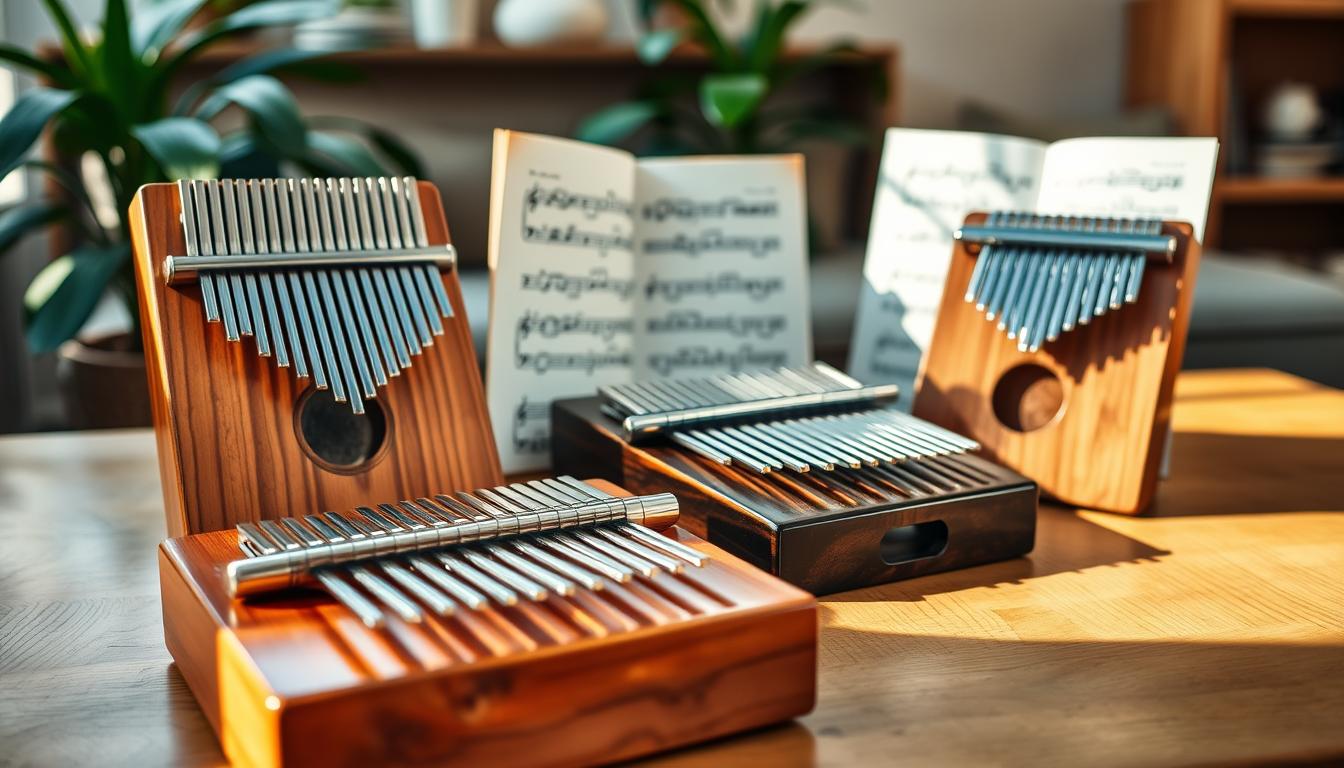
Welcome to this practical guide designed to help you make the right choice before buying. The French market offers a wide variety of models; there is no universally “best” instrument. The right model depends mainly on your goals, experience, and budget.
We will establish a simple framework to help you avoid buying a gadget that ends up in a cupboard. You will find the criteria that really matter: number of tines, tuning, materials, resonator box, build quality, accessories, brands, and budget.
Our promise: a clear way to compare models without unnecessary jargon, while remaining precise about tuning accuracy, resonance, and ergonomics.
Key idea: a good instrument keeps you motivated with a pleasing sound, comfortable playing, and an accessible repertoire. This guide will help you check your choice before ordering.
Why there is no universally “best kalimba”
The right choice depends on how you will use it: for relaxation, musical progress, or simply enjoying its sound.
Before deciding, define your goal. Are you looking for an instrument for ten minutes of relaxation in the evening, a serious learning tool, a gift, or a secondary instrument?
Each model strikes a different balance between volume, weight, simplicity, and repertoire. That balance changes the experience. What appeals to a musician may frustrate a beginner.
Beginners, relaxation, or musical progress: clarify your playing goals
For beginners, ease of learning matters greatly. A common format gives you access to more tutorials and sheet music. Teenagers and adults often progress faster with a standard format than with an unusual model for which online resources are scarce.
Also consider how comfortable it is to hold. An instrument that is too heavy or awkward reduces practice time and motivation.
What really changes the experience: sound, comfort, repertoire, and motivation
Motivation often rests on three things: a rewarding sound from the first notes, comfort that prevents tension, and accessible learning resources.
- Sound: sustain, warmth, and volume affect your desire to play.
- Comfort: width, edges, and access to the tines are essential.
- Repertoire: the more common the format, the more resources are available.
| Goal | Priority | Benefit | Example |
|---|---|---|---|
| Relaxation | Comfort, gentle sound | Easy to handle and lightweight | Occasional evening playing |
| Musical progress | Repertoire, stable tuning | Access to tutorials and sheet music | Standard format recommended |
| Gift or secondary instrument | Price, durability | Simple to use, little maintenance | Budget model or beginner bundle |
To learn more, read a beginner’s guide, or compare options and prices in this practical article on prices and choices.
Which kalimba should you buy? Quality criteria and mistakes to avoid
Choosing your instrument starts with separating what matters from what is superficial.
Here are the main criteria to check before buying:
- Number of tines: affects your repertoire and ease of use.
- Tuning: stability and accurate notes from the outset.
- Material: wood is lighter; acrylic is heavier and sounds brighter.
- Body: a hollow model provides more volume; a flat model is useful for travel.
- Tine quality: affects feel and how long notes ring.
- Ergonomics: width, edges, and comfort under your thumbs.
- Accessories: a tuning hammer and case included.
Common mistakes that lead people to give up
Marketing versus reality: an attractive design cannot make up for an instrument that is too heavy or poorly tuned.
Common pitfalls include too many tines (21 or more for a beginner), very cheap models with poor tuning accuracy, heavy acrylic instruments, and buying without a tuning hammer.
| Situation | Priority | What to choose |
|---|---|---|
| I want to improve | Stability and repertoire | 17 tines, wood, reliable tuning |
| Playing to relax | Comfort and gentle sound | Compact format, lightweight hollow body |
| Gift or travel | Durability and price | Simple model with a case included |
Simple rule: for your first purchase, choose reliability and comfort over the most impressive specifications. The next section explains why the number of tines is such a decisive criterion.
Number of tines or keys: the most decisive choice
The number of tines profoundly changes what you can play and learn.
Simple rule: more tines give you a wider range of notes, but make the layout harder to navigate.
10 to 15 tines: simple, but sometimes limiting
For very simple use, a 10- to 15-tine instrument lets you play easy melodies. Beginners who do not want a broad repertoire may find it immediately comfortable.
17 keys: the most practical standard
The 17-key format offers the best balance. Most tutorials and sheet music are designed for this standard. With 17 keys, you can start by playing only the central tines to keep things simple.
21 tines or more: for keen players
A model with 21 or more tines offers additional notes, but their layout often changes. Without a musical background, you may spend more time looking for notes than playing. That can be discouraging.
6 to 9 tines: discovery and children
Mini models are ideal for children or playing anywhere. They can be fun, but soon become limiting for an adult who wants to improve.
| Number of tines | Suggested use | Benefit |
|---|---|---|
| 6 to 9 | Discovery, children | Compact, simple |
| 10 to 15 | Leisure | Easy, lightweight |
| 17 | Learning | Resources and compatibility |
| 21 or more | Keen musicians | Wider range, greater complexity |
Tip: if you are unsure, choose 17 keys unless you have a particular requirement.
For an overview of approachable instruments, read this practical article on an easy instrument to learn.
Which tuning is best for beginners? Notes, scale, and accuracy
Well-adjusted tines can make a playing session enjoyable from the first note.
“Tuning” means adjusting the tines to determine the notes available. It directly affects what you can play and how easily you can read sheet music.
C major: the most common and accessible tuning
C major remains the recommended tuning for beginners. It has a gentle, harmonious sound.
Many tutorials and pieces of sheet music use this scale, making learning easier. In C major, many note combinations sound good, which builds confidence.
Pentatonic and alternative scales: when to use them
A pentatonic scale reduces the chance of playing a “wrong note” and encourages improvisation. It suits intuitive playing and meditative moods.
A less common tuning, however, makes reading music harder and limits your access to standard materials. Think about your goal before choosing.
- Practical tip: some models arrive tuned, but their pitch can change. A tuner and hammer let you correct it quickly.
- Note: check that the tines remain stable so the instrument stays in tune over time.
| Tuning type | Suggested use | Benefit |
|---|---|---|
| C major (C) | Starting and learning | Compatible with tutorials, accessible |
| Pentatonic | Intuitive improvisation | Fewer wrong notes, atmospheric sound |
| Other scales | Advanced musicians | Distinctive sounds, greater complexity |
Wood or acrylic: effects on sound, weight, and comfort
Choosing between wood and acrylic also means choosing a different playing experience.
Wooden kalimba: why mahogany appeals to beginners
Wood offers warmth and lightness. Mahogany, a soft, lightweight wood, remains a common choice for beginners. It provides gentle resonance and a good balance of sustain and rounded tone.
Easy to carry, it puts less strain on your wrists because of its low weight.
Acrylic kalimba: crystal-clear sound and design, but watch the weight
Acrylic appeals to players with its modern design and brighter tone. In return, it is often heavier and more expensive.
During long sessions, that extra weight becomes noticeable in your hands and forearms.
Choose according to your hands, posture, and playing time
If you have small hands or play for long periods, choose wood for comfort. If your sessions last less than 30 minutes, acrylic may suit you for its appearance and sharper attack.
Common pitfall: choosing solely by appearance, then playing less because of fatigue or a slippery grip.
Practical tip: if you are unsure, choose mahogany. For more details before buying, read this complete guide.
With or without a resonator box: “hollow” or “flat”
Choosing between a hollow body and a flat model affects both the sound and everyday use.
Construction and amplification
A hollow body acts as a small chamber that amplifies each note. The body increases projection and resonance.
A flat model is quieter. It resembles a board or solid block. Its sound is less amplified and more contained.
Effects and playing
On a hollow model, the body’s holes allow simple effects: covering and uncovering them changes the tone and sustain.
This is fun and motivating for playing at home. Be aware that poor construction can create unwanted vibrations that impair resonance.
Choose according to where you play
At home, a hollow body offers good projection. In a bedroom, you may prefer moderate volume. At the office, a flat model is less conspicuous.
For travel, a flat, durable format is often the most practical.
Recommendation: for a first instrument, a hollow wooden model is generally a good choice. It offers fuller resonance unless keeping the volume down is your priority.
Build quality: what to check before buying
The real difference often lies in assembly details and consistent tines. A well-made instrument combines carefully finished wood, stainless steel tines, and a shape that suits your hands.
Steel tines: consistency and comfort
Check the alignment: the tines should be perfectly parallel. They should feel clean and responsive under your thumb, without snagging or sharp edges.
Resonance and sustain: recognizing an instrument that “sings”
Sustain is how long a note lasts. Good resonance produces a note that “sings” and then fades evenly, without buzzing. Listen to recordings or read reviews: notes should ring without unpleasant vibration.
Ergonomics: match the width to your hands
Choose a width that lets you reach the central tines without tensing your fingers. Smooth edges improve comfort and grip while you play.
Finish and durability: signs of careful quality control
Inspect the body’s holes, glued joints, and paint. Unwanted vibrations often reveal poor assembly. Choose a plain, well-finished model over a flashy instrument with poorly fitted parts.
“Consistent tines and a neatly assembled body make all the difference when you are learning.”
| Element | What to check | Why it matters |
|---|---|---|
| Tines | Alignment, stainless steel | Comfort, tuning accuracy, note duration |
| Resonance | Clear sustain without buzzing | Sound quality, enjoyment of playing |
| Ergonomics | Width, smooth edges | Hand comfort, less fatigue |
| Finish | Neat joints, well-fitted holes | Durability, no unwanted vibrations |
Quick checklist: aligned tines, no sharp edges, stable notes, good resonance, and neat assembly.
To compare models with and without a resonator box, read this practical article: with or without a sound hole: which should you choose?
Essential accessories for a successful first purchase
A well-chosen bundle saves you from extra purchases and makes the first few weeks easier. Look for a practical set that lets you play and care for the instrument as soon as it arrives.
Tuning hammer: the essential tool
A tuning hammer corrects a tine that has shifted out of tune during shipping or because of changes in climate.
Without this small tool, you risk becoming accustomed to incorrect notes. A tuning hammer helps maintain accurate tuning over time.
Stickers and visual note markers
Stickers make the keys easier to read and help you locate the notes, especially on a 17-tine model.
They reduce mistakes and speed up learning for beginners.
Case, cloth, booklet, and sheet music: useful extras
A case protects the instrument during transport. A cloth helps preserve its finish.
An included booklet or sheet music provides simple pieces to play without having to search for resources.
Tuner: app or dedicated device
A tuning app is enough to get started. A dedicated tuner offers greater precision.
Either way, using one regularly helps keep the instrument in tune.
“A good bundle saves you from extra purchases and lets you start with confidence.”
| Accessory | Purpose | Why you need it |
|---|---|---|
| Tuning hammer | Adjust tine pitch | Restores accurate tuning after transport |
| Stickers | Visual note markers | Make notes easier to read |
| Case and cloth | Protection and care | Protect the finish and extend the instrument’s life |
| Booklet and sheet music | Guided learning | Help you play your first pieces quickly |
| Tuner | Measure pitch | Allows accurate adjustment from the start |
Avoid: bundles full of decorative items but missing a hammer or tuner, or supplied with a case that is too thin. Choose accessories that help you play and care for the instrument.
Brand or value for money: how to decide
Choosing between a known brand and a good-value model means weighing sound, finish, and after-sales service.
When a brand is worth the investment
Established brands such as Gecko, Lingting, and Hluru often provide more consistent quality control. Finishes are more careful, tines are more comfortable, and the tuning holds better.
That may justify a higher price if you want reliability from the outset.
When an unbranded model is enough
An unbranded model can be worthwhile. Check that reviews are numerous and consistent, that the bundle includes a hammer, case, and stickers, and that no tine produces a “dead” note.
Read comments about tuning, resonance, and unwanted vibrations to assess consistency in quality.
| Option | Benefit | When to choose it |
|---|---|---|
| Brand (Gecko, Lingting, Hluru) | Quality control, after-sales service | When your budget allows and you want longevity |
| Unbranded | Better value for money | When reviews are positive and the bundle is complete |
| Midrange | Balance between sound and comfort | Often the most sensible choice |
Practical rule: as a beginner, look for the best value for money while considering sound, comfort, and accessories. You can upgrade later.
How much to budget in France: prices, ranges, and the pitfalls of very cheap offers
Setting a price range helps you identify worthwhile offers on the French market.
Practical benchmark: aim for a reliable price range of around €30 to €50 to start. That can buy a reasonably well-made instrument, a useful bundle containing a hammer and case, and acceptable tuning accuracy.
Budget models and the risks of very cheap offers
Models costing less than €20 often have problems: uneven tines, unstable tuning, “muted” notes, or sharp edges.
These instruments also often lack essential accessories. In the end, you lose time and money.
When it makes sense to spend more
Moving to the middle or upper price range (around €80 to €150) makes sense if you play regularly, record your music, or want better sustain and a more precise tone.
| Price range | Suggested use | Why |
|---|---|---|
| €20 or less | Trying it out | Risk of poor tuning accuracy |
| €30 to €50 | Reliable start | Good value for money |
| €80 to €150 | Regular practice | Better sound and finish |
Buying tip: put tuning accuracy, comfort, and accessories first. A reliable 17-key model for €40 is better than a model that takes longer to master and looks “high-end” but sounds poor.
“Invest in stable sound and comfort; enjoyment will follow.”
Where to buy and how to check your choice before ordering
A quick check helps prevent unpleasant surprises when your instrument arrives. Before paying, take two minutes to confirm the product’s essential features.
Quick check before buying
- Format: number of keys (17 are often recommended).
- Tuning: look for “C major” or another precise indication.
- Material and body: wood and a hollow body for resonance; a flat model for travel.
- Weight: suitable for your hands and the length of your sessions.
- Accessories: hammer, case, and stickers included.
Read useful reviews
Look for comments about tuning, dead tines, sound, resonance, and finish. Seek reviews that give context, such as “beginner,” “small hands,” or “30-minute sessions.”
“Always listen to an audio sample or watch a recording to judge the tone and sustain before completing your purchase.”
| Element | Positive sign | Warning sign |
|---|---|---|
| Tuning | Stable, tuner included | Notes often need retuning |
| Tines | Even keys, no dead notes | Rough or unstable tines |
| Body | Good resonance, no buzzing | Unwanted vibrations, short sustain |
Quick method: if you are deciding between two models, choose the one with the best balance of accurate tuning, reliable tines, and useful accessories, rather than the most decoration.
Conclusion
Choose the instrument that will make you want to play often.
An ideal starting point is 17 keys in C major, a mahogany body, and a hollow resonator box for more resonance. Choose a complete bundle with a hammer, case, and booklet.
Three mistakes to avoid: too many tines (21 or more), a price so low that tuning quality suffers, and buying without a hammer or tuner.
Suggested budget: aim for €30 to €50 for good value. Compare two models, use the final checklist, and choose the one that best supports learning, comfort, and enjoyment.
Useful reminder: it is better to play often on a simple, enjoyable instrument than rarely on an impressive but uncomfortable one.