Welcome to our complete buying guide for ukulele strings. Whether you are a beginner or an experienced player, strings play an essential role in your ukulele’s sound. In this first section, we will introduce the different types of ukulele strings and explain how to choose the best strings for your instrument.
Ukulele strings come in different configurations and materials. Whether you prefer traditional nylon strings or modern fluorocarbon strings, we will help you understand the advantages and disadvantages of each option. You will also discover why string quality matters so much for getting the best sound.
Our buying guide also offers practical advice on choosing ukulele strings that suit your playing and musical style. You will find recommendations for string brands known for their quality, along with detailed instructions for changing your ukulele strings.
Whether you are new to the ukulele or a seasoned professional, this guide will help you choose the ideal ukulele strings for your instrument. Let’s continue exploring the world of ukulele strings!
The different ukulele sizes and their characteristics
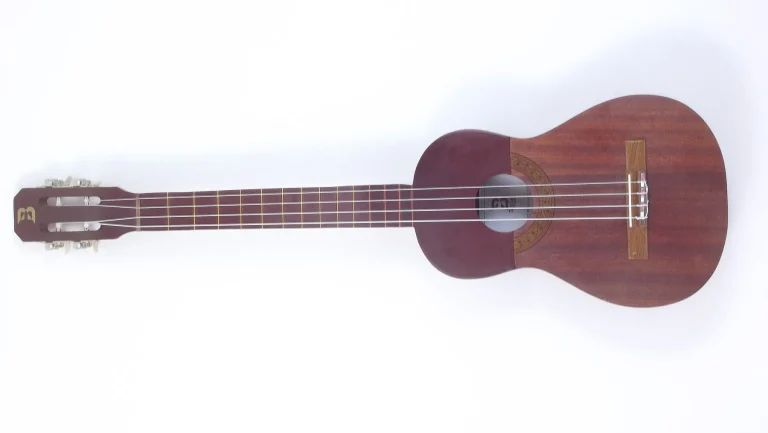
The ukulele is a popular stringed instrument that comes in different sizes. Each ukulele size has its own characteristics, which affect the instrument’s sound and playing style. In this section, we will explore the different ukulele sizes, including soprano, concert, tenor, baritone, bass and electric. We will describe what makes each size distinctive and help you choose the one that best suits your needs.
Soprano ukulele
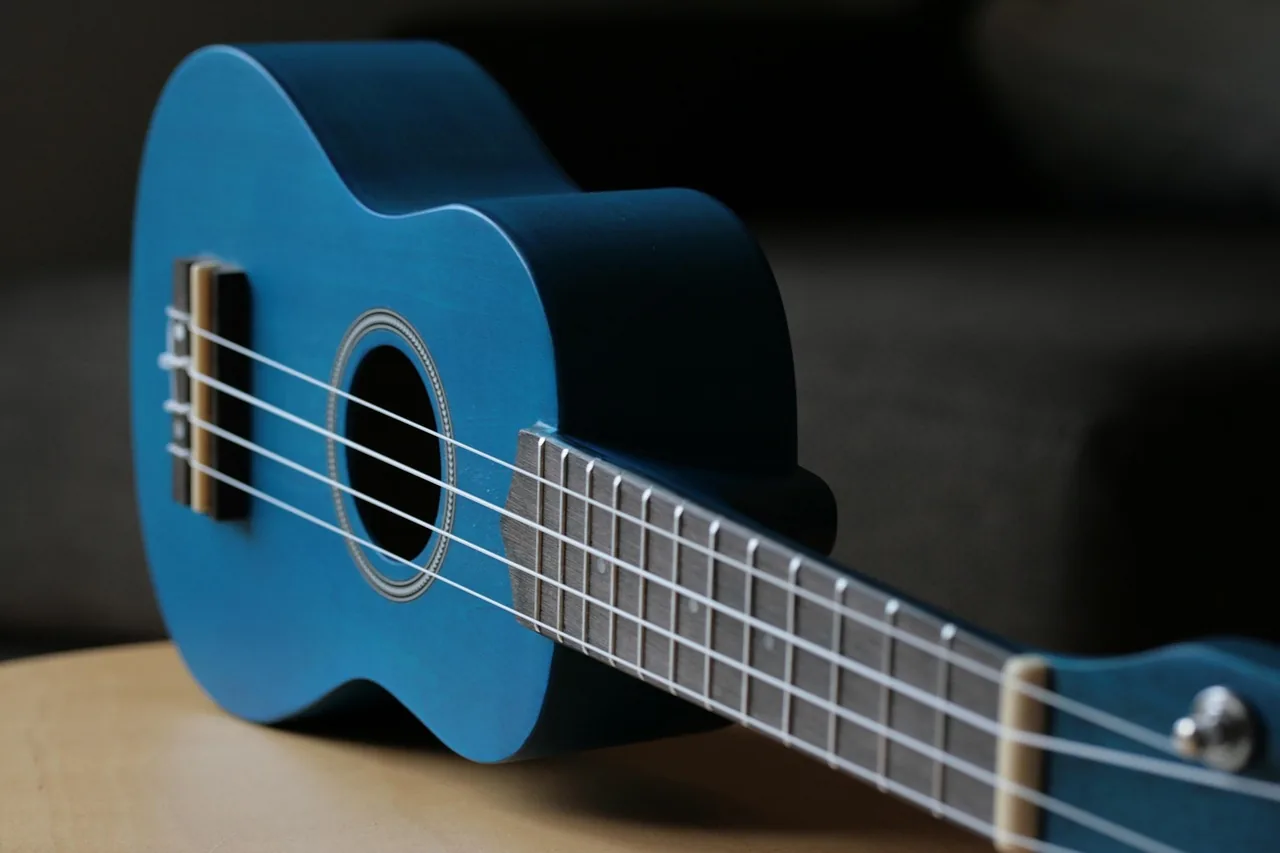
The soprano ukulele is the smallest ukulele size and is often considered the classic choice. With its compact body and short scale length, the soprano produces a bright, cheerful sound. It is ideal for beginners and players looking for the traditional ukulele sound. Its small size also makes it easy to carry when traveling.
Concert ukulele
Somewhat larger than the soprano, the concert ukulele offers a slightly richer, more powerful sound while retaining excellent resonance and playability. Its intermediate size makes it a versatile choice for beginners and advanced players. The concert ukulele is also valued for its roomier neck, which makes more complex chords and melodies easier to play.
Tenor ukulele
The tenor ukulele is one of the most popular choices among experienced players. With its larger body and longer scale length, the tenor produces a warm sound rich in overtones. Its larger size also provides more room on the neck for advanced techniques such as solo playing and fingerpicking. The tenor ukulele suits players looking for a deeper sound and greater versatility.
Baritone ukulele
The baritone ukulele is the largest of the plucked-string ukuleles. Its size and tuning are closer to those of a tenor guitar. With its long scale length and four strings, the baritone produces a rich, deep sound similar to a guitar’s. It suits guitarists who want to explore the ukulele’s distinctive sound while playing something familiar.
Bass ukulele
The bass ukulele is an unusual option for anyone seeking a deep, powerful sound. With its larger body and thicker strings, the bass ukulele produces a deep, resonant sound similar to an electric bass. It is ideal for adding depth and texture to a band or a solo performance. The bass ukulele is often tuned B, E, A, D, allowing it to fill the role of a conventional bass.
Electric ukulele
The electric ukulele is a modern variation of the ukulele, fitted with pickups and able to connect to an amplifier. This lets players amplify their sound and explore new effects and playing styles. Electric ukuleles come in different sizes, from soprano to baritone, offering a wide range of sonic possibilities.
By exploring the different ukulele sizes and their characteristics, you can choose the one that best suits your playing style and preferred sound. Each size offers a unique musical experience, so try them out to find the one that inspires you most.
Comparison of ukulele sizes
| Size | Overall length | Scale length | Sound | Playing style |
|---|---|---|---|---|
| Soprano | 53 cm | 33 cm | Bright, cheerful | Chords, simple melodies |
| Concert | 58 cm | 38 cm | Warm, resonant | Chords, more complex melodies |
| Tenor | 66 cm | 43 cm | Warm, rich | Solo playing, fingerpicking |
| Baritone | 76 cm | 48 cm | Deep, guitar-like | Chords, solos |
| Bass | 77 cm or more | 54 cm or more | Deep, powerful | Bass lines, solo performances |
| Electric | Varies by model | Varies by model | Variable | Variable |
The differences between a ukulele and a guitar
The ukulele and guitar are two plucked-string instruments that share similarities but also have important differences. Let’s explore the main differences between them:
Number of strings
A ukulele generally has four strings, while a guitar has six. This difference affects how each instrument is played and which chords can be produced.
Type of strings
Ukulele strings are generally made of nylon and offer a soft, melodic sound. Guitar strings are mainly made of steel or nylon and offer a richer, more versatile sound.
Size
A ukulele is generally smaller than a guitar, making it easier to carry and suitable for people with small hands. Guitars come in different sizes, from classical to jumbo.
Tuning
Ukulele tuning differs from guitar tuning. The ukulele’s four strings are generally tuned to C, E, G, A (from highest to lowest). The guitar, by contrast, is generally tuned to E, A, D, G, B, E (from lowest to highest).
Sound
A ukulele’s sound is often described as cheerful, bright and distinctive. The guitar offers a wider range of sounds, thanks in part to its number of strings and the different playing techniques available.
Although the ukulele and guitar are both plucked-string instruments, they differ in their number and type of strings, size, tuning and sound.
Here is a table comparing the differences between a ukulele and a guitar:
| Characteristics | Ukulele | Guitar |
|---|---|---|
| Number of strings | 4 | 6 |
| Type of strings | Nylon | Steel or nylon |
| Size | Small | Various sizes available |
| Tuning | C, E, G, A | E, A, D, G, B, E |
| Sound | Cheerful, bright | Wider range of sounds |

In summary, although the ukulele and guitar have characteristics in common, they differ in their number and type of strings, size, tuning and sound. Each offers a unique musical experience and can be chosen according to your preferences and the style of music you want to play.
The advantages and disadvantages of nylon and fluorocarbon strings
When choosing strings for your ukulele, you have several options, including nylon and fluorocarbon. Each has advantages and disadvantages that may influence your choice. In this section, we will examine both types to help you make an informed decision.
1. Nylon ukulele strings
Nylon strings are the most commonly used strings on ukuleles. They have several advantages that make them popular with players.
- Warm sound: nylon strings produce a soft, warm sound that enhances the ukulele’s natural tone.
- Ease of playing: nylon strings are flexible and easy to play, making them ideal for beginners.
- Affordable price: nylon strings are generally less expensive than fluorocarbon strings, making them accessible for any budget.
They do have a few disadvantages, however:
- Limited durability: nylon strings tend to wear out faster than fluorocarbon strings and therefore need replacing more often.
- Less projection: nylon strings may project slightly less sound than fluorocarbon strings.
2. Fluorocarbon ukulele strings
Fluorocarbon strings are a popular alternative to nylon strings. They also have several advantages.
- Brighter sound: fluorocarbon strings produce a brighter, more pronounced sound that brings out the overtones.
- Greater durability: fluorocarbon strings are generally more durable than nylon strings and therefore last longer.
- Tuning stability: fluorocarbon strings tend to hold their tuning longer than nylon strings, reducing how often you need to retune.
They do have a few disadvantages, however:
- Higher price: fluorocarbon strings are generally more expensive than nylon strings, which may deter some players.
- Sensitivity to weather changes: fluorocarbon strings may be more sensitive to changes in humidity and temperature, potentially requiring more frequent adjustments.
The choice between nylon and fluorocarbon strings therefore depends on your preferences and needs. If you want a warm sound and strings that are easy to play, nylon is an excellent choice. If you prefer a brighter sound and greater durability, fluorocarbon may suit you better. Try different string types to find the ones that best match your playing style and ukulele.
Recommended ukulele string brands
Choosing quality strings is essential to getting the best possible sound from your ukulele. Many respected brands offer a wide range of ukulele strings. Two stand out: Aquila and D’Addario.
Aquila is one of the best-known brands of ukulele strings. Made in Italy, Aquila strings are appreciated for their warm, clear sound. They offer excellent intonation and durability. Aquila strings come in different tensions and materials, so you can find an ideal combination for your ukulele.
D’Addario is another well-known brand offering quality ukulele strings. Known for its guitar strings, D’Addario also offers a range of ukulele strings. Its strings provide a balanced sound, good intonation and strong resistance to wear. They come in different materials and tensions, allowing you to tailor the sound and feel to your preferences.
Choosing strings from a respected brand such as Aquila or D’Addario gives you superior quality and an excellent playing experience on your ukulele.
In conclusion, when choosing strings for your ukulele, trusted brands such as Aquila and D’Addario are sensible choices. Their reputation, manufacturing quality and wide availability make them dependable brands for musicians at every level.
How to change your ukulele strings
To preserve your ukulele’s sound quality, it is essential to change its strings regularly. Follow these simple steps:
- Start by loosening all your ukulele strings by turning the tuning pegs counterclockwise.
- Once the strings are loose, cut them near the tuning pegs with an appropriate cutting tool.
- Carefully remove the old strings from the bridge saddle and headstock attachments.
- Tip: use this opportunity to clean your ukulele thoroughly and remove accumulated dirt and residue.
- Take a new string and insert its looped end into the corresponding headstock attachment.
- Pull the string through the headstock attachment until the loop is tight.
- Tip: pull gently on the string as you secure it so that it does not come loose.
- Insert the other end of the string into the corresponding bridge saddle.
- Pull gently on the string until it is properly seated in the bridge saddle.
- Turn the corresponding tuning peg clockwise to begin tightening the string. Repeat these steps for the other strings.
- Tip: tune your ukulele regularly as you tighten the strings to achieve balanced tension and a harmonious sound.
Once all the strings are tightened and tuned, play your ukulele for a while to help them settle. Adjust their tension if necessary to get the sound you want.
| Advantages of changing strings regularly: | Disadvantages of changing strings too late: |
|---|---|
|
|
For the best results, it is recommended that you change your ukulele strings every 2 to 3 months, depending on how often you play. Also take the time to choose quality strings suited to your ukulele.
Conclusion
This buying guide and set of tips for ukulele strings has highlighted the importance of choosing quality strings to get the best sound from your instrument. We have covered the different types of strings available, along with the advantages and disadvantages of nylon and fluorocarbon.
We have also explored the different ukulele sizes and the characteristics of each. We have highlighted the differences between the ukulele and guitar, particularly their number of strings, tuning and sound.
Finally, we have recommended respected ukulele string brands such as Aquila and D’Addario to help you choose. We hope this guide has helped you understand the available options and make an informed decision when buying your next ukulele strings.
FAQ
Why are quality ukulele strings important?
Quality ukulele strings are essential for getting the best sound from your instrument. They affect projection, resonance and ease of playing.
How do I choose strings that suit my ukulele?
To choose strings that suit your ukulele, consider the type of ukulele, your playing style and the sound you want. Check your ukulele manufacturer’s recommendations for further guidance.
What types of ukulele strings are available?
Ukulele strings can be made of nylon, fluorocarbon or steel. Each material has distinct sound characteristics. Nylon strings are soft and produce a warm sound, while fluorocarbon strings are brighter and offer better projection. Steel strings are more commonly used on electric ukuleles.
How long do ukulele strings last?
The lifespan of ukulele strings depends on several factors, including how often you play, the type of strings and regular instrument care. In general, ukulele strings should be replaced every 3 to 6 months.
Which ukulele string brands are recommended?
Brands known for quality ukulele strings include Aquila, D’Addario and Martin. They offer a wide choice of strings suited to different types of ukuleles and playing styles.
How do I change my ukulele strings?
Here is a step-by-step guide to changing your ukulele strings:
1. Loosen the existing strings by turning the tuning pegs counterclockwise.
2. Carefully remove the worn strings by detaching them from the tuning pegs and bridge.
3. Insert the new strings into the attachment holes at the tuning pegs and bridge.
4. Tighten the strings by turning the tuning pegs clockwise until the strings are taut.
5. Adjust the string tension using the bridge and tuning pegs if necessary.
What are the advantages of nylon ukulele strings?
Nylon strings offer a soft, warm sound that is ideal for traditional ukulele playing styles. They are also gentler on the fingers, making learning and practice easier.
How do I care for my ukulele strings properly?
To extend the life of your ukulele strings, wipe them after every playing session with a clean, dry cloth. Avoid touching the strings with dirty or greasy hands, and keep your ukulele in a case when you are not using it to prevent dust and moisture from accumulating.