Tune your ukulele easily with a free online tuner. Our guide offers tutorials, tips, and practical advice to help you tune your ukulele accurately. Simply use your phone’s microphone to tune your ukulele in a few minutes. Whether you have a soprano, concert, tenor, baritone, or bass ukulele, our tuner works with all these types. Get accurate, reliable tuning with our free online tuner.
How to tune your ukulele with an online tuner
Using an online tuner is an easy and convenient way to tune your ukulele. Just launch the online tuner, select your type of ukulele (soprano, concert, tenor, baritone, or bass), then play each string.
The tuner will automatically detect the note and tell you whether to adjust it up or down. Follow its guidance to adjust each string and tune your ukulele accurately.
Here is what an online tuner’s display might look like:
| Note | Action | Indication |
|---|---|---|
| A string | You play the A string | The tuner indicates that the string is in tune |
| E string | You play the E string | The tuner indicates that the string needs to be tuned up |
| C string | You play the C string | The tuner indicates that the string needs to be tuned down |
| G string | You play the G string | The tuner indicates that the string is slightly flat |
With an online tuner, you can tune your ukulele quickly, easily, and accurately, even if you are new to music. This convenient method helps you achieve a clear, harmonious sound.
With an online tuner, you can tune your ukulele confidently at home, during rehearsals, or before a performance. This method saves time and helps you achieve a professional result without worrying about tuning mistakes.
Available tuning modes
Our online tuner offers several tuning modes to suit your needs. One of the most common is standard tuning (gCEA), which works for most songs. You can also choose low-G tuning (G3 C4 E4 A4) if you prefer a deeper sound. Other options include D tuning (A4 D4 F# B4) and baritone tuning (D3 G3 B3 E4). Choose the one that best suits your playing style.
Different tuning modes
| Tuning mode | String notes |
|---|---|
| Standard tuning (gCEA) | G C E A |
| Low-G tuning | G3 C4 E4 A4 |
| D tuning | A4 D4 F# B4 |
| Baritone tuning | D3 G3 B3 E4 |
Note: The pitch of the notes may vary depending on the reference used.
Your choice of tuning can have a significant effect on your ukulele’s sound and your playing style. Explore the options and try several tunings to find the one that best matches your musical preferences.
Tips for tuning your ukulele accurately
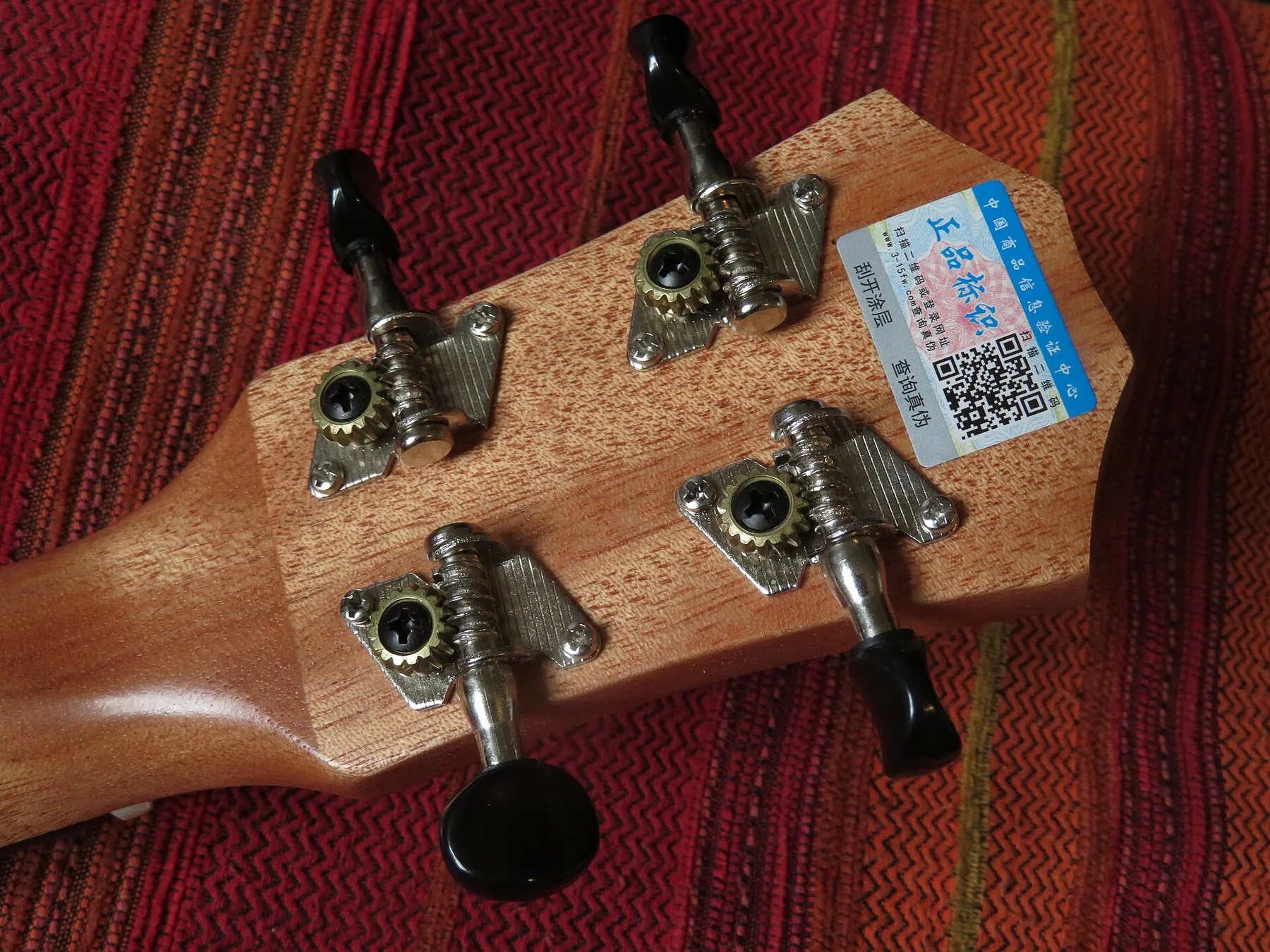
To tune your ukulele accurately, follow a few practical tips. Use the tuning pegs to set the tension of your instrument’s strings. Adjust each string’s tension with the desired note in mind.
Start with the highest-pitched string, then work toward the lowest. This will help you achieve consistent, harmonious tuning. Feel free to use an online tuner or an app to help you.
It is best to tune your ukulele in a quiet place, away from noise that could interfere with the tuner. This lets you focus on adjusting each string and achieve accurate tuning.
If you are having trouble tuning your ukulele, do not be discouraged. Watch our video tutorial for more tips and tricks. These resources are designed to guide you and help you get your ukulele properly tuned.
For inspiration and motivation as you learn, here is a quotation:
“Music gives a soul to our hearts and wings to thought.” — Plato
Follow these tips to tune your ukulele accurately. Good tuning is essential for a clear, harmonious sound. Practice tuning your ukulele regularly to maintain its sound and get the most out of making music.
| Tips for tuning your ukulele accurately |
|---|
| Use the tuning pegs to adjust each string’s tension |
| Start with the highest-pitched string, then work toward the lowest |
| Tune your ukulele in a quiet place |
| Watch our video tutorial for more advice |
Relative tuning for the ukulele
Relative tuning is a useful method when you do not have a tuner at hand. It involves using one string as a reference to tune the others.
Place your finger at the indicated position on each string to reproduce the reference note. Then adjust the strings’ tension until their notes match it.
This method can be useful for tuning your ukulele quickly, but avoid relying on it entirely because it is less accurate than a tuner.

| Advantages of relative tuning | Disadvantages of relative tuning |
|---|---|
|
|
Tuning a ukulele with a piano
If you have a piano available, you can also use it to tune your ukulele. Play G, C, E, and A on the piano, then compare those notes with the corresponding ukulele strings. If necessary, adjust the strings’ tension to match the piano notes. This method can be particularly useful if you prefer to tune your ukulele by ear instead of using a tuner.
| Piano note | Corresponding ukulele string |
|---|---|
| G | Ukulele string 4 (G) |
| C | Ukulele string 3 (C) |
| E | Ukulele string 2 (E) |
| A | Ukulele string 1 (A) |
Common problems when tuning a ukulele
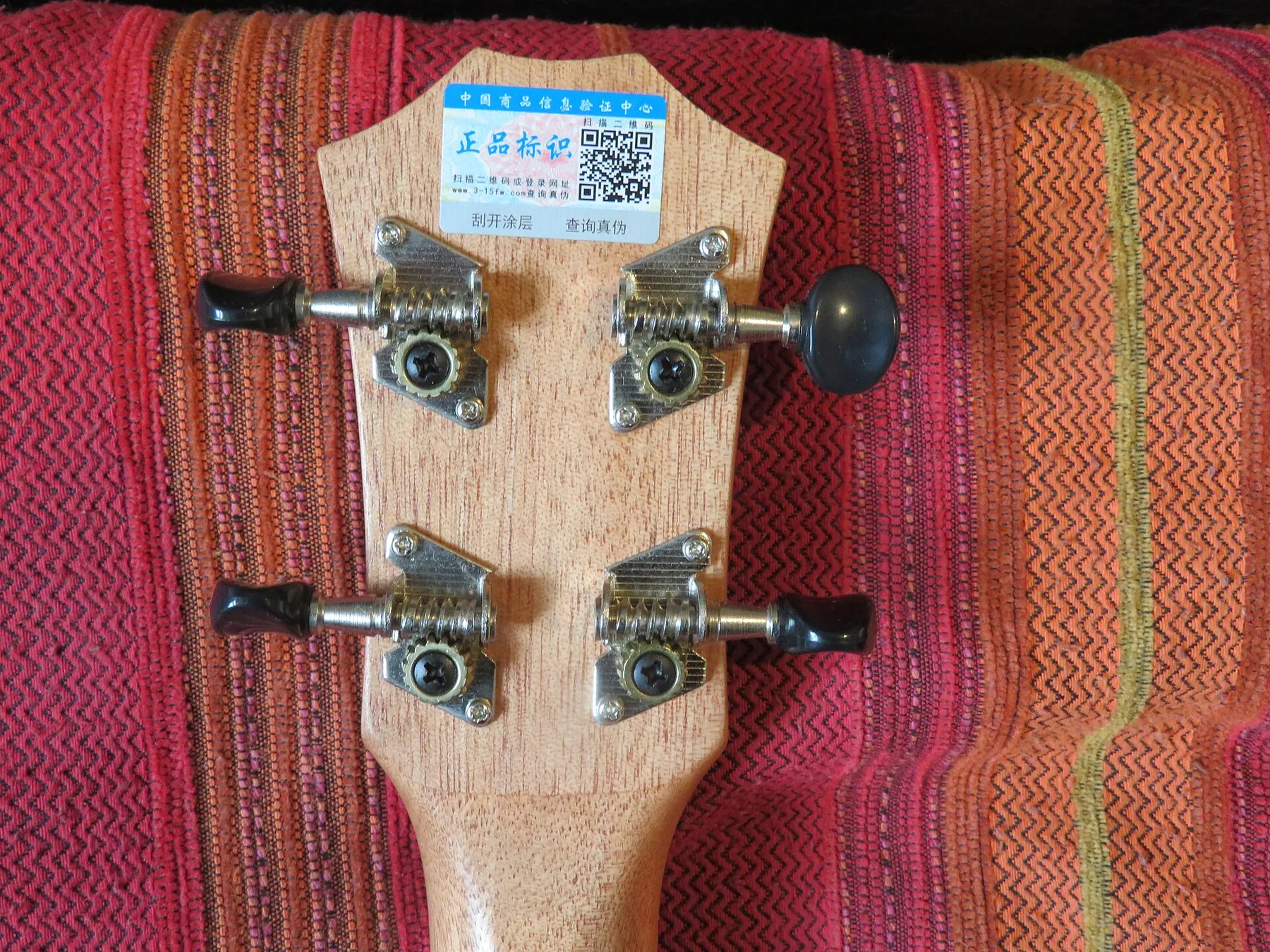
When tuning a ukulele, you may encounter problems such as strings that will not stay in tune, buzzing strings, or difficulty tuning accurately. Make sure your ukulele is in good condition and its strings are of good quality. If they will not stay in tune, check the screws on the tuning machines and tighten them if necessary. If the strings buzz, consult our repair guide for solutions. If you are unsure, ask a music professional for help.
Tips for keeping your ukulele in tune
- Change your strings regularly to prevent them from losing tension and causing tuning problems.
- Adjust the screws on the tuning machines gently to keep the tension balanced on each string.
- Use a quality tuner to stabilize your ukulele’s tuning and get an accurate result.
- Tune your ukulele in a quiet room, away from outside noise that could interfere with tuning.
- Check the position of the frets to make sure they do not cause buzzing or intonation problems.
“Tuning your ukulele accurately is essential for a harmonious sound and for getting the most out of making music.” — Ukulele expert
Guide to solving ukulele tuning problems
| Problem | Solution |
|---|---|
| The strings will not stay in tune | Tighten the screws on the tuning machines or consider replacing the strings. |
| The strings buzz | Make sure the fret heights are correct, or ask a professional to adjust them. |
| Difficulty tuning accurately | Use a quality tuner and follow its guidance carefully when adjusting each string. |
Conclusion
Tuning your ukulele is essential for a clear, harmonious sound. Our free online guide has given you tips, techniques, and tools to tune your ukulele accurately. Whether you are a beginner or an experienced musician, an online tuner can make the task easier and help you achieve proper tuning. Our tips have also introduced you to the available tuning modes and other methods, including relative tuning and tuning with a piano. We recommend practicing regularly to keep your ukulele sounding its best. Enjoy making music with your well-tuned ukulele!
FAQ
How do I use an online tuner to tune my ukulele?
To use an online tuner, launch it and select your type of ukulele. Play each string: the tuner will automatically detect the note and tell you whether to tune it up or down.
What tuning modes are available with an online tuner?
The most common modes are standard tuning (gCEA), low-G tuning (G3 C4 E4 A4), D tuning (A4 D4 F# B4), and baritone tuning (D3 G3 B3 E4). Choose the one that best suits your playing style.
How can I tune my ukulele accurately?
Use the tuning pegs to set the tension of your ukulele’s strings. Adjust each string until it reaches the desired note. Tune your ukulele in a quiet place, and watch our video tutorial for more advice.
What is relative tuning for a ukulele?
Relative tuning means using one string as a reference to tune the others. Place your finger at the indicated position on each string to reproduce the reference note, then adjust the strings’ tension until their notes match it.
Can I use a piano to tune my ukulele?
Yes, you can use a piano to tune your ukulele. Play G, C, E, and A on the piano, then adjust your ukulele strings to match those notes.
What common problems might I encounter when tuning a ukulele?
Common problems include strings that will not stay in tune, buzzing strings, and difficulty tuning accurately. Make sure your ukulele is in good condition, its strings are of good quality, and the screws on the tuning machines are properly adjusted.
Why is it important to tune my ukulele?
Tuning your ukulele is essential for a clear, harmonious sound. A properly tuned ukulele will improve your playing and help you fully enjoy the music you make.