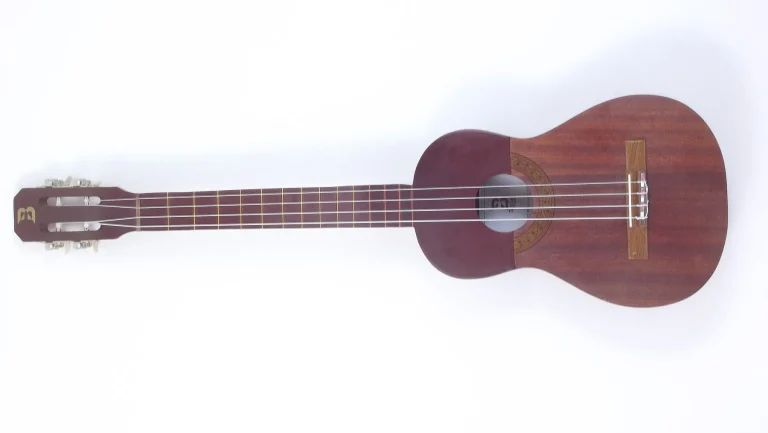
There are many musical instruments, but the ukulele and the guitar stand out. The ukulele is smaller and lighter, with 4 strings. The guitar has 6 strings. To learn more about their differences, click here.
A ukulele weighs about as much as three chocolate bars, making it easy to carry. It comes in 4 sizes: soprano, concert, tenor and baritone. Guitars are larger, with a longer neck and more frets.
Ukuleles are tuned GCEA, while guitars are tuned EADGBE. The guitar has a louder sound, while the ukulele sounds softer. The ukulele is quieter and works well for playing at home. Whether you prefer the ukulele or the guitar, it is important to understand their differences.
The fundamental characteristics of each instrument
It is important to understand the physical differences between the ukulele and the guitar. The ukulele, with its 4 strings, is smaller and lighter. The guitar, with its 6 strings, is larger and heavier. Ukulele strings are made of nylon, while guitar strings may be made of nylon or steel.
The characteristics of each instrument affect its sound. The ukulele has a bright, cheerful sound. The guitar offers a range of sounds, from gentle to powerful. The shape and size of each instrument contribute to its distinctive tone.
- Ukulele: 4 strings, small and lightweight, with a bright, cheerful sound
- Guitar: 6 strings, larger and heavier, with a fuller, more varied sound
Looking at these characteristics makes it easier to understand the differences between the ukulele and the guitar. It also helps you choose the instrument that best suits your needs and musical style.
String configuration and tuning
String configuration and tuning are essential to both the ukulele and the guitar. The ukulele has 4 strings, compared with the guitar’s 6. Its tuning gives each string a specific note. Ukulele strings are tuned G-C-E-A, while guitar strings are tuned E-A-D-G-B-E.
Guitar string tuning takes string tension and length into account. Standard guitar tuning is based on perfect-fourth intervals. However, the 3rd string (G) and 2nd string (B) form a major third. To tune a guitar, it is advisable to use a tuner to find the exact note for each string.

To learn more about strings and tuning, visit ukebox.fr. This site offers resources for musicians. Ukulele and guitar strings can be tuned differently depending on musical style and personal preference. Proper tuning is essential for a clear, accurate sound.
Here are some examples of ukulele and guitar tunings:
- Ukulele: G-C-E-A
- Guitar: E-A-D-G-B-E
Your choice of string configuration and tuning depends on your musical style and personal preferences.
Sound differences between the ukulele and guitar
The ukulele and guitar sound very different. The ukulele has a soft, high-pitched sound. The guitar has a louder, brighter sound. These differences come from the arrangement and tuning of their strings.
The guitar has six strings, while the ukulele has four. This affects the range of sounds each can produce. The ukulele is often used in light, cheerful music, such as Hawaiian music, reggae and calypso.
Frequency range
The ukulele’s frequency range is more limited than the guitar’s. That does not mean the ukulele is less versatile. Musicians use particular techniques to expand its range of sounds.
Sound projection
The guitar projects sound more strongly than the ukulele. It can produce a louder sound suited to playing in a group. The ukulele is better suited to more intimate acoustic performances.
In conclusion, the ukulele and guitar have very different sounds. The ukulele has a soft, high-pitched sound, while the guitar sounds louder and brighter. These differences come from the arrangement and tuning of their strings.
| Instrument | Number of strings | Tuning | Frequency range |
|---|---|---|---|
| Ukulele | 4 | G-C-E-A | Limited |
| Guitar | 6 | E-A-D-G-B-E | Wider |
How difficult is each instrument to learn?
How easy it is to learn the guitar or ukulele depends on several factors. The difficulty of the chords and the arrangement of the strings are among them. The ukulele is often easier for beginners: its chords are simpler, and its string layout is easier to understand.
Here are a few key points to consider when learning the ukulele or guitar:
- Instrument size and weight: the ukulele is smaller and lighter than the guitar, making it easier for beginners to handle.
- Number of strings: the ukulele has 4 strings, compared with the guitar’s 6. Guitar chords are therefore more complex.
- String tension: ukulele strings have less tension than guitar strings, which reduces finger discomfort for beginners.
The ukulele is easier to learn than the guitar, especially for children and beginners. The guitar, however, offers more possibilities for experienced musicians.

In short, learning the ukulele or guitar depends on several factors: size, weight, number of strings and string tension. The ukulele is easier for beginners, while the guitar offers more possibilities for experienced musicians.
| Instrument | Difficulty | Number of strings | String tension |
|---|---|---|---|
| Ukulele | Easy | 4 | Low |
| Guitar | More difficult | 6 | Higher |
Musical styles suited to each instrument
The ukulele and guitar are both very versatile. They can be used in many musical styles. The ukulele is often associated with Hawaiian music and holidays, but it can also be used in folk or pop music.
The guitar is often chosen for popular music and rock. It can also be used in classical music or jazz.
It is important to choose the instrument that suits your musical style. Choosing a ukulele or guitar that suits you is essential for getting the sound you want. For example, a ukulele with nylon strings works well for folk music. An electric guitar is better suited to rock.
Genres commonly played on the ukulele
The ukulele is often used in Hawaiian music, folk and pop. It also appears in more experimental styles, such as electronic and ambient music. Its versatility makes it suitable for many styles.
Traditional guitar styles
The guitar is often used in classical music, flamenco and jazz. It also appears in more modern genres, such as rock and pop. The styles it suits vary by guitar type.
Musical versatility
Both instruments are very versatile. They can be used in many musical styles. The versatility of the ukulele and guitar allows them to adapt to a wide range of genres. Musicians can explore different styles to find the one that suits them best.
Budget and long-term investment
Before buying a musical instrument, consider your budget and long-term investment. Prices for ukuleles and guitars vary considerably depending on the brand, quality and characteristics of the instrument.
An entry-level ukulele costs about €60. A high-end model can cost from €150 to €250. A good entry-level guitar costs about €150. Factor these costs into your budget and long-term investment.
To learn more about financial considerations and regulations related to music, you can research them online. Here are a few points to consider when buying an instrument:
- The initial cost of the instrument
- Maintenance and repair costs
- Long-term investment potential
Ultimately, it is essential to balance your budget with your musical needs. Whether you choose a ukulele or a guitar, consider every aspect of the investment. This will help you make an informed decision.

Transport and everyday practicality
Your choice of musical instrument should take transport and ease of use into account. The ukulele is lighter and easier to carry than the guitar. It is therefore a practical choice for people who travel often.
The ukulele is valued for its small size and light weight. It works well in limited spaces. The guitar needs more space and care, but offers more possibilities to traveling musicians.
Portability and storage
Portability and storage are essential considerations. The ukulele works well for musicians who travel. The guitar requires more care during transport.
Durability and maintenance
Durability and maintenance also matter. Both the ukulele and guitar need regular care. The guitar, however, requires more work, particularly for setup and cleaning.
In conclusion, transport and ease of use are important considerations. The ukulele and guitar each have strengths. Choose according to your lifestyle and musical needs.

| Instrument | Weight | Portability | Storage |
|---|---|---|---|
| Ukulele | Light | Easy | Needs little space |
| Guitar | Heavy | Difficult | Needs a lot of space |
Conclusion: choosing between a ukulele and a guitar
The choice between the ukulele and the guitar depends on your preferences. The ukulele is easier to learn and lighter to carry. The guitar offers more possibilities for learning and growing as a musician.
Whether you are a beginner or an accomplished musician, this choice matters. Think about your goals and musical style to find the instrument that suits you best.