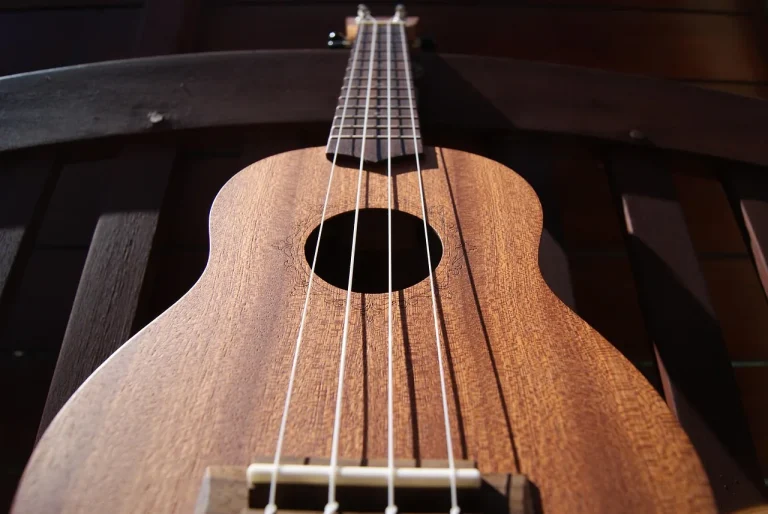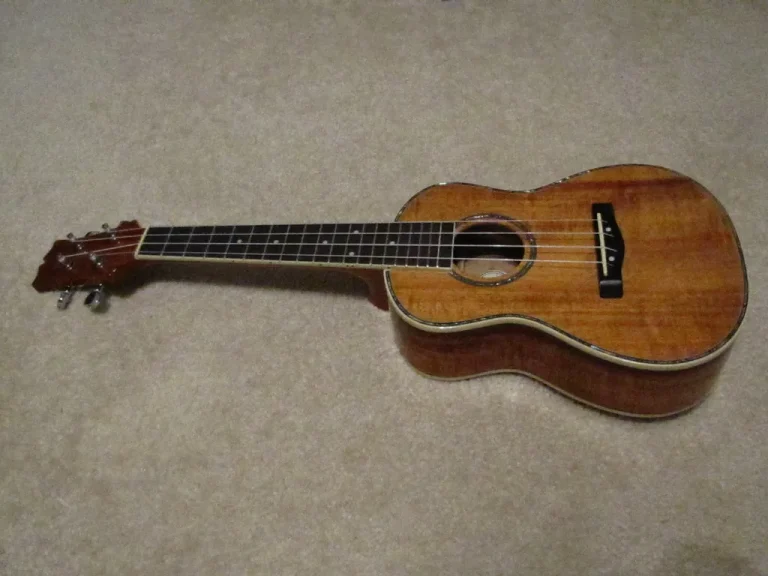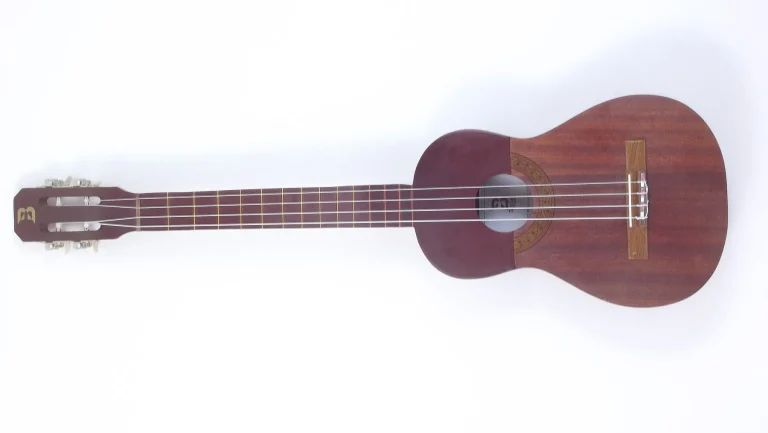
The baritone ukulele has a distinctive sound, lower than that of other ukuleles. To play it well, you need to tune the baritone ukulele accurately. This is essential whether you are a beginner or an experienced player. Following a step-by-step method will help you do it.
Tuning a baritone ukulele requires precision. Its DGBE tuning differs from that of other sizes. To tune it properly, you need to understand the instrument and its tuning. We will look at how to do this, particularly with an electronic tuner, which is considered the most accurate tool.
By following these steps, you will learn to tune your baritone ukulele and improve its sound. Tuning is essential to enjoying the instrument. With patience and practice, you will play better and appreciate the sound of your baritone ukulele even more.
Baritone ukulele and tuning basics
Understanding the baritone ukulele and its tuning is essential before you play. Many beginners wonder how to tune a baritone ukulele easily. To start, you need to know the baritone’s standard notes: DGBE.
To tune a baritone ukulele properly, a guide to tuning a baritone ukulele is useful. Baritone ukuleles differ from other ukuleles in their size and notes. Soprano and concert models are smaller and higher-pitched, while tenor and baritone models are larger and lower-pitched.
Understanding the baritone’s standard notes: DGBE
The baritone’s standard notes are DGBE. The highest-pitched string is tuned to D, followed by G, B and E. Baritone ukuleles have a lower range, ideal for deep bass notes.
Differences from other types of ukulele
Baritone ukuleles differ in their size and notes. Soprano and concert models are smaller and higher-pitched. Tenor and baritone models are larger and lower-pitched.
Why proper tuning matters
Proper tuning is essential for a clear sound. Poor tuning can cause problems with pitch. It is therefore important to follow a guide to tuning a baritone ukulele correctly.
Preparing your equipment for tuning
To tune a baritone ukulele, you need to prepare properly. Choosing a quality instrument is advisable. Entry-level models cost between 50 and 150 euros. Very cheap ukuleles, priced between 10 and 30 euros, are often poor quality.
Brands such as Aloha, Mahalo, Kala, Makala, Gewa, Stagg and Kmise offer quality ukuleles. Most entry-level ukuleles are made of mahogany and fitted with Aquila strings. It is important to change all the strings at the same time to avoid tuning problems.
Sites such as Ukebox offer tuning guides. An electronic tuner can also help you tune accurately.

- Choose a quality ukulele
- Change all of a ukulele’s strings at the same time
- Use an electronic tuner
- Consult online guides and tutorials for tips on tuning a baritone ukulele
How to tune a baritone ukulele: a detailed step-by-step method
To tune a baritone ukulele properly, you need to know the basics. The baritone ukulele has specific notes: D-G-B-E. This tuning differs from that of other ukuleles, such as the soprano or concert.
There are several ways to tune a baritone ukulele. You can use an electronic tuner, tune by ear or compare its notes with another instrument. Each method has advantages and disadvantages, but all can help you tune accurately.
Using an electronic tuner
An electronic tuner lets you tune a baritone ukulele quickly and accurately. Simply turn on the tuner, select the note you want to tune and adjust the strings. This method is ideal for beginners because it requires little experience.
Tuning by ear
Tuning by ear requires experience and a good musical ear. Start with the low notes and work towards the high notes. This method can produce accurate tuning.
Tuning by comparison
Comparing the baritone ukulele’s notes with those of another instrument can be useful. This method suits people who know music. You need to choose a reliable reference instrument to tune accurately.
In short, tuning a baritone ukulele requires an understanding of the basics and attention to its notes. The different methods can help you tune accurately. Choose the one that best suits your skill level and needs.
| Tuning method | Advantages | Disadvantages |
|---|---|---|
| Electronic tuner | Quick and accurate | Additional cost |
| Tuning by ear | Requires no additional equipment | Requires a good musical ear |
| Tuning by comparison | Useful for experienced players | Requires a reliable reference instrument |
Modern tools for accurate tuning
To tune a baritone ukulele properly, you need the right tools. Today, many mobile apps and electronic tuners make tuning easier.
Recommended mobile apps
There are apps designed to tune instruments, including the baritone ukulele. They are accurate, easy to use and available on your phone.
Specialized electronic tuners
Electronic tuners are also very useful. They are accurate and offer features such as automatic note detection. Some even let you save your own tunings.
By following the guide to tuning a baritone ukulele and using these tools, you can keep your baritone ukulele in tune. This will help you learn and play music more easily.
| Tool | Description |
|---|---|
| Mobile apps | Convenient and accurate, ideal for tuning on the go. |
| Electronic tuners | Offer great accuracy and advanced features for personalized tuning. |
Common tuning mistakes to avoid
To tune a baritone ukulele easily, avoid common mistakes. Using an unsuitable tuner can cause problems and make tuning difficult and frustrating.
It is essential to choose a quality baritone ukulele. A poorly made or low-quality instrument can be difficult to tune.
Here are some mistakes to avoid when tuning your baritone ukulele:
- Not using a quality electronic tuner
- Choosing a low-quality baritone ukulele
- Not following the tuning instructions correctly

By following these tips, you can tune your baritone ukulele easily and enjoy the music you love.
| Mistake | Consequence |
|---|---|
| Not using a quality electronic tuner | Incorrect tuning and wasted time |
| Choosing a low-quality baritone ukulele | Tuning problems and difficulty playing |
Keeping your baritone ukulele in tune for longer
To tune a baritone ukulele accurately, you need to understand certain factors. Temperature, humidity and sudden movements can affect tuning. It is therefore important to take steps to keep your ukulele in good condition.
Storing your ukulele properly is important. Keep it in a cool, dry place away from direct sunlight. A case or protective bag can also protect it from impacts.

Check your ukulele’s tuning regularly, too, and retune it if necessary. A regular tuning routine helps keep the instrument stable. Follow these tips to tune a baritone ukulele accurately and keep it in good condition.
Conclusion: improving your tuning technique
Accurate tuning of your baritone ukulele is essential for a great sound. This article has introduced methods for improving your technique. Whether you use an electronic tuner or train your ear, what matters is finding the method that works for you.
Tuning can change with temperature and humidity. It is therefore advisable to check it often and retune the instrument if necessary. With practice, you will become more comfortable keeping your baritone ukulele in tune.
Accurate tuning will help you get the most out of your baritone ukulele. Whether you are a beginner or an experienced player, knowing how to tune it is essential. It will help you improve and enjoy the music.