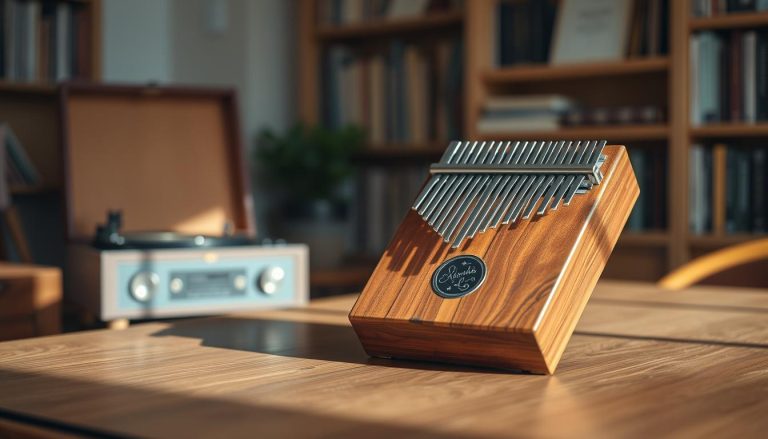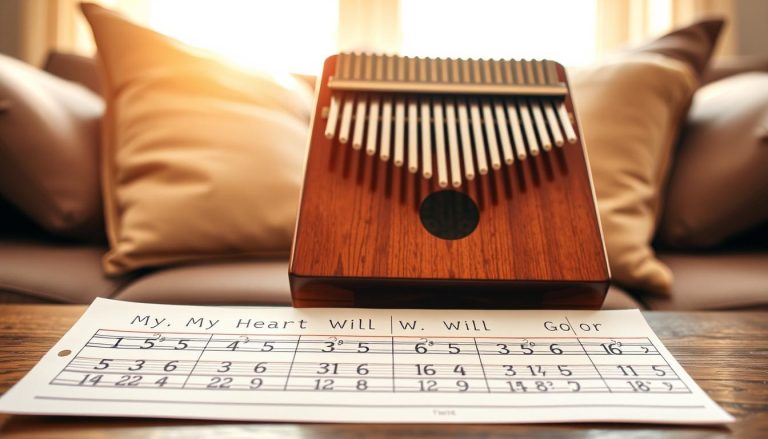
You’re hesitating before buying and want to know whether this simple instrument meets your needs. This guide starts with how you plan to use it: relaxation, songs, introducing a child to music, or playing while traveling.
Meinl is a recognized name among percussionists, but its kalimbas are often considered decent rather than high-end.
In practice, you can play gentle melodies, simple covers, and atmospheric music. Limitations become apparent with complex arrangements, chromatic passages, or frequent key changes.
In France, expect to pay around €30 to €55 for entry-level and mid-range models, and around €65 for an electro-acoustic version, according to buying guides.
Keep in mind that ergonomics (hand size and tine spacing) and regular practice matter as much as appearance. This article gives you a clear assessment, practical criteria, and a starting point for choosing your first kalimba.
Who is a Meinl kalimba for in France today?
In France, this instrument is especially suited to beginners, people seeking relaxation, and parents looking for a simple gift.
Typical players
Beginners and people just starting to make music. Adults who want to unwind after work. Parents who want to introduce a child to music. Shoppers looking for a musical gift that’s easy to pick up and play.
What to clarify before buying
Before buying, identify what you really want: a passing interest or a longer-term goal to improve.
- Your level: complete beginner, returning player, or experienced musician.
- Your weekly practice time: a few minutes or regular sessions.
- Where you’ll play: at home, while traveling, or in wellness workshops.
Realistic expectations
The sound quality is often good enough for improvising and playing simple songs. If you want a sound comparable to a high-end instrument, expect limitations in projection and harmonic richness.
Tip: consult a comprehensive buying guide to choose the size, ergonomics, and accessories (case and tuner) that suit your needs.
Meinl kalimba: Who is it for and what kind of music can you play?
For relaxing, intuitive playing, this instrument lets you make beautiful melodies right away.
Relaxing music
Ideal for meditation and calm atmospheres. Repeating patterns create a relaxing background. You can improvise easily without extensive knowledge of music theory.
Playing songs
Whether you can play songs depends on how many notes are available.
More tines let you play popular tunes and nursery rhymes more faithfully. On a smaller instrument, you’ll need to simplify or transpose the tunes.
Introducing children to music
Children make quick progress with this instrument. Small successes build enthusiasm and encourage learning.
Playing it feels like using a little thumb piano: intuitive, fun, and pressure-free.
- Uses: meditation sessions, gentle background music, and repeating patterns.
- Limitations: complex arrangements, chromatic passages, and frequent key changes.
- The next section connects these uses to buying criteria (hollow or solid body, sizes, and materials).
| Size | Notes | Recommended use | Suitable for |
|---|---|---|---|
| 8 tines | 8 | Relaxation, short patterns | Beginners, children |
| 10 tines | 10 | Nursery rhymes, background music | Families, casual players |
| 17 tines | 17 | Song covers, developing skills | People who want to improve |
| 21 tines | 21 | Broader repertoire, arrangements | Experienced musicians |
To learn more about the models and choose one that meets your needs, read our dedicated buying guide.
Understanding the brand and the Sonic Energy range
Founded in Gutenstetten in 1951, the company began making cymbals and later expanded into other instruments.
It established itself in the percussion world through decades of manufacturing experience. This history explains its current positioning: products designed for both players and professionals.
Meinl Sonic Energy: A focus on well-being
Launched in 2014, the sub-brand focuses on sound exploration and sound therapy. Its range includes bowls, shamanic drums, handpans, tongue drums, and small instruments intended for wellness.
What you’re really buying
In practice, you’re buying a product from the Meinl range rather than an item made entirely in Germany. The packaging of some models says they are made in China.
China now produces good-quality products. Still, pay attention: a German logo doesn’t necessarily mean local production.
- Read the product listing and packaging to check its origin.
- Compare the finish, material, and price to assess value for money.
For an example of a Sonic Energy model, see this official product page.
Perceived quality of Meinl kalimbas: Strengths and limitations
Buyers often admire the appearance while expressing reservations about sound quality.
Finish and appearance
The finish is appealing, with neat varnish and harmonious lines. It makes a good gift.
Note: good looks don’t guarantee superior quality. Some buyers may find its value for money less compelling than that of other models at the same price.
Reported problems
The most frequently reported problem is buzzing or rattling tines. These noises interfere with relaxation and recording.
Possible causes include imperfect assembly, pressure from the retaining bar, misaligned tines, or loose screws.
Accessories and range
Sets generally include a tuning hammer, cloth, and case. These accessories are enough to get started.
The selection of models is limited (8, 10, 17, or 21 notes and a few types of wood). There are few advanced options for specific needs.
| Strength | Limitation | Included accessory |
|---|---|---|
| Attractive finish | Variable acoustic quality | Hammer |
| Good gift idea | Possible buzzing | Cloth |
| Decent beginner experience | Few advanced models | Case |
Hollow body or solid board: Which Meinl kalimba suits your music?
Choosing between a hollow body and a solid board noticeably changes the sound and ease of use.
Hollow body: Projection and effects
The resonating body provides more volume and an enveloping sound. Covering and uncovering the sound holes produces a simple, expressive wah-wah effect.
Possible uses include relaxing at home, wellness workshops, and small performances where natural projection is sufficient.
Solid board: Even sound and portability
A solid board produces a more even sound. Its quieter output helps avoid overloading a nearby microphone.
This design is easier to carry and lets you play in an apartment without disturbing others.
Recording and amplification
For a recording with a consistent sound, choose a solid board. To fill a room without amplification, choose a hollow body.
Simple rule: decide how much volume you want first, then choose the model’s appearance.
Tine count and size: Meinl’s 8, 10, 17, and 21-note kalimbas
The number of tines greatly changes the range of notes available and how you play day to day.

Minimalist sizes (8 to 10 notes)
Kalimbas with 8 or 10 notes are suited to relaxation and repeating patterns.
They’re good for learning quickly, improvising without major difficulty, and playing on the go. Simple songs are possible, though you often need to simplify them.
Standard size (17 notes)
The 17-tine version remains the best compromise for developing your skills.
It makes sheet music and tutorials easier to use. You have more flexibility to play popular songs.
When to choose 21 notes
The 21-tine range offers more notes and harmonic possibilities.
However, it requires a higher skill level, more precise reading, and a better sense of where the tines are.
Ergonomics and a quick way to choose
The instrument’s width, tine spacing, and comfort for your hands and fingers affect the risk of striking two tines at once.
- Simple rule: if you want to learn pieces, choose 17 tines.
- If your goal is meditation or playing while traveling, choose 8 to 10 tines.
- If you’re a patient musician, choose 21 tines.
What kind of music can you play on a Meinl kalimba? Repertoire and limitations
It’s mainly used to create gentle atmospheres and spare melodic lines.
Simple melodies, lullabies, and nursery rhymes
Short, repeating melodies are an excellent fit. Children make quick progress.
Lullabies and nursery rhymes are rewarding from the start thanks to the instrument’s rounded, soothing sound.
Covers in diatonic C: A pattern similar to the piano
The C diatonic scale provides familiar reference points. Many tutorials and scores are available.
You can easily play simple songs using the equivalent of the white keys.
Cinematic soundscapes and relaxation
Slow patterns or simple drones fill the space. The resonance supports a voice or the sound of other bowls.
What proves difficult
Chromatic passages, frequent modulations, and complex arrangements are challenging.
The range, which is limited by the scale and number of tines, restricts how easily you can adapt a piece.
| Repertoire | Difficulty | Strength | Limitation |
|---|---|---|---|
| Lullabies and nursery rhymes | Very easy | Quickly rewarding | Little variation |
| C-major covers | Easy | Many tutorials | No chromatic notes |
| Cinematic soundscapes | Easy to intermediate | Good resonance | Limited projection |
| Complex arrangements | Difficult | — | Restrictive modulations |
Materials and sound: Wood, tines, resonance, and body
The choice of materials changes an instrument’s sound and expressiveness. Understanding how the body and metal parts affect it helps you choose according to your expectations.
Wood: Warmth, sustain, and projection
Wood shapes the tone. Mahogany produces a warm, balanced, accessible sound.
Denser woods offer longer sustain and better projection. They strengthen the harmonics and make the sound more present in a room.
The tines: Attack, sustain, and tone
The metal used for the tines determines their attack and brightness. The alloy affects how long notes ring out.
The alloy’s name alone isn’t enough to judge the sound: listen to several audio or video demonstrations before buying.
Hollow body or solid board: Two sounds
A hollow body opens up the sound and increases projection. A solid board gives a more direct sound that’s easier to control.
In either case, the wood plays a major role in the tone’s color and warmth.
“Always listen to several recordings: the same model can sound very different depending on its finish.”
Finish, screws, and potential problems
Good assembly quality reduces unwanted noise and “dead” notes.
Loose screws, misaligned tines, or an uneven finish often cause buzzing.
- Watch detailed reviews to detect possible buzzing.
- Choose demonstrations in which you can hear each note separately.
- If possible, ask for opinions on the quality of the finish.
Tuning, learning, and everyday playing comfort
How well the instrument stays in tune directly affects playing comfort and your enjoyment each day.
Simple tuning and signs of wear
To tune the instrument, use the supplied hammer to adjust the vibrating length of each tine. A tuner, either an app or a separate device, helps you reach the correct pitch.
Retune the instrument if a note “beats,” sounds too low or too high, or if a group of notes begins to sound unpleasant.
Learning by playing
Look for engraved note labels: they remain legible longer than stickers. To improve, follow video tutorials and use suitable sheet music.
A short session of 5 to 10 minutes a day is enough. Focus on clean attacks and consistency before trying to play faster.
Care and longevity
Keep the instrument in its case, wipe it with the supplied cloth, and protect it from knocks and moisture when traveling. These habits extend its life.
| Action | Frequency | Reason |
|---|---|---|
| Check the tuning | Before each session | Consistent sound |
| Light cleaning | After each use | Preserve the finish |
| Store it in its case | When traveling | Protect it from knocks |
Prices in France and value for money: Is Meinl worth buying?
Before buying, it helps to know what you’ll get for your budget.
Useful price ranges
In France, common acoustic models cost between €30 and €55. Versions with a jack socket often exceed €60 and cost around €65.
What raises the price
The density and species of wood, tine quality, finish, and electronics (pickup and jack socket) are the main factors.
A set with more accessories (case, hammer, and tuner) also costs more.
When to choose Meinl and when to consider something else
If you prioritize an attractive instrument, a familiar brand, and relaxing play, a Meinl remains a reasonable choice in the €30 to €55 range.
If you’re particular about sound quality, tuning stability, and freedom from buzzing, compare several options before buying.
Read our buying guide to refine your choice.
Tip: paying a little more may be worthwhile if it helps you avoid a sound defect or get better after-sales service.
Alternatives to consider if you want better sound at the same price
If your main goal is a clean sound without unwanted noise, comparing your options is essential.
Why compare
Comparing models is useful if you want greater comfort, more stable tuning, and more accessories. For the same budget, you may find a more complete set and a more reliable instrument.
Potential benefits
- Less buzzing and better note response.
- A more complete set: case, booklet, stickers, and a better tuning hammer.
- More stable tuning and better tine ergonomics.
Frequently mentioned brands
Gecko and Lingting often appear in reviews as alternatives. These makers offer a wider choice of models and a sound often considered cleaner.
How to compare
Listen to several demonstrations, read reviews that discuss buzzing, and check tuning stability. Assess tine spacing to gauge playing comfort.
How to avoid counterfeits
Buy from a reliable retailer. Ask for an invoice, warranty information, and details about where the instrument came from. This is the best way to avoid a bad deal.
| Criterion | Benefit | What to check |
|---|---|---|
| Sound | Less unwanted noise | Note-by-note demonstrations |
| Accessories | Complete set | List of included accessories |
| Ergonomics | Playing comfort | Tine spacing |
| After-sales service and warranty | Greater peace of mind | Invoice and terms |
The reason is simple: the brand isn’t bad. But if you want the best sound quality for the same price, comparison is essential.
Conclusion
In summary
Start by defining your main use: relaxation or playing covers. Choose a suitable size, often 10 to 17 tines, according to your hand size and expectations.
Practical tip: for a first kalimba, look for simplicity, a neat finish, and no buzzing. Check the body type (hollow or solid), ergonomics, material, and accessories, then listen to demonstrations.
Pay attention to unwanted noise: favor a seller who accepts returns and provides after-sales service. If you want the best sound for your budget, compare Gecko and Lingting too.
Read our complete guide to refine your choice and find an instrument that suits the way you play.