Context: in France, searches often mention these three names, but their real differences — sound, finish and stability — remain unclear when it is time to buy.
This introduction offers a practical comparison. We set out concrete criteria: wood, tines, tuning and accessories. The aim is to help you choose according to how you will use the instrument (relaxation, learning or performing).
The comparison draws on findings shared by reviews and more than 200 user responses. We start with how the instrument will be used, distinguishing what works at home, for developing skills or on stage.
Note: availability and after-sales support in France matter as much as price. Considering them helps avoid problems with returns, deliveries, parts or product compliance.
Scope: we will examine common sizes (8, 17, 21 and 34 keys), solid bodies and resonator boxes, as well as accessory bundles. A quick comparison table is followed by a review of each brand and then criteria that apply to all three.
– A French buying context with priority given to intended use.
– Concrete criteria for a purchase you will not regret.
– Attention to after-sales support and availability.
Why compare these kalimba brands in France today?
With widely varying instruments and prices, comparison is essential to buying wisely. The market offers many models and very different bundles. People often buy a kalimba as a gift, for a first try or to return to making music.
Buying goal: choose the right instrument for your needs
This guide helps you choose for actual use: relaxation, structured learning or amplified performance on stage. Value for money depends on craftsmanship, tine accuracy and the included accessories.
What user feedback and reviews actually highlight
We compared more than 200 tests and reviews. They highlight tuning stability, comfort in the hands, tine quality and the usefulness of the bundle (case, hammer and note markers).
- Buying in France reduces risks associated with returns and after-sales support.
- Keeping to a budget does not necessarily mean compromising if the finish and tuning are good.
- Measurable criteria (tuning stability, projection and finish) matter more than marketing.
| Criterion | Why it matters | Effect on use | What to look for |
|---|---|---|---|
| Wood / craftsmanship | Determines tone and durability | Warm acoustic sound and reliability on stage | Solid woods and consistent finishing |
| Tines / pitch accuracy | Affects tuning stability | Fewer adjustments and better recordings | Hardened steel and precise setup |
| Accessories / bundle | Makes daily use easier | Protects the instrument and helps with tuning and learning | Included case, hammer and markers |
How we assess a kalimba: the criteria that make a difference
Our method identifies the features that truly change the playing experience. We combine listening, hands-on assessment and simple checks to evaluate quality and resonance.
Craftsmanship and finish
Careful craftsmanship shows in an even soundboard, smooth edges and a lack of rough spots. How comfortably your thumbs rest on the body matters during long playing sessions.
Wood and wood species
The choice of wood shapes the tone: mahogany warms the sound, while beech gives it a crisp attack. Walnut, maple and padauk balance tone and projection.

Tines and pitch accuracy
Well-made steel tines have consistent flexibility and need fewer tuning adjustments. The finish of the keys changes how they feel to play.
Solid body or resonator box
A flat body produces a direct, controlled sound. A resonator box increases projection and creates a “wah-wah” effect through its sound holes.
Accessories and after-sales support
Useful accessories include a hard case for transport, a hammer for correcting the tuning, and markers for the keys. Availability and after-sales support in France are just as decisive as sound quality.
At-a-glance comparison: Gecko, Hluru and Aklot
A concise comparison helps you weigh budget, finish and resonance. The table below makes it easy to match your choice to your intended use.
| Criterion | Average price | Types of models | Resonance | Bundle and buying in France |
|---|---|---|---|---|
| Brand A | Higher price (resonator models > €130) | Flat / resonator | Stable, rich | Complete bundles, good after-sales support |
| Brand B | €50 to €100 | Variety: 8 to 34 keys | Balanced, a good compromise | Wide choice, premium options |
| Brand C | €40 to €70 | Budget models | Variable; check carefully | Accessible, but inspection recommended |
Price positioning
As a guide: entry-level models cost €40 to €70, mid-range models €90 to €130, and fine finishes cost more. These ranges help you set a budget before you begin learning.
Which player is each format for?
Beginners: a standard 17-key format for a straightforward start.
Relaxation: flat models with a gentle sound that are easy to hold.
Developing players / performers: 21 or 34 keys and a resonator box for greater projection.
“Choose the format first, then the tine quality, and finally the bundle and after-sales support.”
Gecko kalimbas: strengths, limitations and models to consider
In the premium segment, the brand stands out for consistent manufacturing that gives buyers confidence. Even finishing and stable tuning make its instruments dependable at home, in the studio or on stage.

Resonance and stability
Consistent resonance and stable notes make this brand a dependable choice. Its instruments often hold their tuning better than average and have a clear attack.
Wood choices and distinctive features
Among the wood species, mahogany and maple remain classics for warmth and clarity. Camphor wood adds a warm tone and a camphor scent that some players enjoy for several years.
Sizes and configurations
Common formats have 8, 17 or 21 tines. The 8-key model is a pocket-sized pentatonic kalimba. The 17-key model is the standard for learning. The 21-key model provides a wider range for arrangements.
Flat or resonator-box model: the first favors precision, while the second favors projection and the wah-wah effect.
Accessories and bundles
Bundles often include a hard case, a tuning hammer and learning markers. These items reduce the overall cost of getting started.
Main limitation
The main drawback is price: some resonator-box models cost more than €100 (the K17SD, for example, costs nearly €120). Check whether the extra volume justifies the purchase.
| Strength | Model | Recommended use | Note |
|---|---|---|---|
| Projection / studio | K17SD | Recording, stage | Resonator box; expensive but professional sound |
| Warm, distinctive tone | K17CAP | Relaxation, attentive listening | Camphor wood: distinctive scent and tone |
| Complete bundle | 17/21-key models | Beginner to experienced player | Hard case and hammer included |
For a broader comparison and buying advice for France, see our guide to the best brands.
Hluru kalimbas: range and value for money
The brand stands out for its extensive catalog, covering formats from 7 to 34 tines. It offers flat models for precision and models with a resonator box for greater projection.
Finishes and options
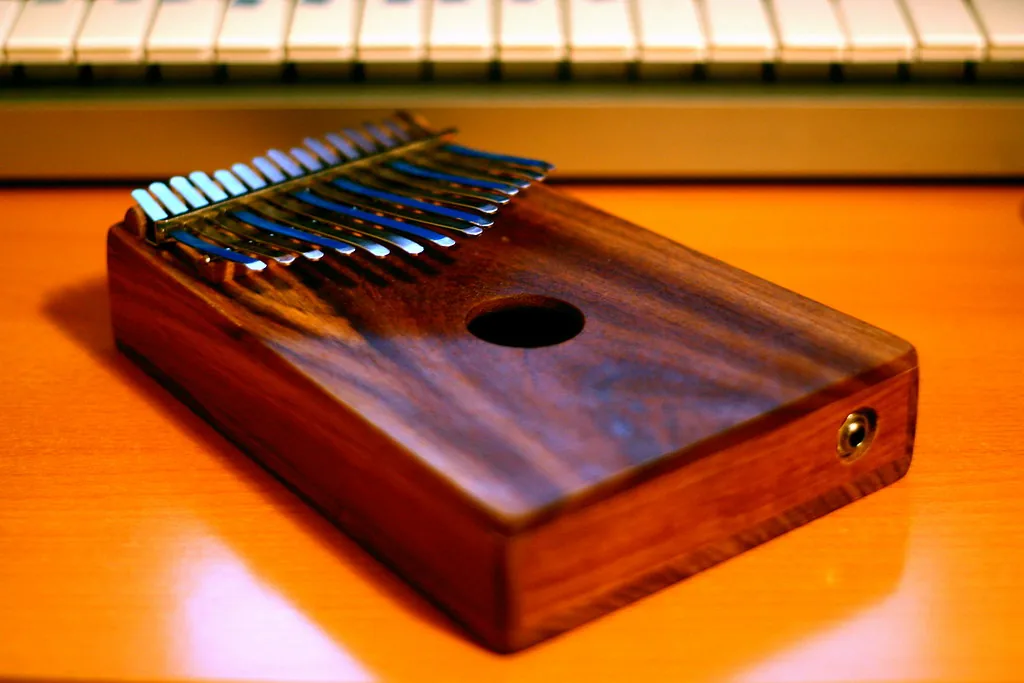
The so-called “prestige” finish includes engraved tines and combinations of woods (walnut and maple). These details make notes easier to identify and give the instrument a more premium feel.
Distinctive designs
Some models emphasize appearance: epoxy resin set into wood, as on the “Ocean” model, creates a striking look. Keep in mind that appearance does not always mean better resonance.
Price and precautions
Prices often fall between €50 and €100, an appealing compromise if you want to upgrade without entering the premium range. Watch out for fake websites and counterfeits.
Choose a reliable retailer in France or a recognized marketplace. For more buying advice, see our buying guide.
Aklot kalimbas: what the brand offers for the price
With a low-priced instrument, it helps to know what you can reasonably expect before buying. Here, the emphasis is on accessibility: a functional instrument whose finish can sometimes be improved.

Budget positioning: what to expect when buying
Budget option: reasonable stability and an adequate sound for relaxation or a gift. The price is attractive, but quality can vary considerably between production runs.
Perceived quality: finish, pitch accuracy and consistency across models
Quality varies by batch. Some instruments hold their tuning well, while others need adjustments. Check the tine and bridge finish when your instrument arrives.
What to check before ordering
- The type of tines (hardened steel) and the presence of markers or engraved notes.
- Bundle contents: pouch or case, tuning hammer, thumb guards and booklet.
- Return policy and recent reviews of the seller in France.
Practical tip: for a sound purchase, choose a platform that makes returns easy and read reviews. For a broader comparison and a buying guide, see our dedicated resource.
What sound can you expect from solid wood and acrylic, and how do they affect resonance?
The body material greatly changes what you hear and feel when playing.
Solid wood: warmth, harmonic richness and durability
A solid-wood body offers audible warmth and harmonic richness. Its sustain feels lively, and its overtones develop more fully when played solo.
For durability, well-dried and well-finished wood resists knocks and changes in humidity. Over time, that helps protect your investment through years of playing.
Each wood species sounds different. Mahogany, beech, walnut and maple bring distinct tonal colors. The quality of the tines remains crucial to final pitch accuracy.
Acrylic: a softer tone and easy care
Acrylic produces a more muted, rounded tone. It has a striking appearance and is easy to care for, but it is often heavier.
If appearance matters most, or you want a softer sound, acrylic may suit you. For better acoustic resonance, however, solid wood remains the recommended choice, especially for a standard 17-key instrument.
Number of keys and tuning: how to choose
Choosing the right number of tines changes how you play and progress.
Standard 17-note format in C major
The 17-note format is the easiest for learning. It makes sheet music easier to read and tutorials easier to follow, especially if you have played the piano or another instrument.
21 keys: a wider range
With 21 keys, you gain lower and higher notes. This allows richer arrangements and greater expressiveness when playing alone or with someone else.
Eight-key pentatonic format
The eight-note format is ideal for children and travel. The pentatonic scale limits clashing notes and encourages immediate improvisation.
Chromatic 34-tine format
The larger 34-tine format lets you transpose and accompany other instruments. It offers a full range of notes but calls for a more advanced learning approach.
“Check the tuning when the instrument arrives using an app, adjust it with the hammer and check it again a few days later.”
| Format | Number of keys | Recommended use | Practical note |
|---|---|---|---|
| Compact | 8 | Children, travel | Easy improvisation without clashing notes |
| Standard | 17 | Beginners, learning | Compatible with tutorials and sheet music |
| Extended | 21 | Developing skills, arrangements | Greater expression and tonal range |
| Chromatic | 34 | Experienced players, ensemble playing | Transposition and a wider repertoire |
A quick decision guide: beginner: 17 keys; developing player: 21; child or traveler: 8; experienced musician or ensemble player: 34. Always check the tuning after delivery.
Accessories and bundles: what really changes the daily experience
A good bundle makes a standard instrument enjoyable to use from the first week.
What comes in the package affects instrument protection, note accuracy and progress in learning.
Hard case or pouch
A hard case protects the instrument during frequent trips (to lessons or performances). It prevents knocks and deformation.
A lightweight pouch is enough for home use and occasional trips. Choose according to your habits.
Tuning hammer and tuner
A hammer paired with a tuning app lets you adjust the tuning quickly.
It helps keep notes accurate and avoids beginner frustration.
Thumb guards
These guards reduce skin wear and hand discomfort.
Greater comfort allows longer and more regular playing sessions.
Markers, booklet, stand and tremolo chain
Engraved markers and a booklet speed up learning.
A stand keeps the instrument in sight and encourages daily practice.
A tremolo chain enriches the tone and lets you explore new sounds.
| Accessory | Effect | Recommended use | Note |
|---|---|---|---|
| Hard case | Maximum protection | Frequent travel, stage | Choose a padded interior |
| Hammer and tuner | Accurate notes | Regular adjustments | Essential for beginners |
| Thumb guards | Hand comfort | Long sessions | Improve playing control |
| Markers and booklet | Speed up learning | Beginners, teachers | Save time when learning pieces |
Where to buy Gecko, Hluru and Aklot with confidence in France
Buying with confidence in France starts with choosing a transparent, responsive seller.
Why after-sales support and shipping matter
A small defect (a misaligned tine or unstable tuning) quickly becomes a major problem if returning the instrument is difficult or expensive.
Local after-sales support reduces delays, simplifies returns and allows a quick exchange if the item is not as described.
Marketplace or specialist shop
Marketplaces often offer the lowest prices. A specialist shop can also provide advice, quality checks and better traceability.
Instruments du Monde offers a wide selection (more than 200 products) and bundles supported in France, reducing the risk of a poorly informed purchase.
Avoiding unpleasant surprises
- Warning signs: unusually low prices, a new website without legal information, and inconsistent photos.
- Recommended steps: check the seller, read recent reviews and inspect the instrument as soon as it arrives.
To follow a sound buying guide, keep the packaging and test the tuning immediately.
Gecko, Hluru and Aklot kalimbas: how do these popular brands compare?
If resonance and stability guide your purchase, certain models deserve priority.
Best choice if resonance and stability matter most
Gecko remains a dependable choice for a rich sound and reassuring tuning stability.
Expect to pay more for resonator-box models. Their sound often justifies the investment for recording or performing.
Best choice if you want a broad range on a controlled budget
Hluru offers an extensive range (7 to 34 tines) and good value for money.
It is an appealing choice if you want to try several formats without paying premium prices.
Best choice if you want the lowest price
Aklot suits smaller budgets, though the finish varies.
Choose a seller in France and check the tuning and bundle contents when the instrument arrives.
Quick recommendations by player
Beginners: 17 keys in C major and a complete bundle (case, hammer and markers).
Children: eight pentatonic keys for improvising without clashing notes.
Experienced musicians: 21 keys for a wider range, or 34 for chromatic and ensemble playing.
| Priority | Recommended brand | Why | What to check |
|---|---|---|---|
| Resonance and stability | Gecko | Consistent finish and tuning stability | Price of resonator-box models |
| Range and budget | Hluru | Variety of formats and design options | Check the production run |
| Accessible price | Aklot | An inexpensive way to start playing | Tuning check and return terms |
“At the same price, the fit between the tines, finish, accessories and after-sales support often matters more than the brand name.”
Next step: shortlist two or three models, check their availability in France and choose a transparent seller to make your purchase more secure.
Conclusion
In short, look for a good match between the materials, tines and bundle so your instrument is ready to play.
A good choice starts with tine quality, tuning stability, finish and ergonomics. Then check the bundle contents: case, hammer and markers.
For the format: 17 keys for learning, 21 to expand your options, 8 for easy improvisation and 34 for chromatic and ensemble playing.
Choose solid wood for warmth or acrylic for appearance. Set your budget (€40 to €70, €90 to €130, or more for premium models) and favor after-sales support in France.
To learn more, see our buying guide. Choosing a well-matched instrument that is ready to play helps maintain motivation and encourages regular practice.