Goal: clarify what distinguishes the traditional instrument from its modernized counterpart, beyond their names.
Why so much confusion? Several names (sanza, likembe, mbila…) refer to the same family of lamellophones. Kalimba became the common commercial term, creating ambiguity.
This introduction sets out the plan: the lamellophone family, historical landmarks, the traditional instrument’s cultural role, modernization and materials, tunings and techniques, and buying criteria in France. By the end, you will be able to identify an instrument by looking at it (rows of tines, body) and listening to it (texture and articulation).
In France, people buy these instruments online and play them for relaxation, onstage or in recordings. To learn more, read our full article on the differences between models.
Understanding the African lamellophone family (thumb pianos)
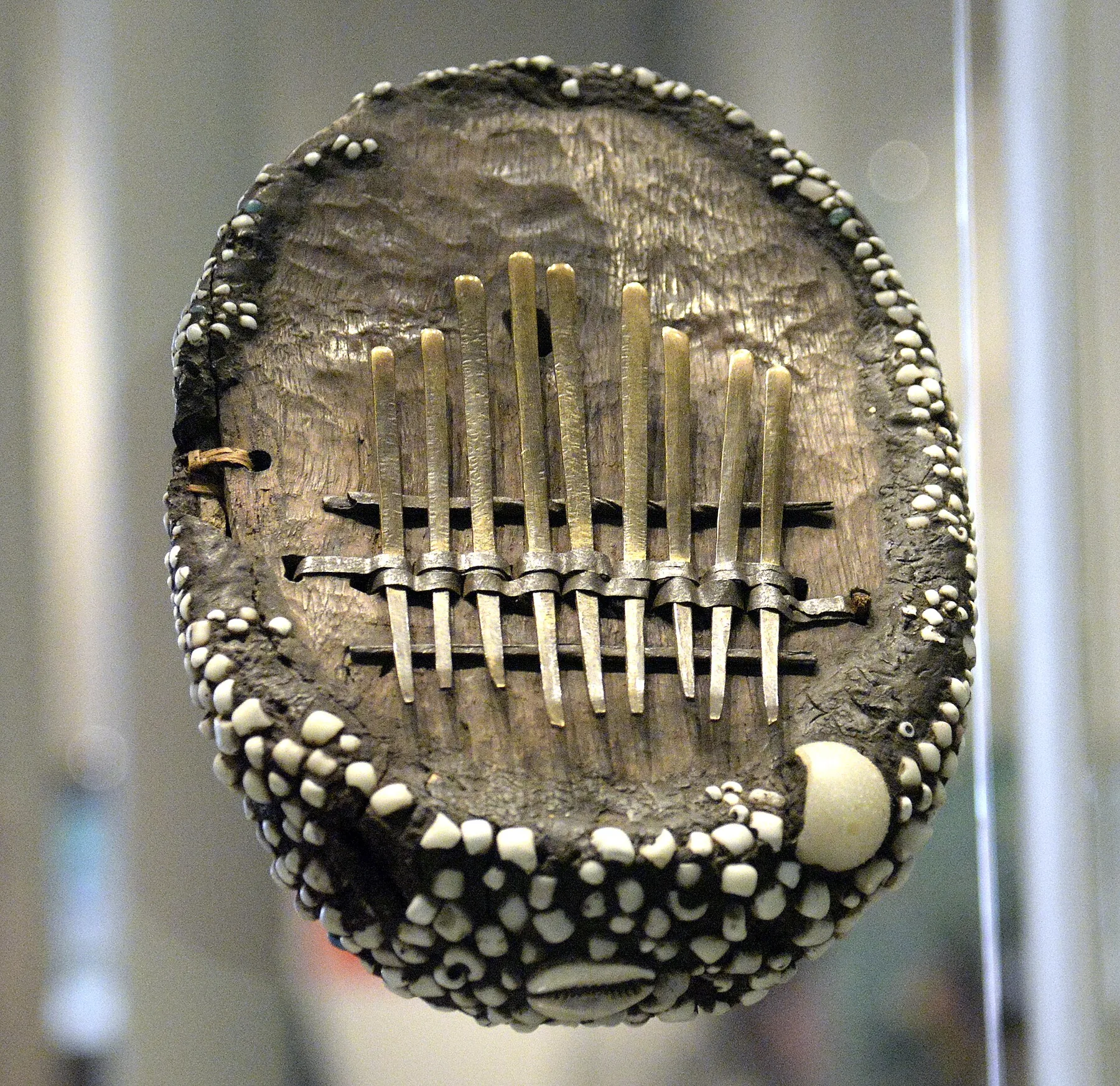
These instruments share one acoustic principle: the tines themselves produce the sound. All are idiophones in the lamellophone family: their bodies produce sound when thin strips fixed at one end and free at the other vibrate.
Why “thumb piano”? It is a simple analogy: you play notes and chords with your thumbs, as on a small keyboard. The technique involves plucking or pressing the free ends of the tines, alternating between the left and right thumbs.
They often look alike because a soundboard or resonating body amplifies the vibrations. A gourd, frame or hollow body shapes the timbre.
Beware: similar-looking instruments do not necessarily sound alike. Tunings, materials and resonators can change the sound considerably.
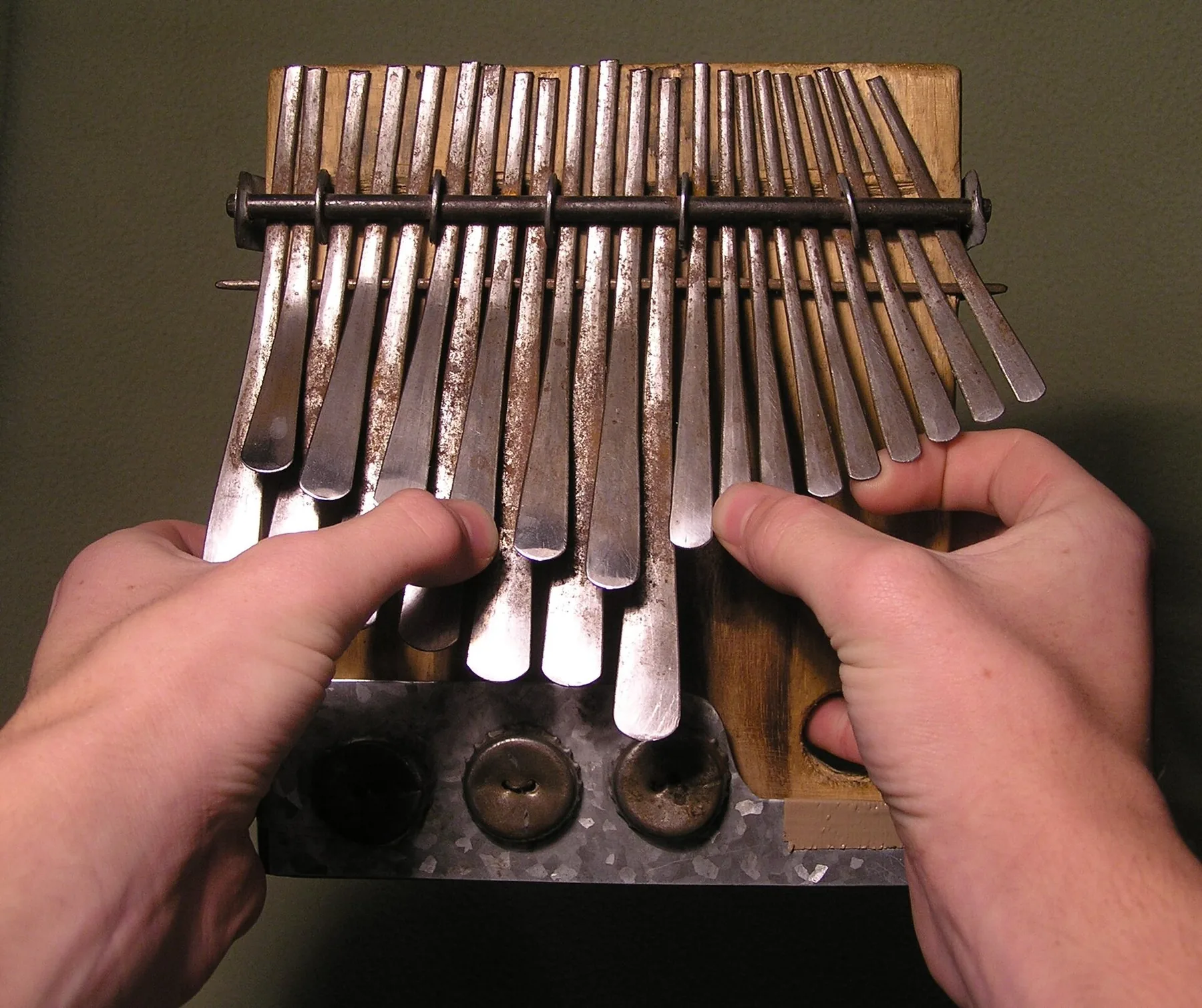
A quick visual check: count the rows of tines, look for a gourd or hollow body, spot any metal bottle caps, and check the stated tuning.
These features help explain the confusion over names. To explore the models and their differences further, read our dedicated guide.
Kalimba vs. mbira: origins, differences and sounds
Evidence dates back more than 3,000 years, mainly on the West African coast. These early instruments used bamboo tines mounted on wooden supports. The playing technique and melodic potential were already present.
Timeline:
- > 3,000 years ago: early bamboo forms
- About 1,300 years ago: major reappearance in the Zambezi Valley
- 20th century: worldwide spread
- 1954: standardization of the modern kalimba
- 2001: invention of the sansula
Reappearance around the Zambezi
About 1,300 years ago, the instrument became established in Central and Southern Africa, particularly in Zimbabwe, Mozambique, Zambia, Angola, Namibia and Botswana. This period marked the start of a strong regional tradition that continues today.
From bamboo to metal: the effect on resonance
The switch to metal transformed the timbre. Metal gives a sharper attack and holds its tuning better. It strengthens the harmonics, increases projection and produces a brighter resonance than bamboo.
| Period | Materials | Effect on sound |
|---|---|---|
| > 3,000 years ago | Bamboo, wood | Warm, short, organic |
| About 1,300 years ago | Local materials (wood, gourd) | More structured sound, ritual use |
| 20th century | Standardized metal | Clarity, sustain, tuning stability |
History and materials shape the sound: modern features such as stable notes and sustain result from the choice of metal and manufacturing methods. We can now distinguish the traditional instrument, rooted in ritual practices, from the modernized version, designed for learning and worldwide distribution.
The traditional mbira: cultural role, rituals and sonic identity
Among the Shona people of Zimbabwe, the mbira occupies a central place in social life. It is used to call upon ancestors and communicate with them during ceremonies and community events.
The mbira dzavadzimu accompanies invocations, requests and celebrations. Musicians play it to facilitate communication with spirits and mark important social milestones.
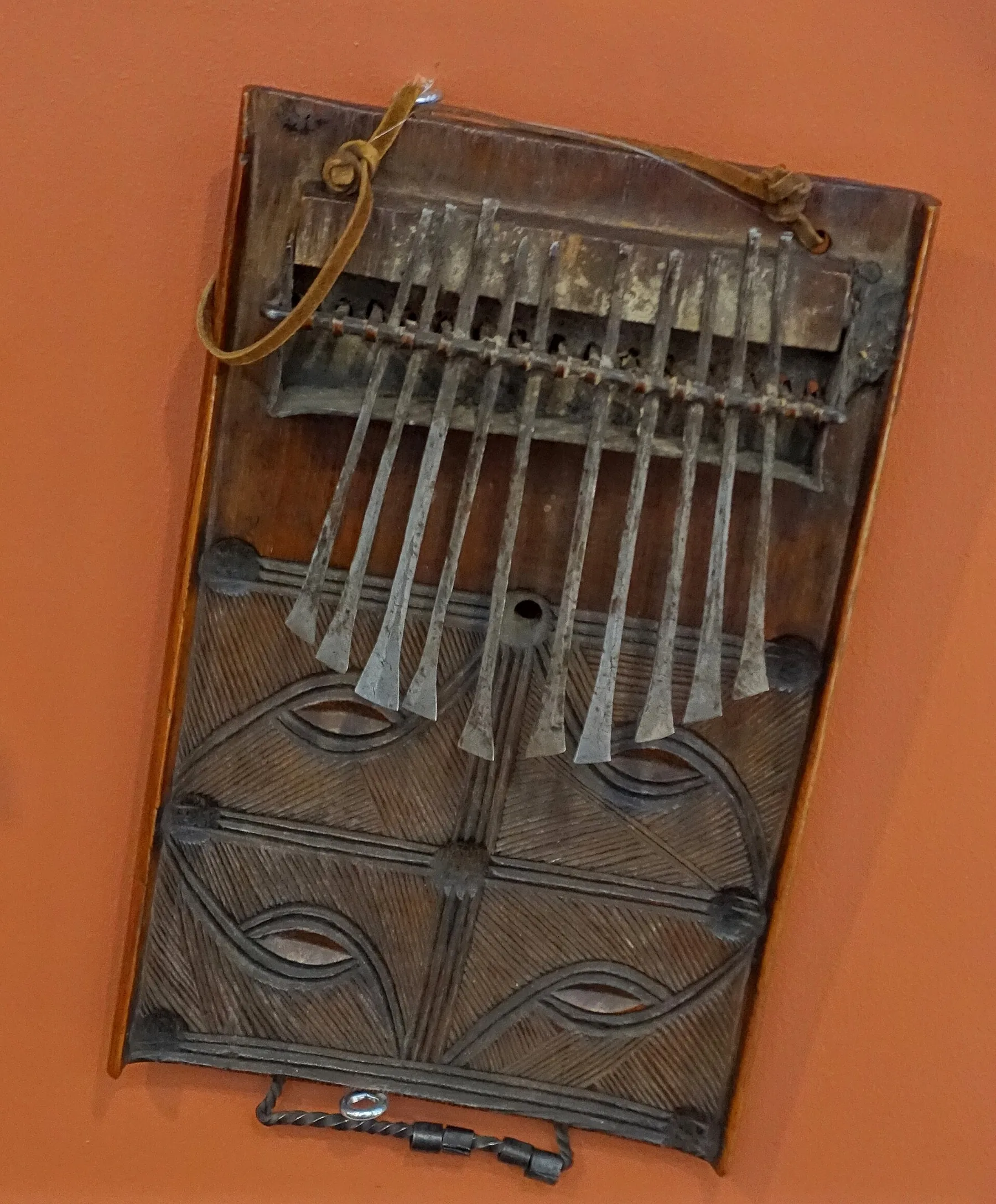
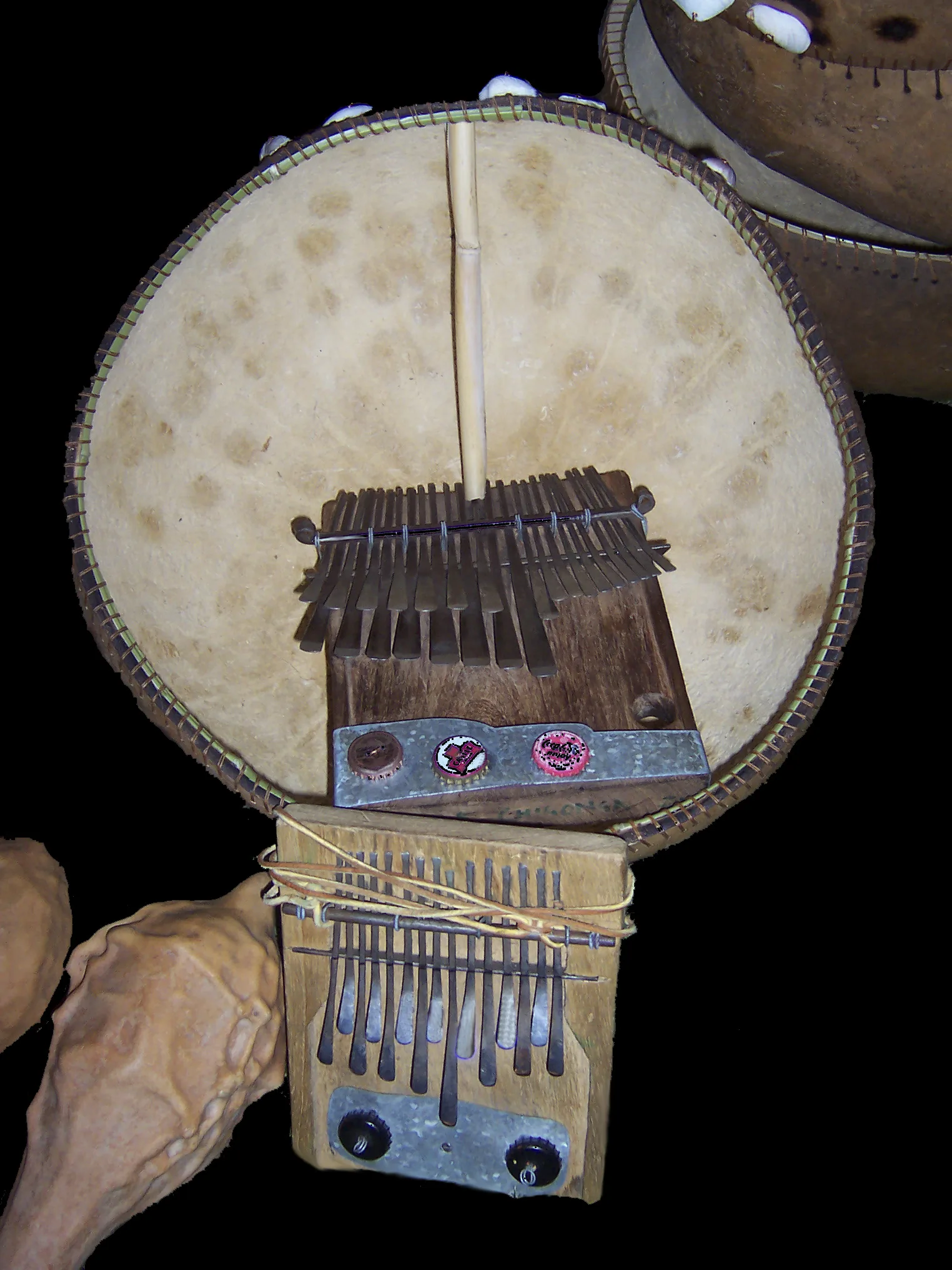
Its construction is often simple and sturdy: a board fitted with two rows of tines, or lamellae, paired with a gourd that acts as a natural resonator.
Metal bottle caps attached to the body add a characteristic rattle. This rough texture enriches the sound and gives it a more organic pulse.
Its tuning follows its own logic: it is often non-diatonic, with some notes absent. This changes how players create harmonies and musical progressions.
Listening guide: notice the texture, harmonics, repeating pulse and almost hypnotic effect of the patterns. These qualities explain why a handmade instrument sounds different from a standardized model.
The modern kalimba: Hugh Tracey’s contribution and worldwide spread
A turning point came in the mid-20th century, when an ethnomusicologist developed an accessible model.
Hugh Tracey standardized the term in 1954 and introduced a simple diatonic model: 15 tines tuned to G major. This version made the instrument easier to learn and teach.
Standardization in 1954
Hugh Tracey wanted the instrument to reach learners. By giving it a commercial identity, he shaped buyers’ expectations. The word became associated with a particular format.
The diatonic scale: why it helps beginners
The diatonic scale follows a pattern familiar to Western musicians. Tablature and popular songs can readily be adapted to it.
Common formats: 15, 17 or 21 keys
The number of keys varies by purpose: 15 for simplicity, 17 for the common consumer format and 21 for a wider range and more possibilities for harmony.
The hollow body has a hole at the front that allows vibrato effects. Holes at the back allow a wah-wah effect when the player changes the airflow with a hand.
Playing it still feels much like playing a small thumb piano: a regular row of tines, stable tuning and quick progress for beginners. Its spread around the world has brought more brands, materials and levels of sound quality.
Names and variants: mbira, sanza, likembe, sansula… why so many terms?
The names of these instruments chiefly reflect the diversity of local languages and uses.
The same object can have a different name in each region. That makes online research and shopping more complicated.
Sanza as a regional synonym
The term “sanza” is often used as a synonym by several communities. It remains a traditional, local word alongside other names.
More than 100 variants: why it matters
There are more than a hundred variants: likembe, njari, matepe, nhare, mbila and others. Sometimes only the name changes.
At other times, the differences are real: the number of rows, tuning, size or resonator changes the timbre and playing technique.
Sansula: a modern variant
The sansula, invented by Peter Hokema in 2001, adds a membrane to a frame. This construction amplifies the resonance and gives the sound a more airy quality.
Before buying, check the region of origin, number of rows, stated tuning and presence of a resonator (gourd, membrane or box). For a more detailed comparison, read our guide to the differences between models.
Construction and materials: wood, metal, acrylic and gourd
The material chosen for the body profoundly changes a tine instrument’s sound. Its construction affects projection, sustain and tonal color.
Wood or acrylic: wood, often mahogany, offers natural warmth and fullness. It produces a gentle resonance suited to playing at home or in the studio.
Acrylic, by contrast, offers greater projection and a very crisp sound. Onstage or in recordings, it helps notes sound clear.
Metal or bamboo tines
Metal tines give a precise attack and hold their tuning well. They strengthen the harmonics and make the sound more present.
Bamboo retains a softer, more traditional texture. It is more sensitive to environmental conditions, making its tuning less stable, but its tone remains warm.
Resonators and build quality
Gourds, hollow bodies and membranes change the resonance: a gourd adds depth, a hollow body provides controlled sustain, and a membrane creates a more airy sound.
- Check the alignment and rigidity of the bridge.
- Check that the tines are firmly secured and well finished.
- Test whether every note sounds even.
Use: whether you play for meditation, in the studio or onstage, choose a material and model that suit your practice. These choices help explain why a traditional instrument can sound more organic, while a modernized version sounds clearer.
Sounds and effects: what the ear hears in a kalimba and a mbira
Listening quickly reveals what distinguishes these instruments: their texture, attack and note duration.
Organic resonance and a hypnotic pulse: on one side, a natural resonator and bottle caps add a rougher texture. The gourd boosts the low notes and creates a repeating pulse. Polyrhythmic patterns produce an almost meditative effect.
Clarity, sustain and distinct notes: on the other side, evenly spaced tines and standardized tuning produce clearer notes with longer sustain. Distinct pitches make harmonizing and recording easier.
Practical effects: players create vibrato and wah-wah by covering or uncovering the sound hole, changing hand pressure or adjusting the angle of their thumbs. These movements control resonance and tonal color.
A short listening guide: compare the attack (a click or a rounded sound), mechanical noise, how long each note rings and the presence of harmonics. Preferences vary with the purpose, whether meditation, a rhythmic ensemble or studio work.
Audible differences also depend on tuning and the number of available notes; for a full comparison, read our guide to the differences.

Tunings, scales and numbers of notes: diatonic, pentatonic and chromatic
The choice of tuning determines what you can play and how you create harmonies.
Diatonic: this is the most common scale on modernized models. It makes learning easier and allows players to accompany popular songs.
Pentatonic: this scale has five notes per octave and lends itself to simple improvisation. Progressions are easier to build because dissonances are rare.
Chromatic: every note is available. Chromatic instruments offer more harmonic colors but require players to find their notes precisely.
How the scale affects learning and composition
A diatonic scale reduces the complexity of fingering. That is useful for relaxation or pop music.
Traditional tunings may omit certain notes. This is not a flaw: it is an aesthetic choice that creates a distinctive musical language.
Modernization: chromatic and electronic models
Double-row models or instruments with mechanisms allow chromatic playing. Electronic versions add amplification and effects.
“More notes mean more possibilities, but also more choices to master.”
| Type | Number of notes | Advantage |
|---|---|---|
| Diatonic | 11 to 17 | Easy, ideal for beginners |
| Pentatonic | 8 to 12 | Simple improvisation, little dissonance |
| Chromatic | 18 to 30 or more | Great harmonic freedom |
Advice for buyers in France: choose a scale to suit your repertoire (relaxation, pop or traditional music). For a detailed buying guide, read everything you need to know about the kalimba.
Thumb-playing techniques: rhythms, patterns and progress
Playing with your thumbs means learning to weave two voices together to create a rhythmic foundation.
Left- and right-hand patterns
The basic principle: the thumbs alternate to produce a bass line and melody that seem to answer each other. The left hand establishes the low foundation. The right hand responds in the higher register.
These roles can be reversed depending on the arrangement of the tines. The musician then learns to balance the two parts.
Shona polyrhythms: kushaura and kutsinhira
Two complementary voices: kushaura often starts the main pattern, while kutsinhira answers it and fills the gaps. Together, they create a cyclical, hypnotic flow.
“The conversation between the parts gives rise to polyrhythm: it is the soul of traditional playing.”
Practice routine
Start with slow arpeggios to develop precision. Add exercises for keeping a steady rhythm.
Then work on how you strike the tines: pressure, release and control of mechanical noise. Finish with ornaments and dynamics.
| Goal | Exercise | Expected result |
|---|---|---|
| Precision | Slow arpeggios, one hand at a time | Clear notes, less noise |
| Rhythm | Metronome and alternating thumbs | Steady tempo and groove |
| Texture | Interweave kushaura and kutsinhira | Polyrhythmic flow |
Choosing an instrument: some models favor clean, distinct playing; others emphasize rich texture and polyrhythm. Adapt your routine to the arrangement of the tines.
Which instrument should you choose in France for your needs?
The right choice depends on your needs. A few simple questions can help you decide.
A four-question approach:
- Goal: relaxation, repertoire or tradition?
- Level: beginner or intermediate?
- Setting: home, stage or studio?
- Budget: entry-level or handmade instrument?
Practical criteria to check
Tuning stability: look for well-adjusted tines and a sturdy bridge.
Tine quality: it affects the attack and how long notes ring.
Comfort: check the size, spacing and feel in your hands.
Resonance: a wooden box, gourd or membrane changes the tonal color.
Learning resources: check the availability of tablature and teaching materials in France.
For relaxation and music therapy
Why this choice is popular: a simple diatonic version offers clear notes and soothing sustain.
Choose an instrument made of wood for a warm timbre. The playing motions remain intuitive, which suits therapeutic practice.
For authenticity and tradition
Choose a handmade version if you want a rich texture and local tunings.
It supports polyrhythm and a traditional sound vocabulary, though it can be more delicate to adjust.
For the stage and recording
Choose an electro-acoustic model or install a piezo pickup to limit mechanical noise.
The choice of wood or acrylic affects projection: wood adds warmth, acrylic adds clarity.
“A good choice takes account of playing technique, performance setting and the sound you want.”
| Use | Recommended type | Suggested material | Main advantage |
|---|---|---|---|
| Daily meditation | 17-key diatonic model | Wood | Gentle sustain and simple playing |
| Workshop or school | Stable, easy-to-play models | Wood or acrylic | Durability and accessibility |
| Afro-jazz project | Handmade model, open tunings | Wood and gourd | Traditional texture and polyrhythm |
| Home studio or stage | Electro-acoustic model or pickup | Acrylic or treated wood | Sound control and amplification |
Conclusion
Design choices shape the playing experience.
One family, different uses. Their ancient roots explain their kinship, but the traditional instrument is often associated with ritual practice, local tunings and a complex texture. The standardized version, popularized by Hugh Tracey in 1954, aims to be accessible. In 2001, the sansula opened up new possibilities too.
In practice, if you want to learn quickly and play Western songs, choose a diatonic model. To explore a traditional musical language, look for a handmade instrument.
Buying advice: prioritize build quality (even tines, tuning stability and balanced resonance) over a large number of poorly adjusted notes. Listen to recordings, compare videos and, if possible, try holding and playing the instrument. To explore the subject further, read our feature on everything you need to know about the kalimba.