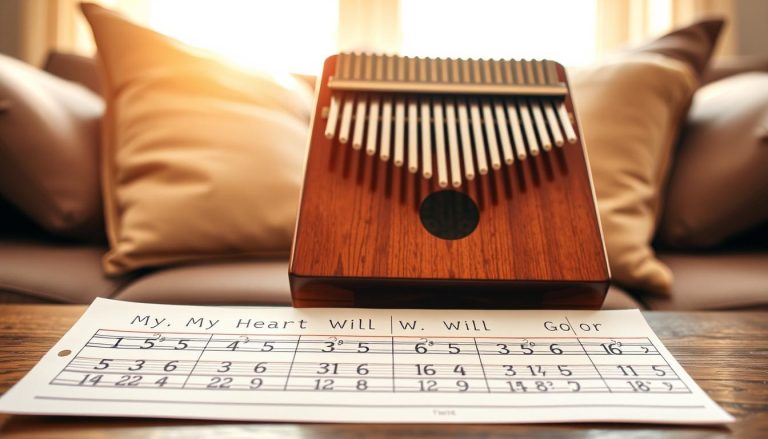
Goal: quickly learn this famous Christmas song on a small instrument with metal tines. This page offers a step-by-step method, clear reading guides and practical resources for practice.
What you will find: an accessible explanation, numbered and lettered tabs, and rhythm tips for beginners. This approach lets you play the melody even if you cannot read standard music notation.
The guide covers two common configurations, with 7 and 17 tines, and offers adjustments for your model. The adapted version is approachable and ideal for a family gathering during the holidays.
A beginner-friendly approach: clear guides, a simple rhythm and short exercises to help you progress quickly. For direct access to the sheet music and more details, see this practical resource: sheet music and tabs.
– A quick, accessible method for getting started.
– Resources for 7-tine and 17-tine models.
– Goal: play a festive melody in a short time.
Why “Jingle Bells” is ideal for playing on the kalimba during the holidays
This festive melody works especially well on the short tines of a thumb piano.
The tune is built around short patterns and a repetitive chorus. That makes it easy to remember and quick to practice.
Origin: “Jingle Bells” was composed by James Lord Pierpont in 1857. The French version dates from 1948 and was adapted by Francis Blanche. Knowing the original tune helps you place the accents and convey its energy.
What you will learn
- Connect the notes and play more smoothly.
- Understand the rhythm and follow simple notation.
- Coordinate your left and right hands without jargon.
Who this tutorial is for
It is suitable for complete beginners and children who read notes as numbers. Experienced musicians will also find a clear version to play at a steady tempo.
| Audience | Goal | Main benefit |
|---|---|---|
| Beginners | Learn the melody | Quick progress |
| Children | Read the numbers | Fun method |
| Experienced musicians | Keep a steady tempo | Consistent playing |
For the complete resource and its notation, see this dedicated section.
Prepare your instrument before playing: tuning and equipment
Properly adjusted tines ensure that every note in the song sounds right. Tuning is essential: even with accurate sheet music, the notes will sound wrong if the tines are not tuned to the correct key.
Check the F major tuning: tune your instrument to F major before learning the song. Test reference notes—the tonic, third and dominant—to confirm the key.
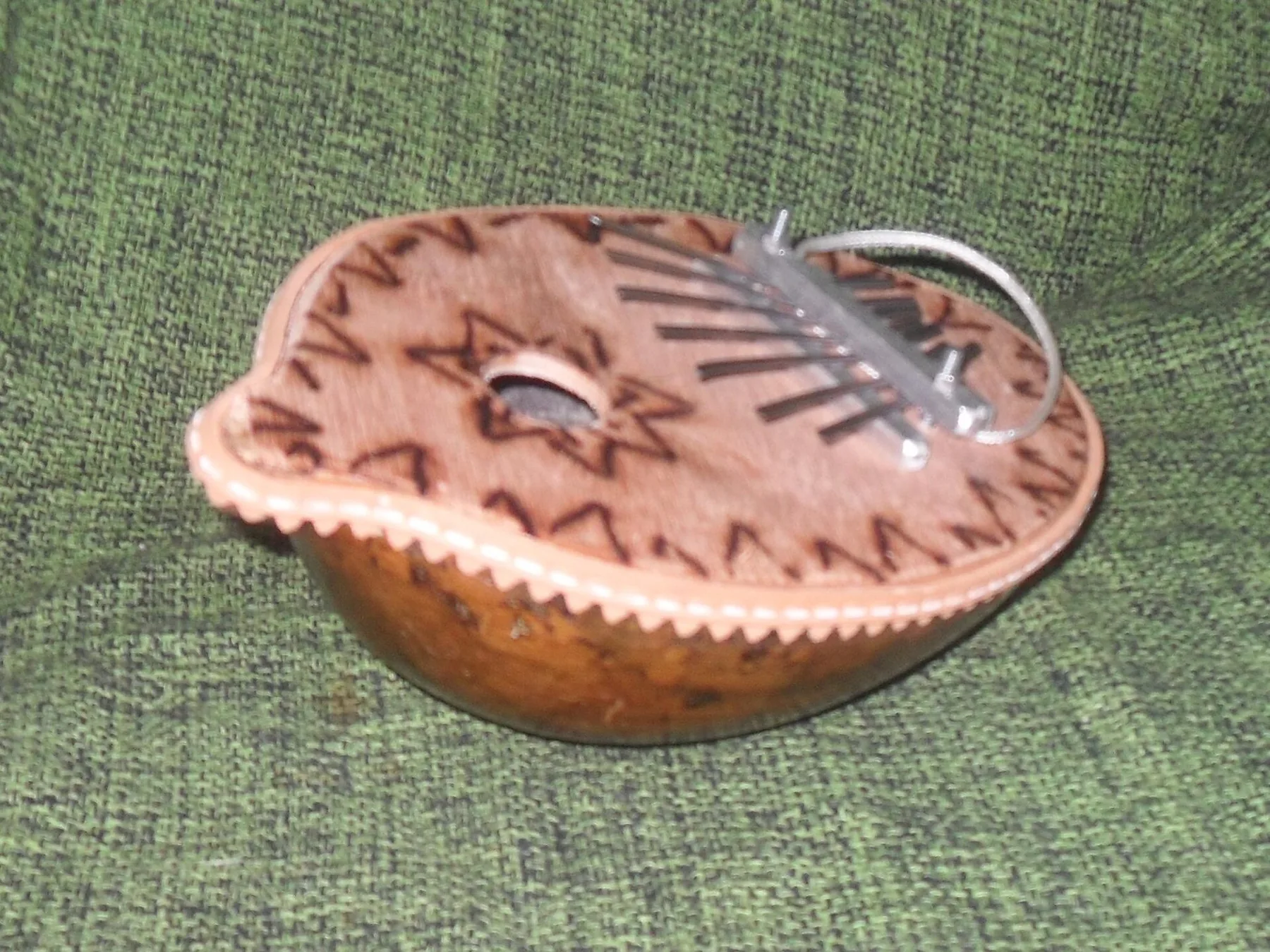
7-key or 17-key kalimba
7-key models are often tuned to a pentatonic scale using C, D, E, G and A. They are intuitive but limit the range of familiar melodies you can play.
17-key models offer more notes. They let you play the entire song in F major without transposing it.
Tools: tuning hammer and tuner
Use a tuning hammer to move each tine and a tuner to check each frequency. Adjust the tines one at a time, working from the center outward.
Practical tip: check the order of the keys and test a few reference notes before following the sheet music. Wrong notes often come from a poorly tuned instrument rather than poor technique.
| Feature | 7 keys | 17 keys |
|---|---|---|
| Typical scale | Major pentatonic | Extended chromatic |
| Playing the song in F major | Often requires transposition | Allows you to play directly in F major |
| Recommended equipment | Hammer and tuner | Hammer and tuner |
Quickly understand sheet music for this instrument without complicated music theory
Reading a melody on an instrument with tines becomes simple once you know the notation systems designed for it. The goal here is practical: follow clear directions to play without learning all of music theory.
Numbered sheet music: the easiest to use
Numbered sheet music associates each number with a tine. You play the tine marked with the indicated number to produce the note. It is quick and ideal for beginners who want to avoid reading a musical staff.
Letter notation
Letter notation uses letters such as A, B and C. It suits people who already know note names. It also makes transposition easy without changing how you read the music.
Tabs and note lengths
Tabs show which keys to play and how long to hold each note, including quarter notes and eighth notes. They help you play the melody more musically than a simple sequence of numbers.
Rhythm, beats and coordination
Learn one short phrase first, identify the repetitions, then work on the fast passages. Keep the rhythm and follow the beats by counting aloud.
Practical tip: alternate precisely between your left and right hands, relax your hands and repeat slowly until you can play steadily.
Jingle Bells on the kalimba: easy holiday sheet music and a step-by-step guide
Start by dividing the melody into short phrases that are easy to remember.
Identify the structure:
find the verses and chorus of the melody
Identify the verse, then the chorus. The chorus contains repeated patterns that are easy to remember.
Mark each pattern and note its duration. This makes reading and learning easier.
Follow the sheet music step by step at a suggested tempo of about 120 BPM
Play one phrase at a time. Start slowly, check that the notes are in tune, then increase the tempo.
Suggested tempo: work toward 120 BPM once you can play steadily.
Practice tips: fast passages, rests and a steady rhythm
Isolate the fast passages and count the rests aloud. Practice with a metronome.
Technique: pluck the tines with even force and alternate between your right and left hands for a clear sound.
Common mistakes: wrong notes caused by tuning or reading errors
Wrong notes often result from poor tuning or reading too quickly.
How to correct them: return to the measure in question, check the tuning, repeat the measure, then put it back into the song.
| Step | Purpose | Tip |
|---|---|---|
| Identify patterns | Understand the verses and chorus | Mark repeated patterns |
| Practice | Stabilize the rhythm | Use a metronome from 60 to 120 BPM |
| Correct mistakes | Eliminate wrong notes | Check the tuning and reread the sheet music |
To access the sheet music and tabs, follow this link and download the resource.
Learn faster with a video tutorial and by listening to the original version
A filmed demonstration shows exactly where to place your thumbs and how to move from one key to another. It lets you see how the left and right hands alternate and move across the tines.

Why video helps you progress faster
Video clears up uncertainty: you can see the movement, how firmly the tines are plucked and exactly where the thumbs sit on the keys. This makes learning easier and reduces mistakes.
How to practice with a filmed lesson
- Watch it once to understand the musical phrase.
- Pause and replay the video to work on short passages.
- Put the passages together, then play at the suggested tempo.
Compare the French and English versions
Listen to the original “Jingle Bells” to feel the pulse and energy of the chorus. This helps you remember the melody: even though the lyrics change, the musical cues stay the same.
Memory tip: sing the chorus silently as you play. Gradually rely less on the sheet music so you can play your instrument clearly and smoothly.
Downloads and resources for progressing beyond this sheet music
Keep useful files for practice and for tracking your progress. After you have played the song successfully once, download sheet music and tabs as PDFs. You can use them for offline review and share them with other beginners.
How to choose:
sheet music and tabs to save as PDFs
Download one version for slow practice and another for reaching the final tempo. Print the short score and keep a digital copy for practice while traveling.
Choose by skill level: beginner → advanced
For beginners, choose sheets that show numbers and note lengths. Intermediate versions add ornaments. Advanced versions require more notes and greater control of dynamics.
Build a useful repertoire
Start with simple melodies: “You Are My Sunshine” and “Frère Jacques” are excellent choices. They improve your accuracy and fluency before you tackle other songs or tunes on the piano.
“Download, organize, play again: it is the quickest way to build confidence.”
| Action | Purpose | Tip |
|---|---|---|
| Download PDFs | Review offline | Two tempos: slow and fast |
| Organize by level | Track your progress | Beginner → intermediate → advanced |
| Write down your goals | Measure your progress | For example, 5 songs in 6 weeks |
| Change instruments | Play more songs true to familiar versions | Move to 17 tines if needed |
If you want to play more pieces that stay true to familiar versions, consider a 17-tine model. It offers more keys and a wider choice of notes.
To find sheet music and tabs and expand your collection, explore more sheet music and files for every skill level.
Conclusion
To sum up: remember the steps that take you from a well-tuned instrument to confident playing.
We prepared the instrument, learned to read numbered sheet music and followed a step-by-step guide to play “Jingle Bells.” The song’s history provides context: it was composed by James Lord Pierpont and published in 1857, then adapted into French by Francis Blanche.
The most accessible method is numbered sheet music, followed by tabs for working on note lengths and notes. To improve, play for a few minutes each day, use a metronome and record yourself so you can correct difficult passages.
Final step: download the resources, listen to the original version and expand your repertoire. Consider a more versatile model if you want to play more songs.