Goal: this guide helps you find an instrument suited to your needs: relaxation, structured learning, or performing on stage. We do not promise one universal model, but clear recommendations tailored to your skill level and budget.
Our assessment draws on more than 200 tests in real-world conditions and weighted user reviews. This method limits bias and focuses on practical criteria: craftsmanship, resonance, tuning stability, ergonomics, and accessories.
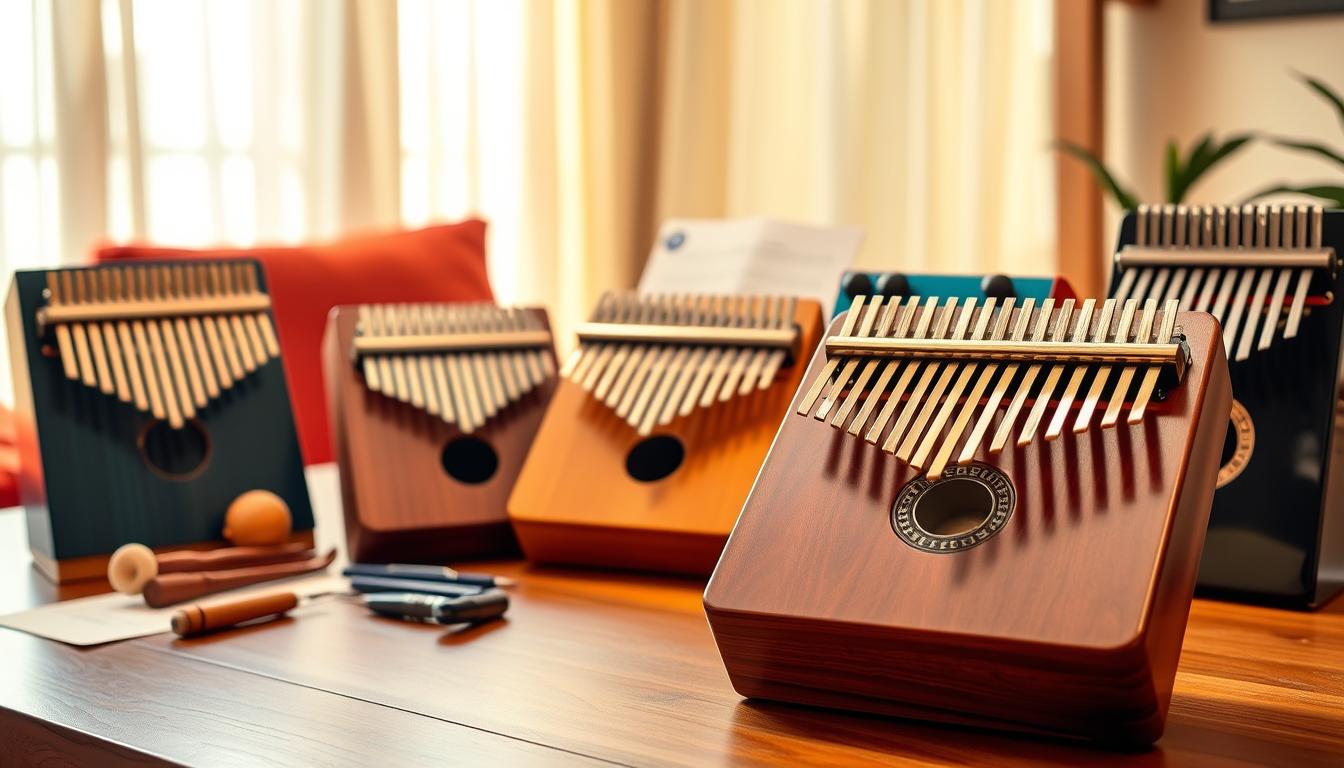
The comparison covers budget and premium models, flatboards and resonator boxes, instruments with 8, 17, 21, or 34 keys, and wood and acrylic options. We also explain why the best kalimba for a beginner is not necessarily the most expensive.
There are two ways to use this article: a table for a quick decision and detailed advice to refine your choice. To learn more about beginner-friendly models, see this beginner’s guide.
Why consult this kalimba buying guide in France today?
With so many options available in France, a practical guide helps separate genuine quality from marketing claims.
Goal: find the best instrument for your level and needs
Our aim is simple: to recommend an instrument suited to beginners, children, and experienced players. We cover everything from playing at home and traveling to recording in a studio.
Methodology: more than 200 models tested
We tried more than 200 models in real-world conditions. We checked their pitch accuracy, tuning stability, and ergonomics, then tested them over time.
Weighted user feedback complements these tests to produce reliable reviews.
What “best” means
We assess craftsmanship, tine consistency, resonance, sustain, comfort, and the availability of after-sales support in France. Value for money also depends on the included accessories: case, hammer, and note markers.
Our selection covers wood models (mahogany, beech, walnut, sandalwood, and padauk) and acrylic models with 8 to 34 keys, offered by sellers providing warranties in the French market.
For full reviews, follow this link.
Leading brands and how they differ
This overview groups makers by intended use: performance, progression, design, or budget.
Performance-focused brands
Gecko stands out for its sound projection and resonator-box models. Its finishes and bundles are often well considered, making it a choice for professionals.
Lingting offers a good balance of professional quality and accessibility with solid padauk. Check the ergonomics: the body may feel thick depending on your hand size.
Hluru makes 21-key walnut or maple models that give players more expressive possibilities if they want a wider range without switching to a chromatic instrument.
Progression, design, and budget
April Yang caters to learners: 17 tines, a beech body, a clear sound, and a complete beginner’s bundle (pouch and tremolo chain).
Chill Angels makes 34-tine chromatic models. They are ideal for playing with other musicians, but are heavier and bulkier.
Kimi and the Ocean model emphasize appearance (acrylic or resin and beech). Visual appeal takes priority, often with a softer tone.
Cega remains the budget option: a decent mahogany model and a beginner’s bundle with thumb guards.
Seller and collection
Instruments du Monde offers a wide selection, accessories, and after-sales support in France that makes buying more reassuring.
| Positioning | Examples | Main strength |
|---|---|---|
| Performance | Gecko, Lingting, Hluru | Projection, sustain, finishes |
| Progression | April Yang, Chill Angels | Learning bundle, wider range |
| Design | Kimi, Ocean | Appearance, distinctive materials |
| Budget | Cega | Affordable price, beginner’s bundle |
| Seller | Instruments du Monde | Wide selection, after-sales support in France |
Comparison table of the best models and brands
This decision table compares playing needs, resonance, and prices.
At a glance: strengths, limitations, and price ranges
| Recommended player | Strengths | Limitations | Price range (France) |
|---|---|---|---|
| Beginner or child | Accuracy, complete bundle (Cega 17) | Limited resonance | €40 to €70 |
| Developing player | Good balance of sound and ergonomics (April Yang) | Mid-range price | €90 to €130 |
| Stage or studio | Projection, sustain (hollow-body Gecko) | Heavier | €120 and up |
Flatboard or resonator-box model
A resonator box provides more projection and sustain and allows a “wah-wah” effect. It is ideal for the stage and recording.
A flatboard prioritizes portability, precision, and durability during transport.
Number of keys
Pocket size (8 keys): travel and pentatonic improvisation. Standard size (17 keys): learning and sheet music. Extended size (21 keys): expressiveness. Chromatic size (34 keys): a full range of notes, comparable to a piano.
Buying rule: at the same price, prioritize tine and finish quality over extra keys you cannot yet use. For more information, see this buying guide.
Best Kalimba Brand: Comparison and Buying Advice
Depending on how you play, some models offer a better balance of resonance, ergonomics, and quality. Here are some quick pointers to help you choose an instrument suited to you.
April Yang with 17 tines (solid beech): versatile choice
For: motivated beginners and intermediate players.
Why: crystalline tone, clear attack, and a ready-to-play kit (around €100). Check whether you need more projection than a flatboard provides.
Gecko K17SD (red sandalwood): a resonator-box benchmark
For: stage and studio players.
Why: strong resonance, pronounced sustain, engraved keys, and a hard case (around €120). Check its weight if you plan to carry it.
Chill Angels with 34 tines: chromatic choice
For: musicians who want access to every note.
Why: sharps and flats are available, with a complete bundle (hammer and book). Drawbacks: size and weight.
Gecko with 8 keys: pocket size
For: children, travelers, and people seeking relaxation.
Why: a pentatonic scale that avoids wrong notes and a size that is easy to carry. Ideal for quick improvisation.
Kimi with 17 acrylic keys: visual appeal and a gentle sound
For: design-conscious buyers.
Why: a soft tone and polished appearance. Bear in mind that its weight becomes more noticeable during long sessions.
Hluru Prestige 21: greater expressiveness
For: players who want to extend their range.
Why: walnut and maple, engraved tines, and a rich sound. Note that 21 keys require more practice.
Lingting with 17 keys (padauk): accessible professional model
For: people seeking a distinctive sound without spending too much.
Why: a solid feel and a complete bundle. Check the body thickness if you have small hands.
Cega with 17 keys (mahogany): budget option
For: beginners on a small budget.
Why: decent acoustics and thumb guards. Expect less rich resonance than a premium model.
Ocean (beech and epoxy resin): a design favorite
For: buyers guided by appearance.
Why: an original look and a resin finish. This model favors appearance over the acoustic warmth of solid wood.
For a detailed guide to choosing by budget and tine count, see this buying guide.
How to choose a good kalimba: essential criteria before buying
A good choice balances tone, tuning stability, and playing comfort.
Wood plays a major role in tone. Mahogany gives a warm, gentle sound. Beech produces a clearer, more precise sound. Walnut and maple offer distinct harmonics. Woods such as sandalwood and padauk enhance projection and character.
Steel tines and keys: simple checks
Check that the tines are consistent. They should vibrate evenly. Their edges should not hurt your thumbs. Check tuning stability after a few days and test every note, from the center to the outermost keys.
Resonator-box or flatboard model
A resonator box provides more resonance, volume, and sustain. A flatboard favors portability and precision. Choose according to your needs: stage and recording, or travel and relaxation.
Size, thickness, and grip
Check the size and thickness. A smaller hand is better suited to a slim body: a thickness of around 3 cm may be too much. Consider the weight, especially for long sessions.
Finishes, markers, and checklist
Engraved or adhesive note markers speed up learning. The quality of the finish is especially apparent in the tine edges and how well the screws fit.
- Check the tuning on arrival.
- Test every note.
- If necessary, adjust the tines with the supplied hammer.
- Check the condition of the tines and note markers.
| Criterion | What to check | Effect |
|---|---|---|
| Wood | Species (mahogany, beech, walnut) | Tone and warmth |
| Tines | Consistency, edges, stability | Pitch accuracy and comfort |
| Resonator box or flatboard | Volume and sustain, or portability | Stage or travel use |
| Ergonomics | Size, thickness, weight | Long-term comfort |
To choose your first instrument, see this guide.
Number of keys and scales: choose for your style of music
The number of keys directly affects the music you can play and how easy the instrument is to learn.
Standard 17-key format in C major
The 17-key C-major format remains the most common. It makes sheet music and online tutorials easier to find.
Advantage: a good balance between harmonic range and easy-to-read notes for learning.
Pentatonic scale
The pentatonic scale avoids common dissonances. It is ideal for relaxation, meditation, and children.
Pocket-size models are easy to handle and let you improvise without worrying about wrong notes.
Chromatic 34-tine format
A 34-tine model includes every semitone. It lets you accompany a piano or other instruments in an ensemble.
Expect greater weight and bulk, however, as well as a longer adjustment period.
“The number of keys affects simplicity, repertoire, and the pace of progress.”
Practical tip: beginners can start with the central keys, then gradually extend their range.
| Format | Configuration | Recommended use |
|---|---|---|
| 8 to 10 keys | Pocket size, pentatonic scale | Relaxation, children |
| 17 keys | C major, standard format | Learning, pop sheet music |
| 21 to 24 keys | Extended range | More expressiveness |
| 34 keys | Chromatic scale | Accompaniment, full arrangements |
Choose by player: beginners, children, and experienced musicians
Defining your needs helps you avoid the common mistake of buying an unsuitable model. Here are simple pointers to guide your choice according to how you will play.
Beginners
Choose a 17-key model in C major. This format makes learning and finding sheet music easier. Pick a complete bundle with a case, a hammer, and readable note markers.
Above all, check the tuning when it arrives and the stability of the tines to ensure it holds up over time.
Children
Choose a pocket-size pentatonic model, such as the Gecko 8. It is light and sturdy and produces musical results quickly.
Build quality should put safety and durability ahead of extra features.
Experienced players
For stage or studio use, prioritize projection and expressiveness: a resonator box, solid woods (Gecko K17SD, Hluru 21), or more keys (Chill Angels 34).
Comfort during long sessions depends on size and thickness: test the grip for your hand size.
Common mistakes:
- Buying a 21- or 34-key model without actually needing it.
- Overlooking ergonomics if you have small hands.
- Underestimating the weight, especially of acrylic models.
Simple method: first define how you will use it (home, travel, or stage), then choose between a flatboard and a resonator box, decide on the number of keys, and finally set your budget.
Essential accessories for a successful purchase
Before making your final choice, check the included accessories: they directly affect your experience. A good bundle lets you start quickly, protects the instrument, and avoids extra purchases.
Tuning hammer and tuner
Tuning hammer: tap a tine lightly to raise or lower a note. This is the simplest way to adjust the tuning.
Tuner: an app is often enough. Check the tuning, especially at first and before each important session.
Case, pouch, and protection
Hard case for frequent travel; pouch for storage at home. The body and tines can quickly acquire marks, so protect them.
Thumb guards
These guards reduce discomfort during long sessions. They improve comfort and help you keep learning without frequent breaks.
Note markers, booklet, and optional accessories
Stickers and a booklet make it easier to read notes on a 17-key model. For enjoyment, consider a tremolo chain, a tassel, or a display stand: these accessories can encourage regular practice.
| Accessory | Purpose | When to choose it |
|---|---|---|
| Hammer and tuner | Maintaining the tuning | From the day it arrives |
| Hard case | Protection while traveling | Frequent transport |
| Thumb guards | Comfort | Long sessions |
Budget and value for money: price ranges in France
To manage your budget, here are clear pointers on prices in France. Understanding these ranges helps prevent an impulsive purchase and lets you assess the balance between cost and performance.
Entry level: aim for a decent instrument rather than the cheapest
Guide price: around €40 to €70 (for example, Cega 17).
Avoid the very cheapest model. Its tines may shift, its tuning may deteriorate, and rough finishes may hurt your thumbs.
Mid-range: a balance of tines, resonance, and a complete bundle
Guide price: around €90 to €130 (April Yang at around €100, Gecko K17SD at around €120).
This range offers the best value for money for most buyers. It brings more resonance, better tuning stability, and useful accessories.
Premium: finishes, fine woods, projection, and durability
Guide price: over €130. You pay for fine wood (mahogany, sandalwood), careful finishes, and better projection.
Over its lifetime, a durable instrument can save you from buying another one.
When to buy: bundles, promotions, and the real cost of accessories
Compare bundles. A slightly higher price that includes a case, hammer, and tuner can lower the final cost.
| Range | Price range (France) | Example |
|---|---|---|
| Entry level | €40 to €70 | Cega 17 |
| Mid-range | €90 to €130 | April Yang, Gecko K17SD |
| Premium | Over €130 | Fine woods, professional finishes |
Final tip: prioritize long-term value for money over the lowest price. A good initial choice reduces accessory costs and extends the instrument’s playing life.
Where to buy with confidence in France: availability, returns, and support
To buy with confidence in France, prioritize a transparent seller with clear sales terms.
Choose a seller who explains warranties, delivery times, the returns policy, and technical details: wood species, number of keys, flatboard or resonator-box design, and included accessories.
Local after-sales support is reassuring: repairs, quick exchanges, and help in French make a difference. Stores carrying several brands, such as Instruments du Monde, make it easier to try and compare models before buying.
Checklist for avoiding scams:
- Check the website address and legal information.
- Assess whether reviews are credible and be wary of unusually low prices for well-known brands.
- Compare bundle contents (case, hammer, note markers) at the same price.
When the instrument arrives, inspect it, test every note, and check the tuning. If you find a defect, use the seller’s returns procedure promptly.
Conclusion
Best Kalimba Brand: Comparison and Buying Advice
To choose the instrument that suits you, follow a simple process. First decide how you will use it, then choose the format (flatboard or resonator box), the number of keys, and finally your budget and the included accessories.
A few pointers: for learning, the best kalimba remains the April Yang 17 (flatboard, beech, with a complete kit). For the stage, choose the Gecko K17SD (resonator box, sandalwood) for its projection and resonance. The Chill Angels 34 suits chromatic playing. The Gecko 8 suits children and travel.
Do not compromise on key criteria: stable tines, tuning that holds, readable note markers, playing comfort, and a suitable case. Having a hammer and checking the tuning on arrival let you play in tune immediately.
If you are still unsure, choose a 17-key model in C major: it is the safest choice for starting and progressing in France, with a good balance of quality, price, and playing enjoyment.