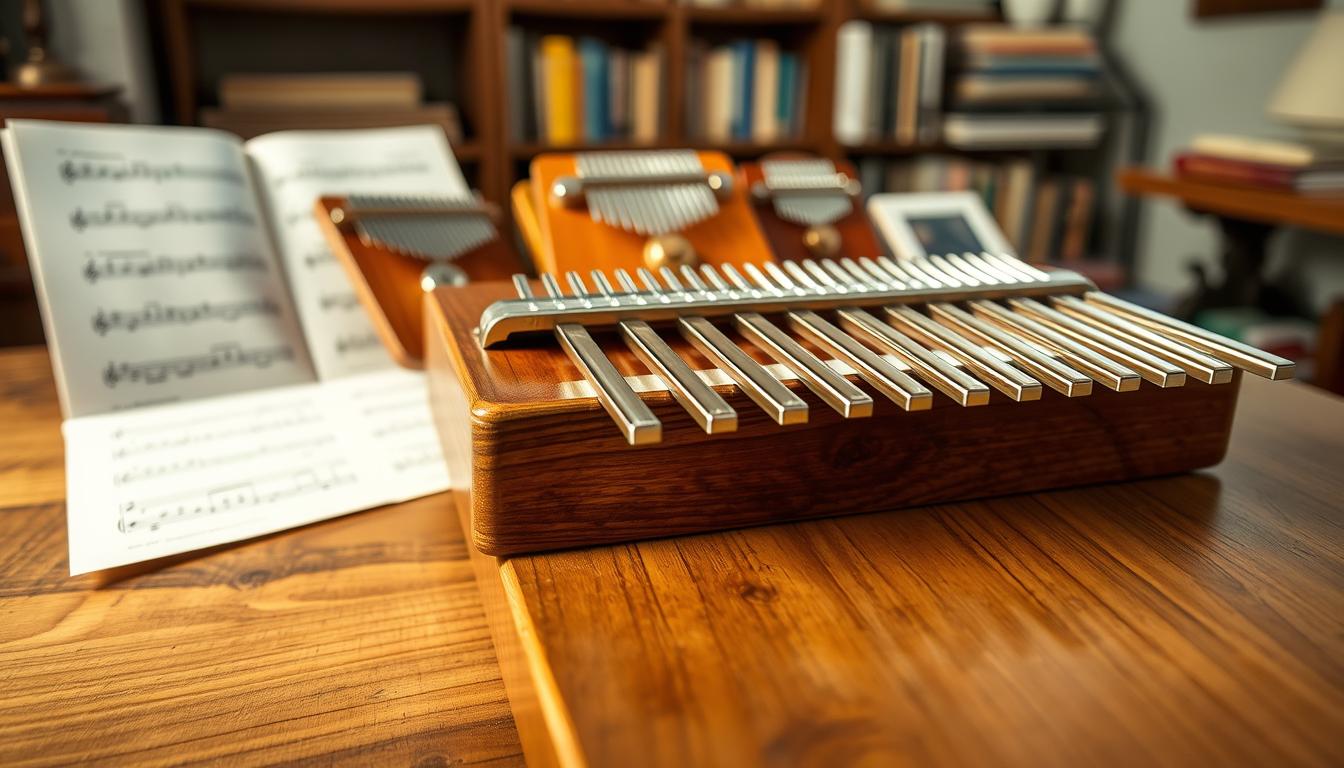
Goal: clearly compare two formats to help you choose based on your skill level, how you plan to use the instrument (relaxation, covers, or composition), and playing comfort in France.
Context: the 21-key format generally adds four low notes in the center, giving the sound more depth. This provides more arranging options, but does not necessarily let you play more songs.
In this guide, we explain the main differences: their effects on the scale, range, availability of sheet music, ergonomics, sound, and budget.
Key points: four extra notes (often low notes), roughly 5 cm more width and 100 g more weight, and an average price increase of €10 to €20 for a comparable finish.
To explore the topic further and see practical examples, read this comparison: 17-key vs 21-key comparison guide.
Understand 17-key and 21-key kalimbas before you buy
Before choosing your instrument, learn the terminology and how it is played. This will help you decide whether you want it for relaxation, covers, or composition.
Useful terms in France: you will often see the words mbira, sanza, or “thumb piano.” In everyday use, these terms refer to the same family of instruments with metal tines.
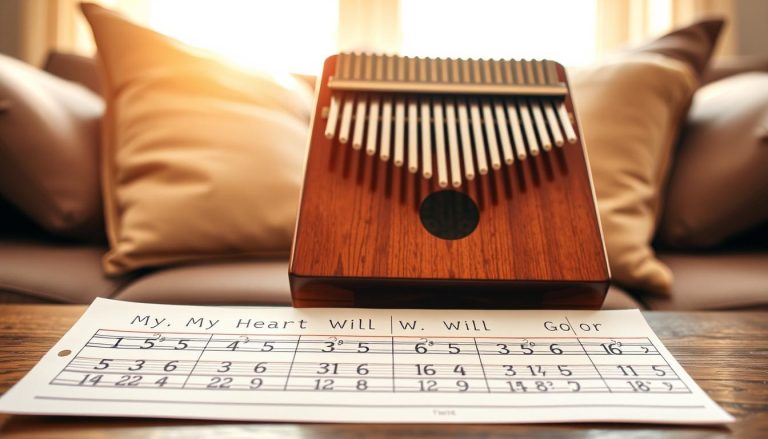
How it works: you pluck the tines with your thumbs; each tine produces a specific note. This makes tablature easier to read. To get started, learn how to read suitable sheet music.
Key principle: each key corresponds to one note. A model has as many notes as keys, which affects its range and how you locate notes.
What the number of tines really changes: a wider range, more arranging options, and sometimes a slight difference in playing comfort. Bear in mind that the number of keys alone does not guarantee quality. The wood, steel, finish, and tuning stability all have a major effect on the sound.
We first compare the musical aspects, then their practical effects on sheet music, ergonomics, and price. For an overview, read this 17-key vs 21-key comparison guide.
17-key vs 21-key kalimba: differences at a glance
Let’s look at what four extra notes bring to the instrument’s sound and use.
What you gain from four extra keys
Main benefit: four additional keys provide extra notes, often low notes positioned in the center. They slightly extend the scale and range.
This makes bass lines, simple chord inversions, and richer accompaniment easier. For a creative musician, the extra keys offer more ways to arrange notes in chords.
What stays the same: you can play most familiar songs
Most popular melodies can still be played on a standard model. The main melody often uses the same diatonic scale.
In other words, more notes do not automatically mean more songs. The real benefit is greater freedom in arranging music.
- 17 keys = standard format with plentiful learning resources.
- 21 keys = wider range with more prominent low notes.
- Choose according to your skill level: a beginner using sheet music → standard format; a creative musician → extended format recommended.
| Criterion | Standard format | Extended format |
|---|---|---|
| Number of notes | Sufficient diatonic range | Four extra notes, often low notes |
| Resources | Plenty of sheet music and tutorials | Fewer format-specific resources, but more arranging options |
| Recommended use | Learning and playing covers | Composition and richer accompaniment |
For more help choosing between 17 and 21 keys, read our detailed comparison.
21-Key Kalimba: Benefits, Sheet Music, and Differences from a 17-Key Kalimba
Let’s review the practical advantages of a model with a wider range for accompaniment. It makes bass lines and chord inversions easier and offers a richer palette of sounds for arranging music.
Benefits for arranging
The extended model lets you add low notes without making the right-hand part more complicated. It offers more harmonic possibilities, which appeals to creative musicians.
Limits of learning resources and note layout
On the other hand, there are still more tutorials and sheet music for the standard format. It also takes a little time to get used to the note layout.
For a practical comparison and examples, read the comparison guide.