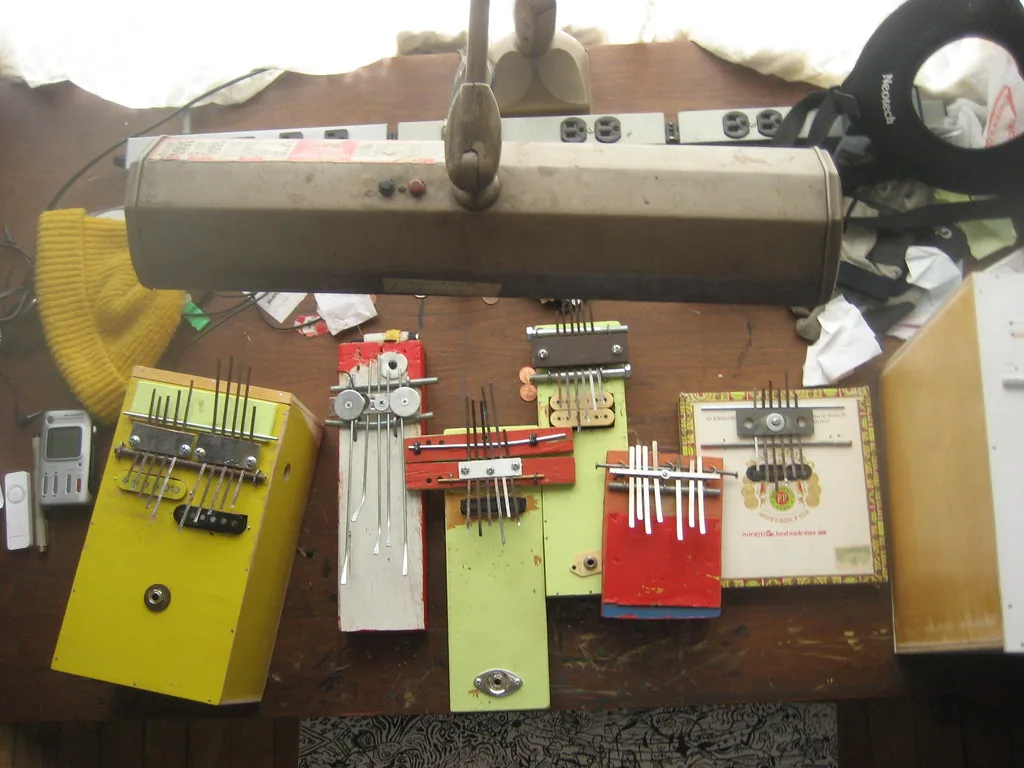
Goal: learn to retune a kalimba and eliminate unwanted noises without damaging the instrument.
This guide starts with a simple diagnosis: distinguish a tuning problem from a sudden noise on one tine. We then explain how to slide the steel tines to reach the correct frequency using a tuner.
The article follows a practical sequence: diagnose the issue, tune correctly, then work from the simplest fix to the most technical. Several methods can reduce buzzing: moving the tine, inserting a paper shim, adjusting a twist, and smoothing the bridge.
Expected result: stable notes, better resonance, and a repeatable way to restore a clear sound at every session. Remember: a thumb piano can go out of tune over time through playing, transport, or humidity. This is not necessarily serious if you adjust it carefully.
Finally, avoid rough actions such as heavy hammer blows, aggressive sanding, or excessive twisting, and stop if you notice any sign of structural damage.
Understand the problem: poor tuning, buzzing, vibrations, and “dead” notes
Before taking action, distinguish an out-of-tune note from a simple rattle.
Quick diagnosis (30 seconds): play the note on its own. If its pitch has changed, the note is out of tune. If a metallic sound is heard over a stable pitch, it is an unwanted noise.
Common causes include a tine touching its neighbor, uneven contact with the bar, or a soundboard transmitting an unwanted resonance.
Over time, each pluck transfers energy to the bar. Friction creates small signs of wear. These tiny imperfections can be enough to cause a rattle even when the note remains in tune.
Set priorities according to the extent of the problem: if only one note is affected, check its alignment and spacing. If several notes are affected, inspect the support, cleanliness, and bar of the instrument.
Finally, some high notes naturally ring for less time. But an unusually “dead” note may result from poor contact or dirt buildup. For a step-by-step method, follow this detailed solution.
When and why to tune your kalimba in France today
To keep its sound reliable, check it regularly according to how often you play and the type of instrument you have.
Tune regularly according to use
If you play every day, check the tuning before each session. If you play occasionally, a monthly check is enough.
Wood reacts to humidity, and playing can move the tines: hollow-body models often go out of tune more quickly.

After a knock or transport: a quick check
After moving the instrument, play 3 to 5 reference notes at the center and edges. If one note has shifted noticeably, adjust that note before tuning the whole instrument.
Adapt the tuning and choose a reference pitch
Tuning options: A at 440 Hz under ISO 16; some players prefer 432 Hz. Neither reference is inherently better: what matters is staying in tune with the accompaniment.
To adapt a tablature, you can transpose it by a semitone and then return to standard tuning.
Apps or a dedicated tuner
Apps can help in a quiet setting, but a smartphone microphone limits accuracy. A dedicated tuner remains the most reliable option.
For a complete method, follow this page: tune a kalimba step by step.
Essential tools for adjusting a kalimba without damaging it
A good adjustment starts with suitable tools and a quiet space. Without the right equipment, you risk damaging the soundboard or finish.
Basic tools
Minimum kit: a tuning hammer or suitable pliers, a reliable electronic tuner, and a stable surface (your lap, a nonslip mat, or a table).
Safe technique
Tap straight, using small movements. Check the note after each tiny adjustment to avoid overshooting the target.
Choosing a tuner
Electronic tuner: accurate for frequent use. Tuning fork: useful if you have a trained ear. Smartphone apps are handy when traveling, but their readings depend on the microphone and background noise.
Prepare the room and microphone
Turn off fans and noisy devices. Place the microphone near the tines without pressing the body against a surface that amplifies the sound.
Position and common mistakes
- Recommended position: keep the instrument stable, your hands free, and your plucking strength consistent for repeatable measurements.
- Avoid tuning in a noisy room, changing how hard you pluck between readings, or moving the microphone during the process.
Tune a kalimba step by step: a simple, precise method
Here is a clear procedure for getting accurate notes without risking damage to the instrument.
Preparation: choose your reference pitch (A at 440 Hz or 432 Hz), start your tuner, and decide on an order: from the center outward or from left to right. This keeps you from missing notes.
Principle and practice
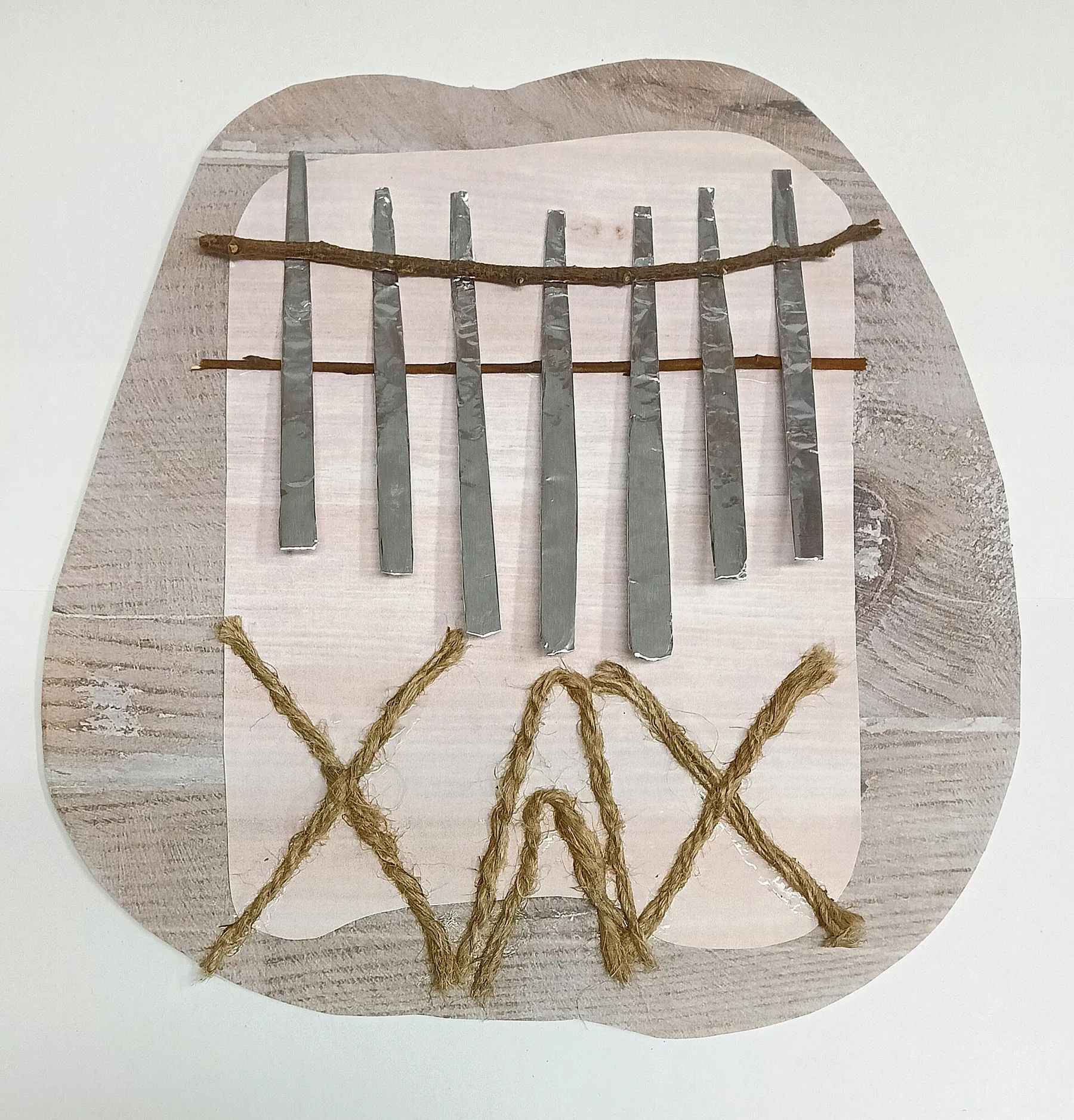
The principle is simple: the longer the free portion of the tine, the lower the note. To raise the pitch, shorten the vibrating portion by sliding the tine slightly upward. To lower it, move the tine outward.
Procedure in small steps
- Pluck the tine with the same force each time.
- Let the note sound gently and read the tuner.
- Move the tine very slightly, then test it again immediately.
- Repeat until you reach the desired pitch.
Sharp or flat tip: if the tuner shows that a note is too low, slide the tine upward in small steps. If it is too high, slide it downward. Avoid large movements.
“Check each note several times; a correction can affect its neighbors.”
Check stability: wait 5 to 10 seconds and test the note again. Recheck the whole instrument, since adjustments can affect other tines. Write down notes that often drift to make future checks easier.
For more targeted troubleshooting, follow this detailed solution.
Tuning your instrument: 17-tine, 21-key, or 8-tine kalimbas
Whether your thumb piano has 8 tines or 21 keys, the tuning method stays the same; only the note layout changes. The movement, order of work, and use of the tuner are the same for every size.
Matching notes to tines
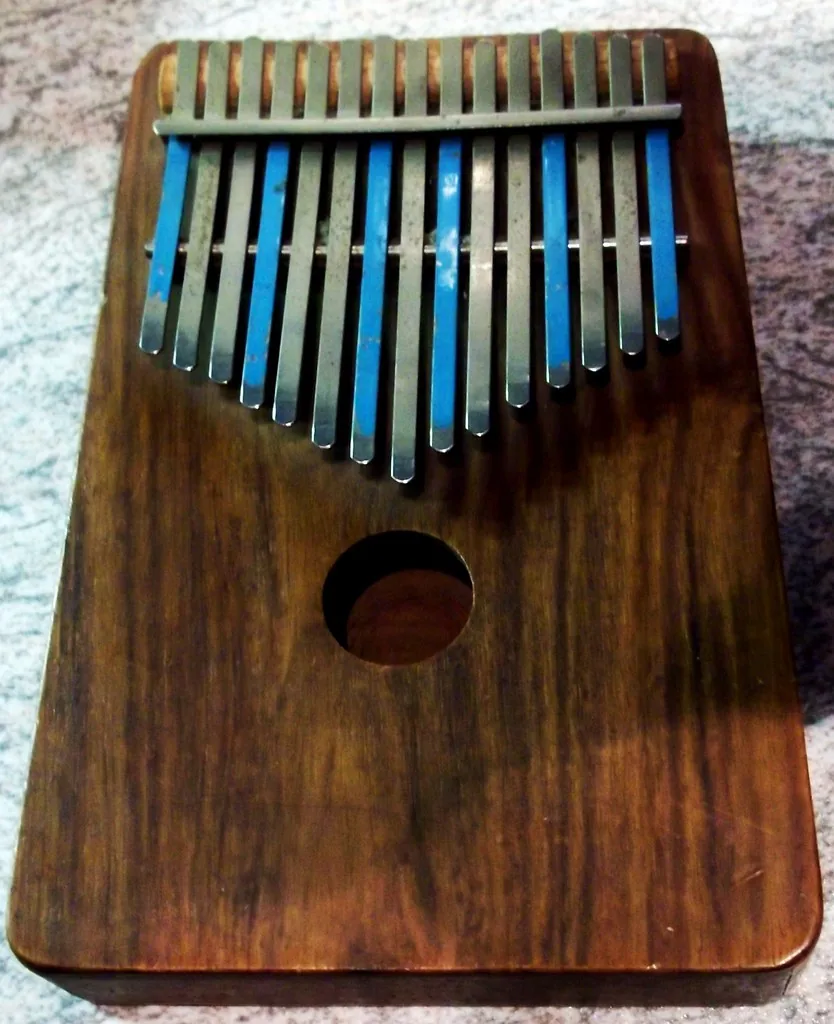
To locate each note, first look at any engravings or stickers supplied with the instrument. The manufacturer’s booklet or diagram often shows the note layout.
If there are no markings, start with a common tuning (often C major), then check each note with a tuner. Watch out for octaves: the same note name can appear in different registers.
Hollow and solid bodies
Hollow-body models amplify the sound but may go out of tune sooner. Wood, acrylic, and solid bodies can affect how well an instrument holds its tuning.
A travel instrument exposed to cold or humidity may go out of tune faster than a thumb piano kept at home. After tuning, play a simple scale to check the sequence of notes and the consistency of the tone.
- 8 tines: ideal for beginners.
- 17 tines: a versatile standard size.
- 21 keys: a wider range, tuned by the same method.
How to adjust a kalimba: out-of-tune tines, buzzing, and vibrations
A quick visual check can save you unnecessary adjustments later. Look at the tine from the front: if it touches its neighbor or is not perpendicular to the bar, its sound may be affected.
Sideways movement and controlled rubbing
Push the tine very slightly to one side, then test the note. If the contact persists, gently slide it across the bridge with light pressure until it reaches a smooth contact point.
Paper shim and “cushion” variation
The process is simple: lift the tine a little, slip a thin strip of paper between the tine and bar, release the tine to hold the paper in place, then trim the excess. This method works well on low notes.
For a reversible fix, leave a small paper cushion under the tine. This is a quick, effective way to stop persistent buzzing without changing the pitch.
Twisting, sandpaper, and pickup
If the tine does not lie flat, carefully grip its tip and twist it very slightly, listening after each small movement.
If the bridge has marks, slide in approximately 400-grit sandpaper with the abrasive side facing the bar, then work gradually up to approximately 1,000 grit to smooth it. Use light passes.
On models with a pickup, plug in a cable to test the jack. If the noise changes, check the outer ring and reposition the internal contact gently.
When to stop and ask for help
Stop adjusting and consult a repair specialist if a tine is cracked, the bar is bent, or several notes remain unstable despite corrections. For additional resources, see this dedicated page: practical guide.
Dull high notes and limited sustain: what you can improve
High notes can sometimes seem weak even when the instrument is correctly tuned.
Why high notes ring for less time
The main reason is that the tines are shorter: they vibrate for less time, so sustain naturally decreases.
Playing techniques that bring out high notes
Use a slightly stronger attack in the upper register. Play faster phrases to compensate for the shorter notes.
Also try playing the low notes more softly to leave room for the high notes in the mix.
Targeted cleaning
Dust and residue around the bar can muffle the sound. Blow away loose dust and carefully remove any visible buildup.
After cleaning, test the affected note immediately to check the result.
Remember: these adjustments can improve your thumb piano’s sound within the instrument’s natural limits. This article offers practical improvements without promising to transform its tone completely.
Prevent buzzing from returning and keep your kalimba in tune longer
A short maintenance routine helps adjustments last and limits sound problems.
Good storage and handling habits
Store the instrument in a bag or hard case. Avoid direct heat, excessive humidity, and placing it near radiators.
Do not leave the thumb piano on vibrating surfaces. Protect the tines from knocks during transport.
A simple checking routine
Check a few reference notes each week if you play often, or each month if you play occasionally.
Only tune the kalimba if you confirm that a note has drifted. Fewer adjustments limit wear from handling the tines.
Careful adjustments and light maintenance
Make tiny adjustments and keep the spaces between the tines even. If you move a tine sideways to remove a noise, realign it afterward to keep it comfortable to play.
Dust the bar regularly and inspect the bridge so you can spot marks that might affect a note.
Learn more about preventing unwanted noises
Conclusion
Use a gradual, methodical approach to address each problem without risking damage to the instrument.
Method: first determine whether the problem is pitch or an unwanted noise. Always start with the least invasive action before trying more advanced techniques.
Practical reminder: work in a quiet place, pluck consistently, and make tiny adjustments to stabilize the notes.
Follow this order to reduce noise: check alignment and spacing, move the tine sideways, insert a paper shim or cushion, twist it slightly, and then smooth the bridge very lightly if necessary.
If the problem persists or you notice structural damage, consult a specialist instead of continuing to adjust it. This article provides a reliable, repeatable method that respects the instrument.
For detailed steps, see the detailed solution.