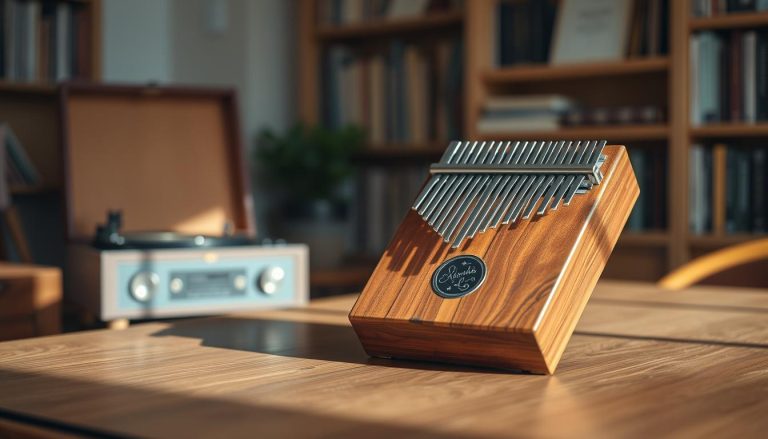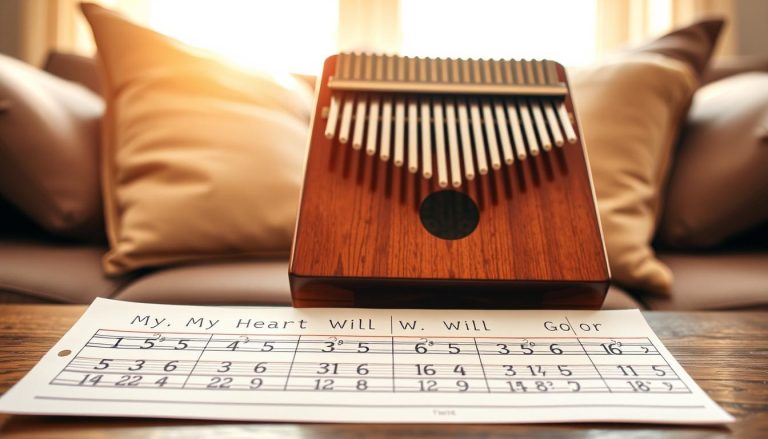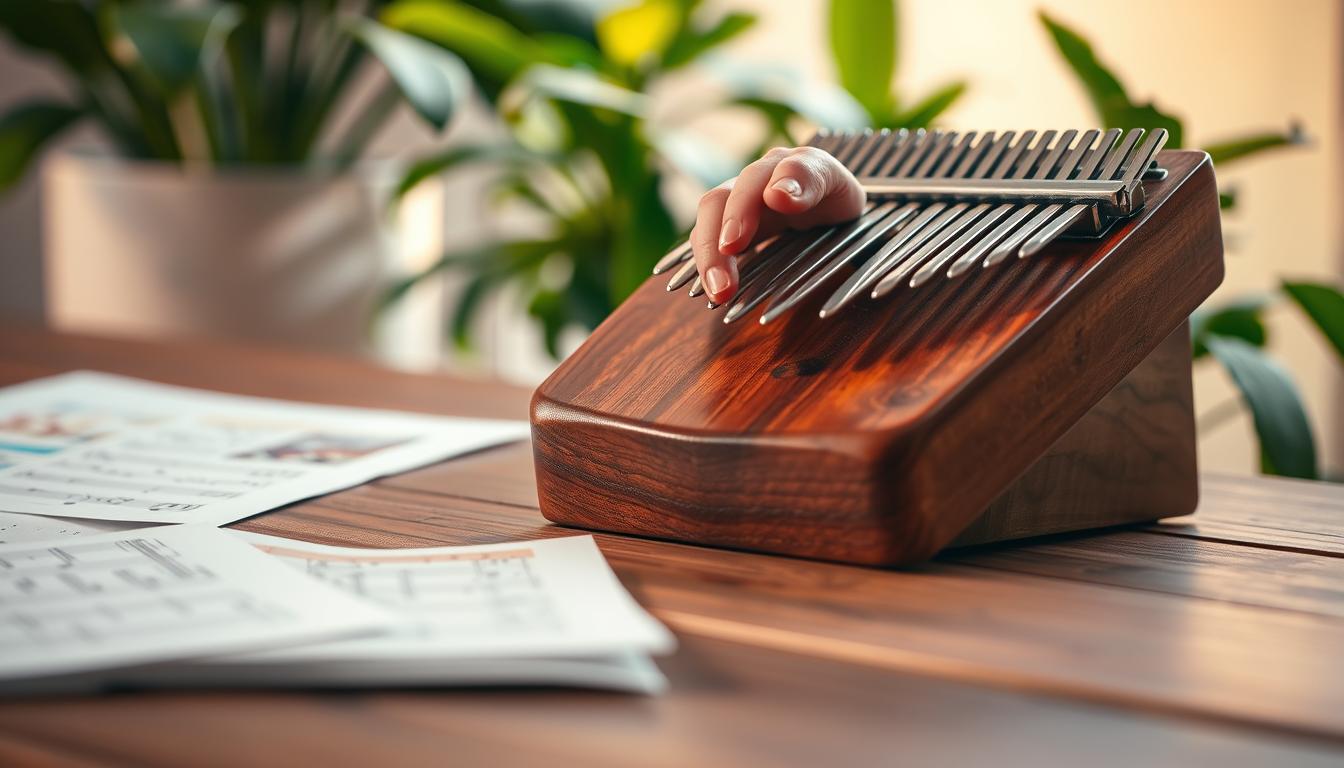
Goal: help you avoid the pitfalls of your first purchase and spend your budget on what really matters for sound, comfort and motivation.
A poor choice makes learning difficult. An uncomfortable or badly tuned model can be discouraging. A good one, by contrast, makes you want to play every day.
This buying guide covers the practical points: number of tines, material (wood or acrylic), soundbox, ergonomics, finish, accessories and budget. In France, a good beginner model often costs between €30 and €50, including essential accessories.
Most tutorials and sheet music are made for standard formats, often with 17 keys. This standard affects your choice and makes learning easier.
Here is the path to follow: understand how the instrument works, compare models, learn to tune it and play your first pieces. By the end, you will know which model to buy and how to start playing in the first few days.
Understand the kalimba before buying one
Knowing the names of its parts and how to play it helps you avoid a disappointing purchase.
The kalimba is an idiophone: sound is produced when you press and release a steel tine. The vibrating tine moves the air and creates a clear note.
The names “thumb piano,” “mbira” and “sanza” refer to instruments in the same family in different regions. Knowing these terms helps you read product descriptions.
In a listing, look for the soundboard, two bridges and the metal bar that holds the tines in place. A hollow soundbox changes projection and resonance.
- Playing motion: the thumbs press and release the tines; the other fingers steady the instrument.
- Quality: the stability of the tines and care taken during assembly affect tuning accuracy.
- Remember: the “keys” are the tines; the body is made of wood or acrylic.
Understanding these elements lets you compare models beyond their appearance and avoid an impulse purchase. To learn more, read our complete guide to the subject.
Origins and history of the kalimba, from Africa to its modern popularity
This instrument has deep roots in the history of sub-Saharan Africa, long before it spread around the world.
Remains dating back about 3,000 years were found on the west coast, in present-day Cameroon. Other examples found near the Zambezi date back about 1,300 years. These instruments were used at celebrations, during storytelling and in spiritual ceremonies.
In the 16th century, European missionaries such as João dos Santos described local versions. Then, in the 1950s, ethnomusicologist Hugh Tracey studied, adapted and standardized models.
In 1954, the founding of AMI (African Musical Instrument) encouraged tunings closer to European standards. This made the instrument more accessible to the general public and to modern teaching methods.
Why so many names?
Depending on the region, it may be called a mbira, sanza, likembe or thumb piano. These names reflect different cultures. Today, “kalimba” often means the standardized version, while “mbira” sometimes refers to traditional forms.
| Period / aspect | Characteristics | Impact today |
|---|---|---|
| Ancient (3,000 to 1,300 years ago) | Ritual use, repeating patterns, local wood | A sound identity linked to social practices |
| Transition (16th century) | Written descriptions by travelers | First European accounts |
| Modernization (1950s) | Standardization by Hugh Tracey and AMI | Formats compatible with tutorials and sheet music |
Who is the kalimba for? Beginners, children and trained musicians
Its apparent simplicity comes from both the scale it uses and the way its notes fit together.
For beginners, most models are tuned to C major. Even an imperfect sequence of notes will often sound harmonious. This forgiving quality builds motivation and reduces frustration.
For children, choose a light model with 8 or 9 tines: it is easy to hold and less intimidating. These formats limit the length of pieces you can play but encourage exploration.
For teenagers and adults, choose a stable body with tine spacing that suits their hands. An instrument that is too wide causes fatigue; one that is too small makes it hard to position the thumbs.
Trained musicians and pianists
Musicians, particularly pianists, may prefer models with 19 to 21 tines or more for a wider range. Bear in mind that the notation becomes denser and finding the right notes takes more effort.
| Player | Recommendation | Drawback |
|---|---|---|
| Child | 8 or 9 tines, light and stable | Limited repertoire |
| Adult beginner | 10 to 17 tines, standard format | Good balance between sound and ease of learning |
| Trained musician | 19 to 21 tines or more, wide range | Greater complexity and harder note identification |
Kalimba: a complete guide to choosing one and getting started
Defining what you want to do with your instrument makes choosing a model much easier. Start with a simple question: do you want to play to relax, pursue serious study, give it as a gift or play in a group?
Define how you will use it
- Relaxation: favor a gentle sound and comfort (low weight, rounded edges).
- Serious study: look for a standard 17-key model, stable tuning and accessories (hammer, case).
- Gift: ergonomics, durability and a neat finish matter more than a wide range.
- Group playing: look for volume, a hollow soundbox and good tuning stability.
Criteria that really change the experience
Three factors affect playing: sound (warmth or brightness), comfort (weight, edges and tine spacing) and motivation (how easily you can start playing melodies and songs).
To make a quick decision in a shop, check the stated tuning, inspect the finish around the tines and ask whether a hammer and case are included. A poor choice — too many tines, an overly heavy material or a rough finish — often leads people to give up.
The ultimate goal is to enjoy playing from the start. Choosing a model suited to the time you can practice each day increases your chances of making progress.
Number of keys and tines: the most decisive factor
The number of keys determines what you can play and how you will learn. It is the first thing to consider: it sets the instrument’s range, how easy its layout is to read and its compatibility with sheet music available online.
Aim for 10 to 17 tines for a comfortable start
This range provides enough notes for varied melodies without overwhelming your visual memory. Between 10 and 17 keys, you can find a good compromise between range and ergonomics.
The 17-key format: the practical standard
The 17-key model has become the unofficial standard. It offers a useful two-octave range, and most tutorials and sheet music are designed for it. If you want to follow lessons and start playing quickly, it is the safest choice.
8 or 9 keys: ideal for discovery, but quickly limiting
Small models are light and reassuring for children. They offer an easy introduction but restrict the repertoire and may frustrate anyone who wants to play longer songs.
19, 21 or 24 keys: a rich but demanding range
Larger models add lower notes and sometimes semitones. They suit experienced musicians, but their dense layout and greater risk of mistakes make them less suitable for beginners.
- Examples: gift for a child = 8 or 9 keys; motivated teenager or adult = 17 keys; curious pianist = 19 to 21 keys after practicing on a 17-key model.
- Simple rule: choose 17 keys to play pieces quickly; choose a small format for sensory exploration.
Once you have chosen the number of keys, you still need to understand the note layout to find your way around this “thumb piano.” To learn more about the number of tines, read our dedicated guide: number of tines and keys.
Note layout and scales: understanding the “thumb piano”
The notes follow a clear pattern that makes them easier to memorize. Think of the keyboard as folded inward: the low notes are in the center and the high notes toward the edges.
Symmetrical arrangement: the notes rise by alternating between left and right. This layout lets your thumbs naturally share the work of moving up and down the scale.
Why C major makes learning easier
The C major scale is the most common. It often sounds pleasant even when played awkwardly. This forgiving quality reduces the fear of wrong notes and makes improvisation easier.
“A well-chosen scale encourages daily practice.”
Simple landmarks: the longest tines in the center produce low notes. The shorter tines near the edges produce high notes.
| Element | Landmark | Benefit |
|---|---|---|
| Center | Long tines | Low notes, harmonic foundation |
| Edges | Short tines | High notes, clear melodies |
| Layout | Symmetrical | Memorizing shapes |
Practical choice: a 17-key model tuned to C major offers the greatest compatibility with tablature and videos. Remember that low notes are in the center and high notes at the edges, then mentally locate the notes of a simple piece.
Wood or acrylic: choosing the right material for sound and comfort
The material noticeably changes the tone and how long a note lasts.
Effect on sound: the material changes how vibrations travel through the soundboard. This affects tone, resonance time and how the notes are perceived.
Wooden kalimbas: warmth, resonance and manageable weight
Wood bodies offer natural warmth. The sound seems rounder, and notes often ring longer.
A wooden model is often light. You can play longer without tiring your thumbs.
Why mahogany is often recommended
Mahogany gives a rounded tone and clear resonance. It strikes a good balance between projection and comfort.
Acrylic kalimbas: design and crystalline tone
Acrylic appeals for its design and brightness. Its tone is clearer and sometimes distinctly crystalline.
However, it can be heavier. A heavy model is harder to keep steady in your hands and causes fatigue sooner.
How to compare online: audio samples and simple criteria
Listen to audio samples through headphones. Check:
- Sustain (how long the note lasts).
- Attack (how clearly the note begins).
- Consistency (a similar volume across all notes).
- The absence of unwanted vibrations or muted notes.
| Material | Sustain | Attack | Weight |
|---|---|---|---|
| Wood (generally) | Long | Gentle | Light |
| Mahogany | Long resonance | Warm | Moderate |
| Acrylic | Shorter | Bright and clear | Often heavy |
“An enjoyable sound is more motivating than any technical specification.”
Soundbox: what is the real difference between hollow and flat kalimbas?
A hollow or flat body changes the sound, feel and everyday use of the instrument.
Construction changes the result. A hollow soundbox amplifies the sound and transfers vibrations to your hands. Greater volume and longer resonance make the notes more prominent.
A flat model, by contrast, has a solid body. It is often quieter, more stable and easier to carry. This construction suits playing on the move and reduces unwanted resonance.
Effect on bass notes and resonance: hollow models sometimes bring out the bass. Their longer resonance can also make an out-of-tune note more obvious. A flat model has a drier attack and more distinct notes.
- Construction: hollow = a body with a cavity that amplifies; flat = a solid, more stable body.
- Use: hollow = playing at home, a lively feel; flat = portability and discretion.
- Caution: an attractive soundbox cannot make up for poor workmanship. Check tine stability and tuning.
“A highly resonant instrument brings out the best in the sound… but also reveals its flaws.”
Practical criterion: if you want comfort and an enjoyable feel from your first notes at home, favor a hollow model. If you often play while traveling, a flat model remains a reliable choice.
Ergonomics and handling: size, shape, edges and thumb fatigue
How the instrument feels in your hands often affects how frequently you practice more than its tone does. Poor ergonomics cause tension and shorten sessions, even if the sound is appealing.
Body width: for small hands, favor a compact model (about 10 to 14 cm). Teenagers and adults can choose a width of 15 to 20 cm if the shape remains rounded.
Edges and finish: check for splinters, slippery surfaces and sharp edges. Rounded edges reduce finger tension and improve thumb precision.
- Weight: acrylic may require a firmer grip; a well-finished wooden model is less tiring.
- Stability: an unstable instrument forces you to grip harder and tires your thumbs.
- Quick test: in a shop, play for 2 to 3 minutes, alternating thumbs; check whether your hands stay relaxed.
For a gift, favor comfort over appearance. If you want reviews and reliable brands, visit our page on the best brand.
Build quality: avoid the pitfalls of very cheap models
Before you buy, build quality often determines whether the instrument makes you want to play or ends up in a drawer. Mechanical flaws in some budget models quickly diminish the enjoyment of playing.
Signs of a good instrument
Notes with a clear attack, even resonance and no buzzing are simple indicators. A well-finished body without sharp edges or visible glue shows careful assembly.
Common problems with cheap models
Very cheap models sometimes have misaligned tines, uneven notes and unwanted vibrations. These flaws make the instrument feel poorly made and can discourage you.
Why quality matters more than the brand
On a tight budget, a familiar brand does not always guarantee a good instrument. Check features you can observe, the tuning and reviews that mention how well notes hold up after a few weeks.
| Problem | Symptom | Signs of quality |
|---|---|---|
| Poorly fitted tines | Muted notes, tuning problems | Clear attack, even resonance |
| Poorly finished body | Chips, sharp edges, visible glue | Smooth finish, no visible defects |
| Unwanted vibrations | Buzzing, secondary sounds | No buzzing, good resonance |
Practical rule: if two or three notes sound dull or the finish could hurt your hands, choose another model, even if you like its design.
To make a more informed choice and avoid common mistakes, read our dedicated article: how to choose a kalimba.
Budget and value for money in France: how much should your first kalimba cost?
Knowing how much to spend helps you buy a lasting instrument without overpaying.
Recommended range: in France, plan to spend around €30 to €50 on your first instrument. This budget helps you avoid unstable models while remaining affordable.
What you are really paying for is quality tines (accurate pitch and response), a good wood finish and tuning stability over time. Very cheap offers often lack consistency and need frequent adjustments.
What you gain by spending more
Above €50, you may get better projection, more consistent notes, a neater finish and sometimes included accessories. A sturdy case, a small hammer and note labels improve the experience as soon as the instrument arrives.
- Priority: a well-made 17-key wooden model is better than an instrument that looks premium but is poorly tuned.
- Buying tip: compare the price with what the kit includes (hammer, stickers, case, booklet) and with reviews about tuning stability.
“A good 17-key model with useful accessories beats an attractive instrument that is out of tune.”
Essential accessories for getting started (and staying motivated)
A good starter kit prevents extra purchases and makes the first few weeks of practice easier.
The essentials: a tuning hammer, note labels, a bag or case, a booklet or QR codes, and thumb protectors. These improve the experience more than gadgets do.
Tuning hammer
The hammer lets you correct a tine that has gone out of tune after a knock or a change in humidity.
Essential with a new model, it enables quick tuning and saves you time when a note sounds wrong.
Note stickers
Visual labels help you memorize the notes faster and read simplified sheet music more easily.
For beginners, they save valuable time while learning.
Bag, case and transport
A bag protects the instrument and its tines from knocks that could affect tuning. A hard case is useful if you travel often.
Booklet, simplified sheet music and QR codes
A small booklet or a QR code that leads to tutorials lets you play a melody within minutes. This boosts motivation and encourages regular practice.
Thumb protectors
Useful for long sessions, these reduce irritation and let you gradually increase playing time without pain.
- Recommendation: at the same price, favor a kit with a hammer, stickers and a bag.
- To get started quickly, read our introduction to the kalimba.
Tuning and care: keeping your instrument in tune
Keeping your instrument in tune takes a simple, regular routine. A well-tuned instrument makes every session more enjoyable and prevents frustration when a melody sounds wrong.
The physical principle and how to adjust a tine
Each tine corresponds to one note. Shortening the vibrating part of the tine raises its pitch; lengthening it lowers the pitch.
To adjust it, tap the tine gently with a small hammer, using light strokes. Check the note after each tap so you do not move it too far.
When to tune
Tune the instrument if a note sounds off, if a piece sounds wrong despite correct fingering, or after a knock or travel without a case.
“Regular checks stop an out-of-tune note from disrupting the melody.”
Storage and good habits
Store the instrument away from moisture and sudden temperature changes. Protect the tines during transport with a padded bag.
If the body is hollow, check the tuning more often: resonance makes flaws more noticeable.
| Situation | Symptom | Recommended action |
|---|---|---|
| Off-pitch note | Dull or imprecise sound | Adjust the tine with light hammer taps |
| After transport | Out-of-tune notes, unstable tuning | Check every note and tune them one by one |
| Change in humidity | Gradual loss of tuning | Store somewhere dry and check weekly |
Don’t worry: tuning becomes quick with practice. For a step-by-step method for a 17-tine model, read our tutorial: how to tune a kalimba with 17 tines.
Getting started: simple, effective ways to learn
Short, regular practice leads to real progress. Start with focused sessions built around repetition and relaxed thumbs.
Basic exercises
Playing up and down the scale strengthens your tactile memory of the keys. Play 5 to 10 slow repetitions ascending, then the same number descending.
Add visual labels or stickers to memorize the notes faster.
Reading music without music theory
Tablature using letters or numbers is enough to play simple songs. Sheet music for 17 keys is widespread and easy to follow.
A short, progressive routine
Practicing for 5 to 10 minutes a day is better than playing a long session now and then. Set a small goal: a scale, a musical phrase or a short piece.
Working on rhythm
Play slowly at first, then increase the speed with a metronome. This steadies your rhythm and reduces mistakes.
“Break a piece into short phrases, master each transition, then put everything together.”
- Simple plan: scale → musical phrase → piece.
- Low-pressure technique: repeat for 10 to 20 seconds, take a break, then start again.
- If you play piano, draw on your sense of rhythm while getting used to the kalimba’s unusual key layout.
First pieces and styles: what melodies should beginners play?
Starting with very short tunes lets you enjoy playing and progress quickly. Choose simple, familiar melodies suited to the 17-key format so you can hear results soon.
For your first pieces, favor short songs, such as a chorus or a phrase of 4 to 8 bars. This helps you memorize the movements and play a complete passage in little time.
Simple melodies and popular songs for 17 keys
The 17-key format gives you easy access to sheet music: most free resources are written for it. Stay in C major at first to make wrong notes less noticeable.
- Choose 3 to 5 familiar songs (a lullaby, film theme or simplified pop song).
- Learn the chorus first; repeat it slowly, then increase the tempo.
- Use visual labels on the keys to memorize them faster.
Playing to relax: gentle sounds, repetition and improvisation
For relaxation, favor repeating patterns that let notes ring. Improvise with 3 to 5 notes and listen to how long they last.
- 2 minutes: slowly play a scale to warm up.
- 5 minutes: work on a melody you have chosen.
- 2 minutes: improvise freely to finish gently.
| Goal | Example | Benefit |
|---|---|---|
| Quick learning | Chorus of a lullaby | Immediate motivation |
| Repetition | Four-note pattern | Highlights resonance |
| Improvisation | 3 to 5 notes in C major | Creativity and relaxation |
| Progress | Adding variations | Strengthens playing skills |
“A simple repertoire makes you want to play often: the more you practice, the better you remember the pieces.”
Conclusion
In short, focus on a few criteria that will make a difference every day.
Priorities: the number of keys or tines (10 to 17, preferably 17), the C major layout, the material (wood, ideally mahogany), the body type (hollow or flat), and build quality and ergonomics.
For most buyers, a well-finished, 17-key wooden kalimba supplied with a hammer, stickers and a bag is the best compromise. A hollow body offers more volume but calls for careful construction. Check the tuning on arrival and plan for regular adjustments.
Suggested budget: €30 to €50 to avoid common flaws. Choosing a suitable model, tuning it and practicing for a few minutes each day can make it a lasting musical companion rather than just a decorative object.